Overview
Dive shop inventory planning is often treated as a small operational task, but for many retailers and training centers, weight stock has a direct effect on cash flow, shelf space, and service speed. Unlike impulse accessories, diving weights are essential items customers need immediately. If the right options are unavailable, the sale can stall or move to another supplier.
The challenge is simple: stock enough to support daily demand, class schedules, and seasonal peaks without filling your back room with slow-moving lead. That is where disciplined stock management, smart assortment choices, and clear reorder points make a measurable difference.
A focused range of the most important weights usually outperforms an oversized assortment with low turnover
For professional buyers, the goal is not maximum variety. It is dependable availability, efficient SKU optimization, and access to flexible diving weights wholesale supply when demand shifts. A specialist supplier with no minimum orders and in-house production can help shops stay lean while still covering the needs of recreational divers, instructors, and schools.

Why dive weight inventory ties up cash
Diving weights are practical products, but they can become expensive inventory if bought too broadly or too deeply. Every extra kilogram sitting unsold on the shelf represents capital that cannot be used for faster-turning categories such as masks, fins, rental maintenance, or course marketing. In other words, lead may look durable, but poor planning makes it a quiet drain on working capital.
This issue gets worse when shops overestimate demand for uncommon formats, unusual sizes, or duplicate product styles that serve the same purpose. Without clear SKU optimization, a shop can end up carrying too many versions of low-frequency items while the core weights run out at the wrong moment.
- Cash is tied up in heavy stock that moves slowly
- Storage space becomes less efficient
- Staff spend more time checking overlapping SKUs
- Reordering becomes reactive instead of planned
Strong dive shop inventory planning reduces this risk by matching stock depth to actual sales velocity. When supported by flexible diving weights wholesale purchasing, shops can replenish more often instead of overcommitting upfront.
Fast-moving diving weights every shop should stock
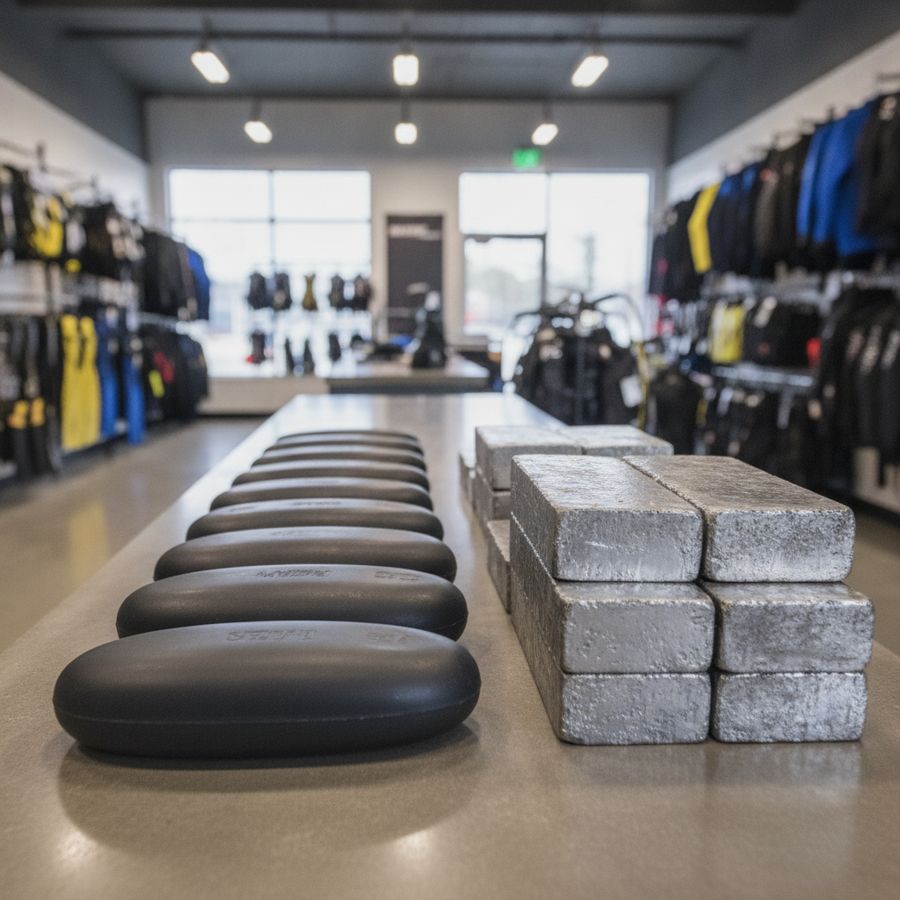
Most dive shops do not need every possible weight configuration. They need a dependable core range that supports the majority of open water, advanced, and rental use cases. Fast-moving items usually include standard lead blocks, coated blocks for cleaner presentation, and soft lead options that fit comfortably in integrated BCD systems or trim pockets.
A practical baseline assortment should cover the products divers ask for repeatedly, not the rare edge cases. Shops that work with schools or rental fleets may also benefit from easy-to-identify, durable options that can stand up to frequent handling and wet environments.
- 0.5 kg and 1 kg weights for trim and fine adjustment
- 2 kg blocks for common recreational setups
- Soft lead pouches for integrated weight systems
- Belts and buckles for traditional configurations
- Selected heavy ballast for technical or specialized needs
Stock management works best when these fast movers are always available and fringe demand is supplied on a shorter reorder cycle. That keeps service levels high without creating dead stock across too many product lines.
Choosing sizes: 0.5 kg to heavy ballast
Size selection is where many shops either become efficient or overloaded. Smaller increments such as 0.5 kg and 1 kg support trim adjustments, training use, and customers who want a precise setup. These are versatile sizes that serve both new divers and experienced users refining buoyancy. In many stores, they deserve priority because they solve the widest range of fitting problems.
Mid-range blocks remain the everyday workhorses for belt systems and general recreational diving. Heavier ballast, by contrast, should be stocked more selectively. It is valuable for technical diving, commercial applications, or specific training environments, but turnover is usually lower unless that customer segment is a clear part of your business.
Broad demand is found in small and mid-sized weights, while heavy ballast should follow proven local need
For better SKU optimization, start with the sizes your staff issue most often in rentals and training. Then review what actually sells by unit count and by total kilograms moved. This approach makes dive shop inventory planning more data-led and less based on guesswork.
Reorder points and forecasting seasonal demand
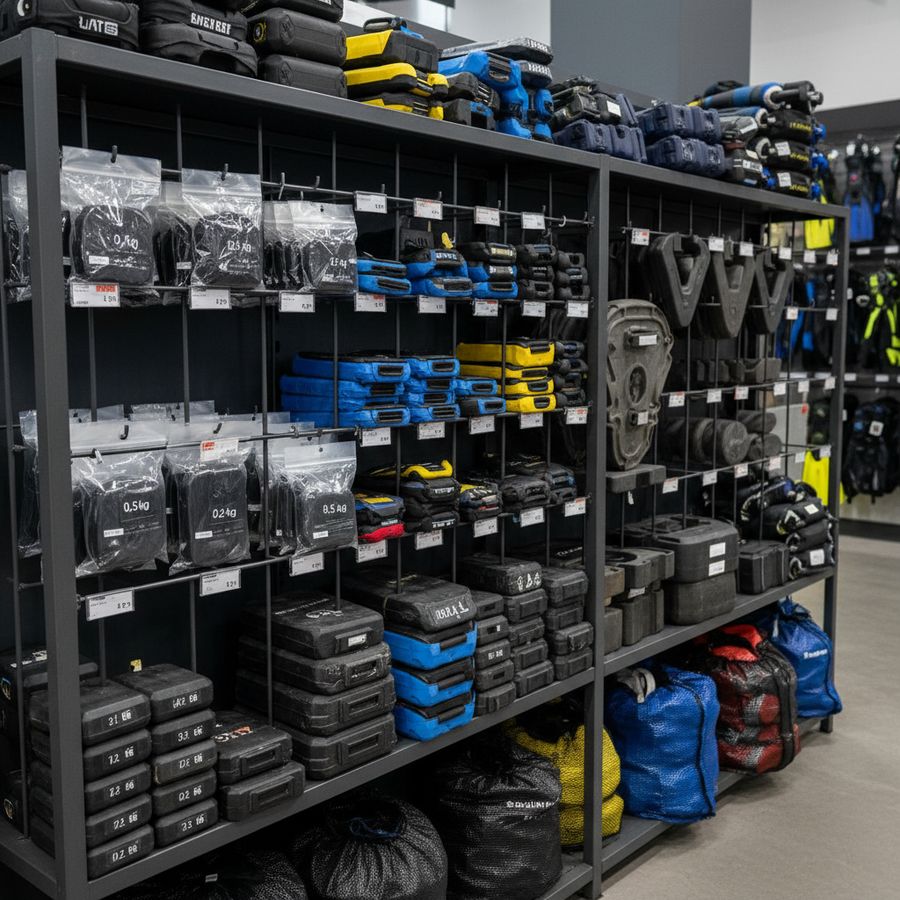
Reliable reorder points are essential if you want to avoid both stockouts and overbuying. A simple method is to track average weekly sales by product type, then add a safety buffer based on supplier lead time and expected seasonal variation. If a 1 kg coated block sells steadily and lead time is short, you can reorder leaner. If spring course bookings spike every year, the buffer should increase ahead of that period.
Seasonality matters more than many shops realize. Local training starts, travel season, charter partnerships, and school packages can all create predictable waves in weight demand. The more closely your inventory reflects those patterns, the less money gets trapped in slow months.
- Review sales history by month and customer segment
- Set minimum stock levels for core SKUs
- Adjust reorder points before peak training periods
- Separate rental demand from retail demand in forecasts
When paired with responsive diving weights wholesale supply, accurate reorder points allow a shop to stay available without turning the storeroom into excess ballast.
Simplifying skus with blocks
Blocks are one of the easiest areas to simplify because they cover a large share of routine demand. Instead of stocking too many finishes, shapes, or near-identical formats, focus on the block styles that your customers recognize, your staff can issue quickly, and your shelving can organize efficiently. That is the essence of smart SKU optimization.
For many shops, a compact mix of key coated and standard block weights is enough to handle most walk-in sales and rental needs. Coated blocks can also improve presentation by keeping shelves cleaner and reducing visible oxidation, which matters in a retail environment where product appearance influences buying confidence.
Fewer block variations with stronger availability usually sell better than a complex assortment with frequent gaps
Use sales reports to eliminate duplicate slow movers. If two products meet the same need, keep the one with better turnover, cleaner handling, or stronger margin. This kind of disciplined stock management frees up budget for faster-selling essentials and makes replenishment easier for staff.
Belts, And pouches
Belts and pouches deserve their own planning logic because they support different diver preferences and equipment systems. Traditional belts remain important for training, rental fleets, and customers who prefer a simple setup. Pouches and soft lead options are equally important for integrated BCD systems, trim use, and divers who value comfort and flexibility.
Rather than treating these products as accessories, treat them as part of a complete weighting solution. A shop that stocks only lead without the right carrying format can still lose sales. Matching belts, buckles, and soft lead pouch options gives staff a better chance to solve the whole problem during one customer interaction.
- Stock a dependable belt and buckle combination for rental and training
- Keep soft lead pouches available in common fill weights
- Review attachment compatibility with popular BCD systems
- Bundle common combinations to improve turnover
From a dive shop inventory planning perspective, these lines should stay focused and practical. The objective is coverage, not clutter.
Conclusion
Effective dive shop inventory planning for weights is not about having the biggest assortment. It is about stocking the right core range, setting realistic reorder points, and using disciplined stock management to prevent dead stock. When a shop concentrates on fast-moving weights, practical size coverage, and simplified product lines, inventory becomes easier to control and far more profitable.
The strongest results usually come from partnering with a true specialist in diving weights wholesale. A focused supplier can support cleaner SKU optimization, quicker replenishment, and lower capital exposure, especially when no minimum orders are available. That flexibility matters for independent dive shops, schools, and training centers that need reliability without overstocking.
The best inventory plan is the one that keeps core weights available while leaving cash free for the rest of the business
In a category as essential as diving lead, precision beats excess. Build around what moves, review performance regularly, and let demand guide the next order.