Why no minimum order changes planning
For many retailers, dead stock starts with one purchasing rule: buying more than the business can realistically sell. In a specialist category like diving lead, that problem grows quickly because sizes, formats, and customer needs vary across training, recreational, and technical use. A no minimum order model changes the entire logic of inventory planning. Instead of filling shelves just to reach a supplier threshold, a dive business can order to match actual turnover.
That matters because dive shop inventory should support cash flow, not trap it. When a supplier can ship small replenishment orders, shops and schools gain room to test demand, refine their range, and restock proven sellers more often. This creates a leaner stock profile with fewer slow-moving items and less money tied up in niche weights that may only sell occasionally.
Order frequency often matters more than order volume when the goal is to reduce dead stock
For professional buyers, the operational benefit is just as important as the financial one. A focused stock strategy becomes easier when the supplier already carries the depth of range. Rather than overcommitting, the shop can keep core sizes available and top up as needed.
- Lower upfront stock investment
- More flexibility during seasonal shifts
- Faster reaction to course bookings and rental demand
- Reduced risk from incorrect size mix
In short, no minimum order purchasing helps turn dive weights wholesale into a responsive supply system instead of a warehouse burden. That is the foundation of smarter inventory control.

Fast-moving dive weight sizes to prioritize
Not every weight size deserves the same shelf space. The best-performing dive shop inventory usually comes from identifying the sizes that move consistently across entry-level courses, recreational divers, and rental setups. For most stores and training centers, faster turnover often comes from practical, versatile units rather than specialized heavy configurations.
A smart starting point is to prioritize weights that work across the widest range of divers. Smaller increments help instructors fine-tune buoyancy, while standard mid-range blocks are commonly used in rental systems and open water training. In other words, the most valuable stock is not always the heaviest stock. It is the stock that solves the most frequent fitting and trim needs.
When planning dive weights wholesale purchases, buyers should review rental logs, course schedules, and past reorder patterns. The goal is to build around the sizes that leave the shelf first, then carry limited backup stock in slower variants.
- Small weights for fine buoyancy adjustment
- Mid-range blocks for general training and rental belts
- Popular technical formats only where local demand supports them
- Replacement weights that match the shop’s existing belt systems
The fastest-moving size is usually the one that fits the broadest number of divers, not the most specialized use case
By giving priority to repeat sellers, shops reduce dead stock and keep replenishment simple. This is one of the most practical ways to improve inventory planning without expanding total stock value.
Balancing soft lead and coated blocks
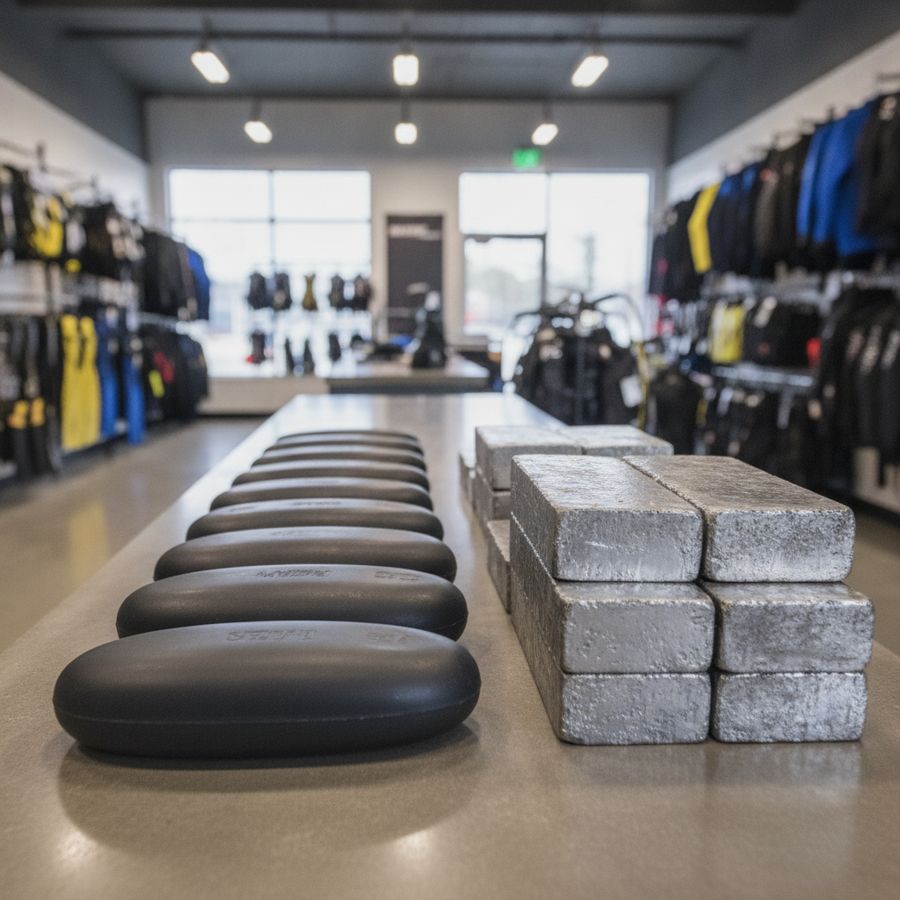
One of the most important decisions in inventory planning is how to balance soft lead with coated blocks. Both serve a purpose, but they do not perform the same role in a professional stock mix. Soft lead is often preferred where flexible packing, compact storage, and easy integration into pouches or custom setups matter. Coated blocks, on the other hand, are popular for durability, cleaner handling, and a more professional-looking display.
For shops trying to avoid dead stock, the answer is rarely choosing one category only. A better strategy is to let customer type guide the mix. Dive schools may need practical, high-use formats that can cycle through rental gear all season. Retail-focused stores may benefit from carrying coated blocks for resale appeal while keeping soft lead available for operators or advanced divers with specific requirements.
Presentation also affects movement. Coated weights help shelves stay cleaner and more consistent in appearance, while soft lead offers flexibility in weight combinations and packaging formats. That makes each category valuable in different sales situations.
- Use soft lead for adaptable operational stock
- Use coated blocks for visible retail presentation
- Match the ratio to rental demand versus consumer sales
- Review damage, handling, and cleaning requirements regularly
A balanced range protects margin and service level at the same time
For efficient dive shop inventory, the right mix depends on who the business serves most often. When stock reflects real usage instead of assumptions, dive weights wholesale buying becomes more precise and far less wasteful.

When schools need backup weight inventory
Dive schools operate under a different pressure than standard retail. They cannot afford to run out of essential weights during a busy training day, especially when multiple student groups are scheduled back to back. That is why backup stock matters. The challenge is keeping enough reserve inventory without creating piles of dead stock at the end of the season.
The solution is to define backup inventory by operational risk, not guesswork. If a school regularly teaches entry-level divers, it should hold reserve weights in the sizes most commonly used in introductory courses and rental belts. This is not about expanding every SKU. It is about protecting the core sizes that support uninterrupted training.
Backup stock is especially important when equipment is shared across locations, exposed to heavy wear, or needed for last-minute student changes. A belt lost, a pouch damaged, or an unexpected class increase can create immediate shortages if the reserve pool is too thin.
Schools do not need more inventory everywhere; they need more certainty in the few items they use every day
- Keep emergency reserve only in high-turnover sizes
- Separate teaching stock from retail stock counts
- Review usage after every major training block
- Replenish quickly instead of overbuilding deep reserves
With a no minimum order supply model, training centers can maintain that safety buffer more efficiently. This supports better dive shop inventory control, reduces capital tied up in slow lines, and keeps inventory planning aligned with real teaching demand.
Forecasting seasonal demand across training centers
Seasonality has a major effect on dive shop inventory, especially for businesses serving multiple training centers or locations. Demand for diving lead does not stay flat throughout the year. It rises with course launches, holiday travel periods, local weather improvements, and certification schedules. Without forecasting, buyers often react too late, then compensate by overordering. That is how dead stock begins to build once the peak passes.
Good forecasting starts with simple patterns. Compare last year’s monthly consumption, upcoming course calendars, and expected student numbers. Then separate baseline demand from peak demand. Baseline demand covers normal retail and replacement needs. Peak demand reflects temporary surges tied to instruction and rental usage.
Multi-site operators should also avoid treating every center the same. One location may run beginner-heavy programs, while another serves advanced divers or technical training. That changes which sizes and formats move fastest. Better forecasting comes from local usage data, not a single national estimate.
- Track demand by month, center, and weight type
- Use course bookings as an early demand signal
- Build flexible reorder points before the season starts
- Adjust stock mix by location instead of ordering uniformly
The best seasonal forecast is specific enough to guide reorders and flexible enough to adapt when bookings change
When paired with no minimum order purchasing, seasonal forecasting becomes much safer. Buyers can stock for the next wave of demand without committing to excess dive weights wholesale volume that may sit untouched later.
Margin protection through lean stock decisions
Protecting margin in a specialist category is not only about negotiating cost price. It is also about making disciplined stock decisions. Every slow-moving unit on the shelf has a hidden cost: tied-up cash, lost storage efficiency, and a higher chance of markdowns or neglected inventory. Lean purchasing helps prevent these issues while keeping service levels strong.
For businesses managing dive shop inventory, lean stock does not mean understocking. It means carrying the right assortment in the right depth. Core high-turnover weights deserve regular replenishment. Niche products should earn their place through proven local demand. This approach keeps the business responsive while reducing the financial drag that comes from dead stock.
Margin also improves when ordering decisions are based on total performance, not item popularity alone. A weight that sells occasionally but causes storage clutter and low turnover may be less valuable than a modestly priced fast mover that reorders frequently. That is why inventory planning should connect stock movement, carrying cost, and replacement speed.
Lean stock decisions protect profit by reducing waste before waste ever reaches the shelf
- Prioritize reorder speed over speculative volume
- Review low-turn SKUs quarterly
- Concentrate capital in proven lines
- Use supplier flexibility to avoid bulk buying pressure
Ultimately, stronger margins come from better discipline. When dive weights wholesale purchasing follows real demand and benefits from a no minimum order model, shops and schools can stay stocked, agile, and profitable at the same time.