Overview
Lead oxidation prevention matters because dive weights are handled constantly by staff, instructors, students, and customers. When lead sits in humid air or is repeatedly exposed to water, salt, friction, and skin oils, its surface can form a dull residue. That residue is not just a cosmetic issue. In a busy dive environment, it can transfer to hands, shelves, bins, vehicle interiors, and rental gear, making dive weight safety and clean handling procedures far more important.
For dive shops and schools, good lead handling is really about reducing unnecessary contact, maintaining a professional presentation, and extending the useful life of inventory. Cleaner weights are easier to issue, count, stack, rinse, and store. They also support a better customer experience, especially when students are learning equipment habits for the first time.
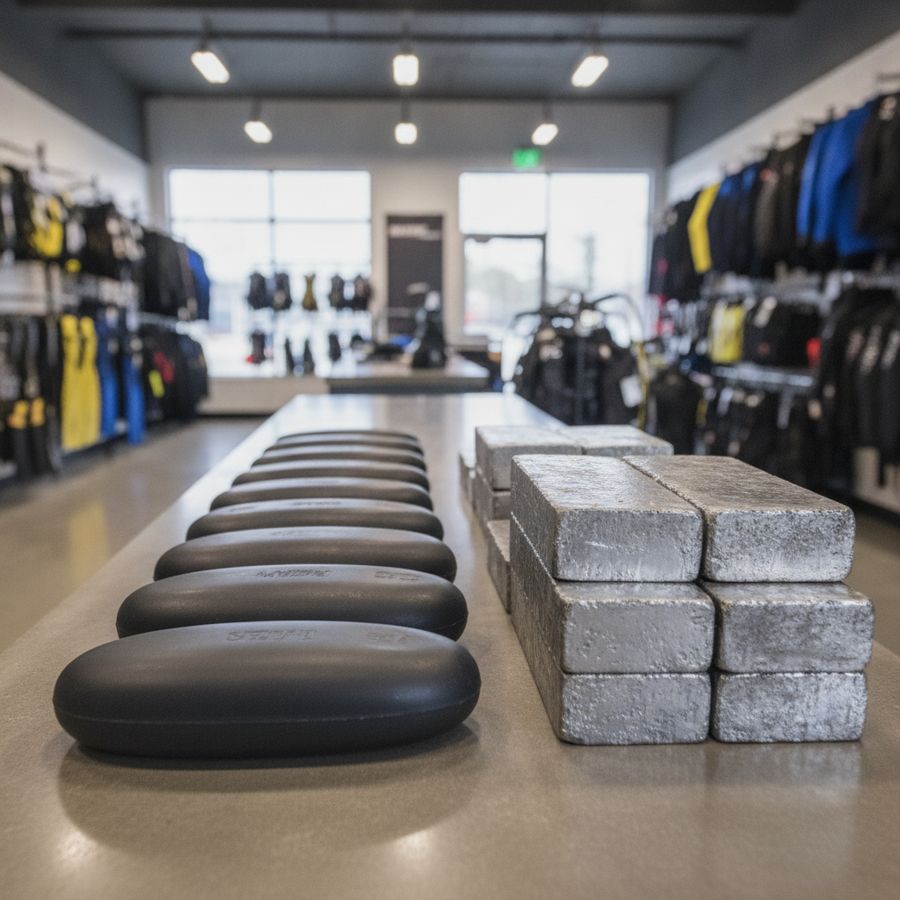
Well-managed dive weights are easier to handle, cleaner to store, and safer to use every day
The most practical approach combines several steps: choosing the right products, limiting abrasion, using coatings where suitable, improving lead storage, and following simple cleaning routines. Whether you work with uncoated weights, soft lead, or coated lead blocks, the goal is the same: reduce residue, reduce damage, and keep your operation efficient.
What causes lead oxidation on dive weights
Lead oxidizes when its surface reacts with air, moisture, and contaminants. In diving, that process is accelerated by exactly the conditions weights see most often: wet decks, rinse tanks, saltwater exposure, transport in damp crates, and repeated handling. Even when oxidation stays on the surface, it can create a chalky or dark film that rubs off more easily during day-to-day use.
Salt and humidity are especially important. After a dive, weights that are left wet or stored in closed containers can stay damp for hours. That trapped moisture supports faster surface change. Friction also plays a role. When blocks knock together in a bin, get dragged across boat decks, or scrape against buckles and racks, the outer layer wears away and exposes fresh metal.
Operational habits can make the issue worse:
- Stacking wet weights immediately after use
- Leaving weights in salty residue without rinsing
- Using rough bins or metal containers that scratch surfaces
- Allowing repeated impact during transport
Lead oxidation prevention starts with understanding that oxidation is not caused by one single mistake. It is usually the result of repeated exposure to water, salt, air, and abrasion over time. That is why consistent routines matter more than one-off cleaning or occasional inspections.
Handling rules for shops and dive schools
Dive shops and schools benefit from written handling rules because weights pass through many hands in a single week. Clear procedures lower mess, reduce direct contact, and make training environments more professional. For effective dive weight safety, the aim is to keep handling predictable from delivery to storage to customer use.
Staff should be trained to lift and pass weights carefully, avoid dropping them into piles, and wash hands after frequent contact. Instructors should also show students where to place used weights after class so wet blocks are not left on benches, in vehicles, or mixed with dry stock. If your business rents equipment, separating incoming and ready-to-issue inventory is a practical step that prevents cross-contamination and confusion.
Simple handling rules reduce residue transfer and make daily operations smoother for staff and divers alike
A useful shop standard may include:
- Rinse used weights before returning them to storage
- Keep wet and dry weights in separate bins
- Use gloves for bulk sorting or heavy cleaning tasks
- Inspect coatings and edges during check-in
- Clean shelving and containers on a fixed schedule
These rules support better lead handling without adding much time. In fact, they usually save time by reducing cleanup, product damage, and the need to re-sort mixed inventory later.
Coatings that reduce residue and damage
Coatings are one of the most effective tools for lead oxidation prevention because they create a barrier between the lead surface and the surrounding environment. In practical terms, that means less direct exposure to moisture, salt, air, and hand contact. For shops and schools, coated products can also look cleaner on the shelf and leave less residue during repeated issue and return cycles.
Coated lead blocks are especially useful in operations with high turnover. A protective layer helps reduce surface marking and limits the rubbing that occurs when weights are stacked, transported, or handled by beginners. This does not mean coatings eliminate all wear. If a coating is chipped by impact or constant abrasion, the exposed area still needs attention. But compared with bare lead, a quality coating can noticeably improve cleanliness and durability.
From the site materials, Van Krimpen highlights a specialized protective finish designed to help prevent oxidation and surface damage. That kind of solution is valuable for businesses that want weights to stay presentable in retail racks, training bins, and rental fleets.
When selecting products, consider:
- How often the weights are handled
- Whether they are used in rental or instructional settings
- How rough transport and storage conditions are
- How important low-residue presentation is for your customers
In many professional settings, coatings are not just cosmetic. They are a practical part of safer, cleaner lead handling.
Storage conditions that slow surface oxidation
Good lead storage can significantly slow oxidation, even when weights are used often. The key is to reduce lingering moisture and minimize surface damage while the weights are off duty. That starts with a dry, ventilated storage area rather than a sealed box where dampness stays trapped. A clean shelf, plastic crate, or lined bin is usually better than rough metal containers that scrape the surface every time weights are moved.
Temperature swings and humidity also matter. If weights are stored in a cold van overnight and then moved into a warm room, condensation can form on the surface. Over time, that repeated moisture cycle encourages oxidation. Shops near the coast should be especially careful, because salty air can settle on equipment even when it is not actively being used.
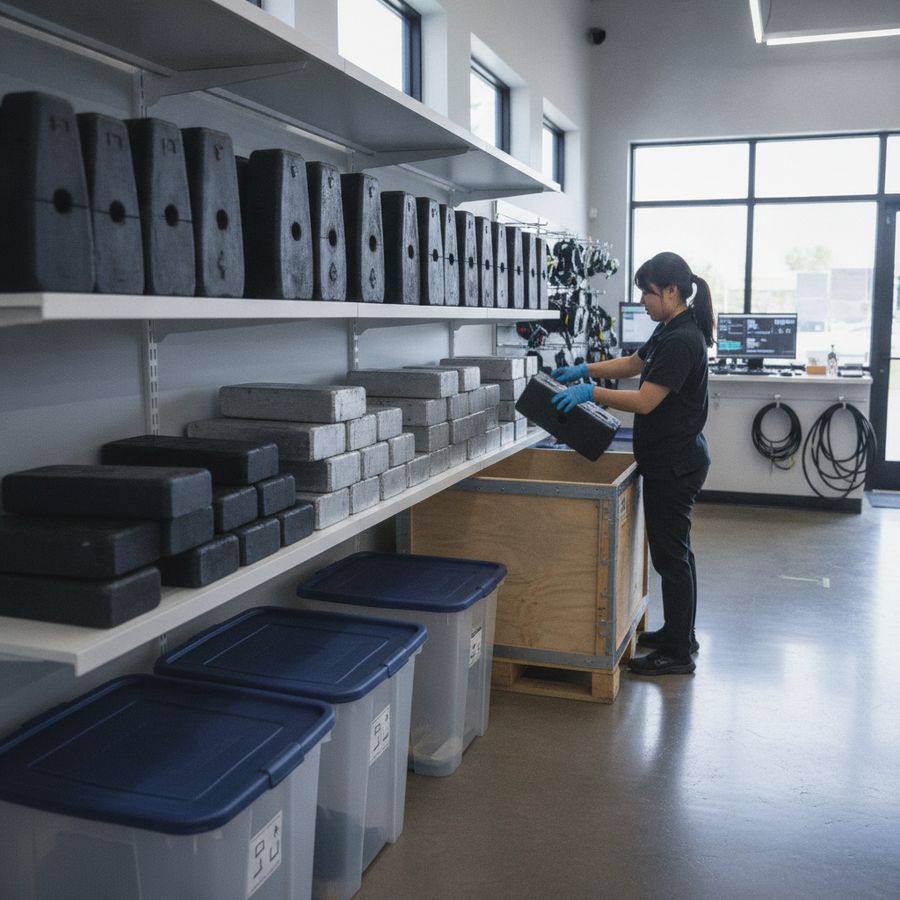
Dry storage and low abrasion are two of the simplest ways to keep dive weights cleaner for longer
Useful storage practices include:
- Dry weights fully before stacking
- Use bins with smooth interiors
- Keep stock off wet floors
- Separate damaged items for inspection
- Rotate older stock forward so it is used first
These steps help protect both uncoated and coated lead blocks. Better storage reduces residue, limits shelf mess, and supports a more organized workflow for busy professional dive operations.

Cleaning protocols for safer lead contact
Cleaning dive weights should be routine, not occasional. A simple protocol reduces residue transfer and supports safer lead handling for employees and customers. In most cases, the goal is not aggressive polishing. It is controlled cleaning that removes salt, dirt, and loose surface contamination without creating unnecessary abrasion.
Start by rinsing weights with fresh water after use, especially after saltwater dives. Let them dry completely before they go back into storage. For periodic maintenance, wipe surfaces with disposable or washable cleaning cloths reserved for this task. Staff who perform bulk cleaning or sorting should wear gloves and wash hands thoroughly afterward. Work surfaces should also be cleaned once the job is done, particularly in rental rooms and classroom areas.
A safe protocol usually looks like this:
- Rinse after use to remove salt and debris
- Dry fully before stacking or boxing
- Wear gloves for large batches or visibly oxidized weights
- Avoid harsh scraping that removes protective layers
- Clean nearby bins, shelves, and counters regularly
If a weight shows heavy residue, flaking surface damage, or a failing coating, remove it from general circulation until it is assessed. Consistent cleaning supports dive weight safety by keeping contact cleaner and preventing small surface problems from becoming a larger operational issue.
Conclusion
For professional dive operations, lead oxidation prevention is a practical maintenance issue with clear benefits. Cleaner weights are easier to handle, easier to store, and more professional to present to customers. They also help reduce residue transfer across hands, gear rooms, shelves, boats, and vehicles. That makes prevention worthwhile even before visible oxidation becomes severe.
The most effective strategy combines several habits rather than relying on one fix. Choose suitable products for the level of use, consider coated lead blocks where cleanliness and appearance matter, train staff on proper lead handling, and make rinsing, drying, and inspection part of the normal workflow. Just as important, improve lead storage so weights spend less time wet, scraped, or packed into poor conditions.
Safer lead contact starts with better routines, not complicated processes
For dive shops, schools, and other professional users, these steps support better dive weight safety every day. A clean, organized weight system protects inventory, supports staff efficiency, and creates a better experience for divers from their first fitting to their final gear return. In short, prevention is simpler and more cost-effective than dealing with avoidable residue, damage, and disorder later.