Overview
Lead oxidation prevention matters for any dive shop, school, or distributor that handles large volumes of diving lead. While lead weights are durable and functional, their surfaces can dull, chalk, or leave residue when exposed to moisture, air, friction, and poor storage conditions. That affects presentation, routine handling, and customer confidence, especially in retail spaces where clean stock supports a professional image.
For B2B buyers, oxidation is not just a cosmetic issue. It can increase cleaning time, create mess on shelves and bins, and raise questions about lead safety among staff and end users. The good news is that most surface damage can be slowed through better product selection, protective coatings, handling rules, and storage discipline.
Clean, well-protected dive weights support safer handling, better merchandising, and longer service life.
Whether you manage new inventory or rental dive weights, the goal is simple: reduce surface exposure, limit abrasion, and keep weights ready for use. In the following sections, we look at what causes oxidation, why coated lead blocks help, and which practical routines keep stock cleaner for longer.

What causes oxidation on diving lead
Oxidation forms when bare lead reacts with oxygen and environmental contaminants over time. In dive operations, that process is accelerated by damp air, salt residue, frequent handling, and repeated impact between weights. Even when the corrosion is only superficial, it can create a dusty or uneven finish that makes stock look older than it is.
Several common conditions speed up the problem:
- Storage in humid rooms or near wet gear
- Saltwater residue left after use
- Weights rubbing together in crates, bins, or boats
- Skin oils and moisture from repeated handling
- Poor ventilation and long periods without inspection
Diving lead used in training centers and rental programs is especially vulnerable because turnover is high and equipment is often returned wet. Uncoated blocks can also transfer grey marks to shelves, gloves, bags, and vehicle interiors.
Oxidation is usually a surface issue first, but neglect turns a manageable condition into a recurring operational nuisance.
Understanding the causes makes lead oxidation prevention far easier. Once you control moisture, friction, and exposure time, shelf cleanliness and weight appearance improve noticeably.
Coatings that keep shelves cleaner
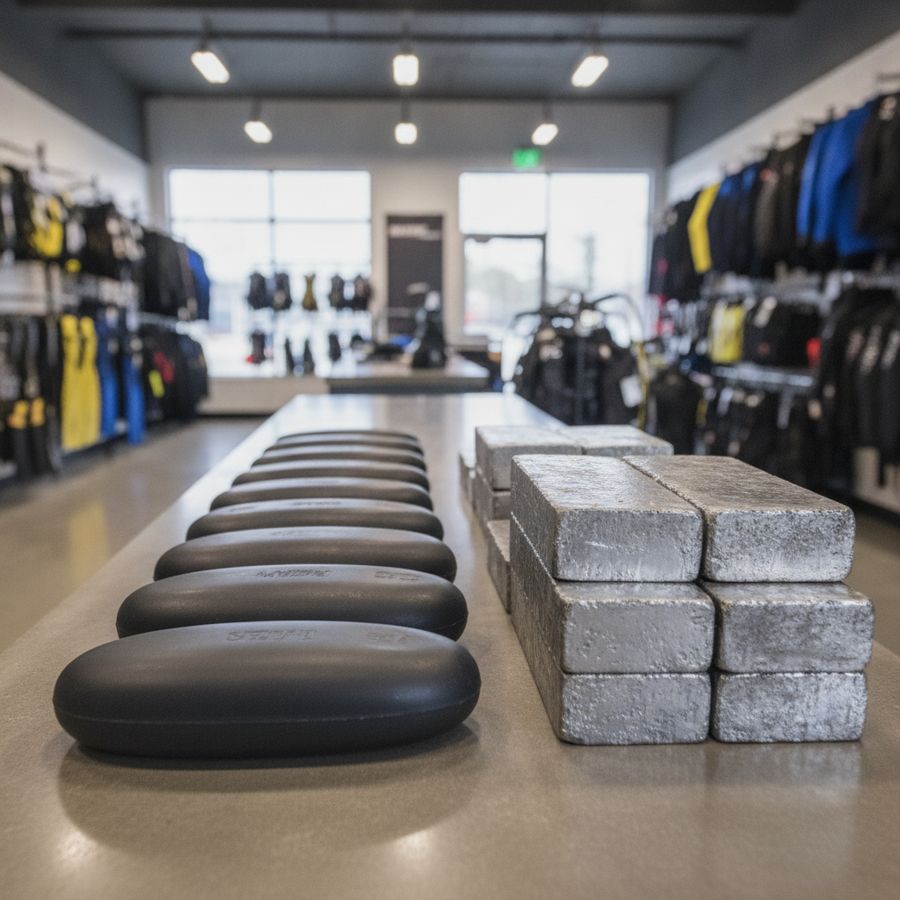
One of the most effective ways to reduce visible oxidation is to choose coated lead blocks instead of bare cast weights for retail and rental use. A protective finish creates a barrier between the lead surface and the surrounding air, moisture, and routine contact. That helps keep shelves, storage bins, and hands cleaner while also improving the overall presentation of the product.
For professional buyers, coatings deliver practical advantages beyond appearance. They reduce the chalky residue often associated with unprotected weights and can help limit minor surface damage caused by transport and stacking. In busy shops, that means less wiping, fewer marked displays, and a more polished customer experience.
Useful coating benefits include:
- Cleaner stock presentation
- Less residue on shelves and packaging
- Lower day-to-day maintenance time
- Better durability during repeated handling
Lead safety procedures still matter, but protective finishes make those procedures easier to manage in daily operations. For suppliers and schools that want dependable, professional-looking inventory, coated products are often the simplest upgrade with the most visible impact.
Safe handling for staff and customers
Good lead safety starts with clear handling habits. Although dive weights are everyday equipment in the industry, staff should treat them as specialist products that require clean storage, sensible contact procedures, and routine hygiene. This is especially important in stores, training centers, and rental counters where multiple people may touch the same weights throughout the day.
Practical handling standards should include washing hands after contact, avoiding food preparation areas, and limiting unnecessary direct handling of uncoated pieces. Staff who sort or clean large quantities may also use work gloves to reduce residue transfer and improve grip when lifting heavier blocks.
Simple handling rules protect people, reduce mess, and help maintain a professional dive operation.
Customer-facing environments benefit from consistency. Keep weights arranged by size, prevent them from sitting in puddles or mixed debris, and provide clean baskets or containers for issue and return. If a product shows excessive residue or a damaged surface, remove it from display until it is cleaned or replaced.
These steps support lead oxidation prevention while reinforcing confidence in your equipment standards, especially for first-time buyers and rental customers.
Storage methods that slow surface damage
Storage plays a major role in how fast diving lead oxidizes. Even high-quality weights can deteriorate in appearance when kept in damp, salty, or poorly organized conditions. The goal is to reduce moisture exposure and avoid constant friction between individual pieces.
For best results, store weights in a dry, ventilated area away from direct standing water and away from gear that remains wet after dives. Use bins, racks, or shelves that keep products separated by type and size. If stock arrives wet from a boat or training session, allow it to dry fully before returning it to enclosed storage.
- Use stackable trays or compartments to limit rubbing
- Keep bare and coated products separated
- Avoid long-term storage on damp floors
- Rotate older stock forward for faster turnover
- Inspect rental returns before re-binning
These methods are especially valuable for rental dive weights, which move through frequent wet-dry cycles. Better storage not only slows oxidation but also reduces scuffing, shelf residue, and unnecessary replacement costs over time.

When oxidation becomes a sales problem
Oxidation becomes a sales issue when customers stop seeing a weight as durable equipment and start seeing it as old stock. In retail settings, appearance strongly influences trust. A dull, dusty, or marked surface can make even fully usable diving lead look neglected, which affects buying decisions and perceived value.
This matters even more for B2B resellers and dive schools. Shelf residue, inconsistent finishes, and visible surface chalk can create extra objections during product selection. Staff then spend more time explaining condition, cleaning displays, or discounting inventory that should have sold at normal margin.
Customers often judge product quality before they ever lift the weight.
Common warning signs include repeated complaints about dirty handling, weights that make displays look untidy, and rental stock that photographs poorly for online catalogues or partner sales materials. At that stage, oxidation is no longer just a maintenance concern; it is affecting presentation, conversion, and brand perception.
Investing in coated lead blocks, cleaner storage, and better inspection routines helps prevent this problem early. Professional presentation supports confidence, especially when buyers compare suppliers on reliability as well as price.
Maintenance routines for rental fleets
Rental dive weights need structured maintenance because they face the hardest operating conditions: salt exposure, repetitive handling, transport abrasion, and fast turnaround between users. Without a routine, oxidation and residue build up gradually until cleaning becomes time-consuming and fleet quality becomes inconsistent.
A simple maintenance system should happen after every return and as part of a weekly deeper check. Daily tasks focus on rinsing, drying, and sorting. Weekly tasks focus on inspection, cleaning, and removing problem units from circulation.
- Rinse returned weights to remove salt and grit
- Dry them completely before storage
- Check coatings for chips or worn areas
- Separate damaged pieces for review
- Wipe storage bins and shelving regularly
For uncoated stock, consistency is especially important because moisture left in crates or vehicle boxes will accelerate surface dulling. For coated stock, maintenance protects the finish and extends its visual lifespan.
Strong routines improve lead oxidation prevention, reduce replacement frequency, and help ensure that every customer receives weights that look clean, organized, and ready for safe use.
Conclusion
Preventing oxidation on dive weights is not about one single fix. It is the result of better product choices, better storage, and better day-to-day discipline. When dive businesses combine protective finishes, dry storage, and clear handling procedures, they reduce mess, improve appearance, and support stronger lead safety standards.
For professional operators, the value is clear. Clean shelves save staff time. Well-kept stock inspires more confidence. Durable, presentable diving lead also holds up better in rental fleets and busy training environments where equipment is constantly moving.
Lead oxidation prevention protects both product condition and the professional image around it.
If your goal is to keep inventory cleaner for longer, start with the basics: reduce moisture, limit friction, inspect weights routinely, and choose coated lead blocks where appearance and handling matter most. These steps are practical, scalable, and easy to implement across retail, training, and rental settings.
In short, smart prevention helps dive businesses get more from every weight they stock, sell, and issue.