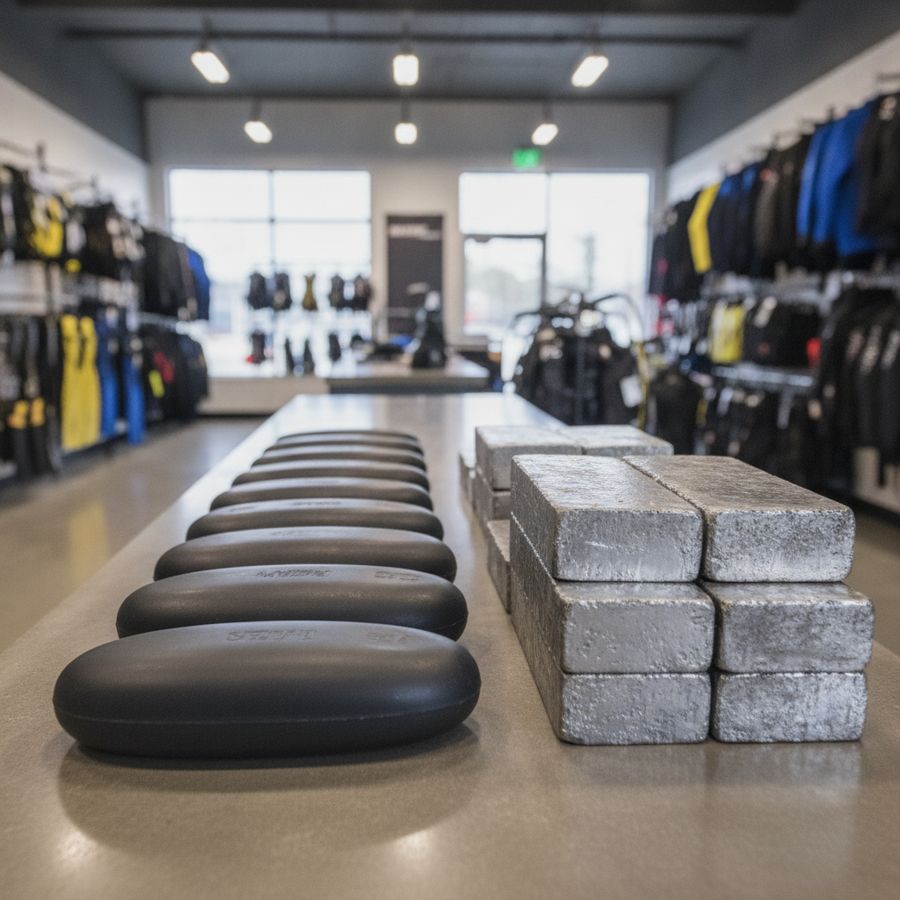
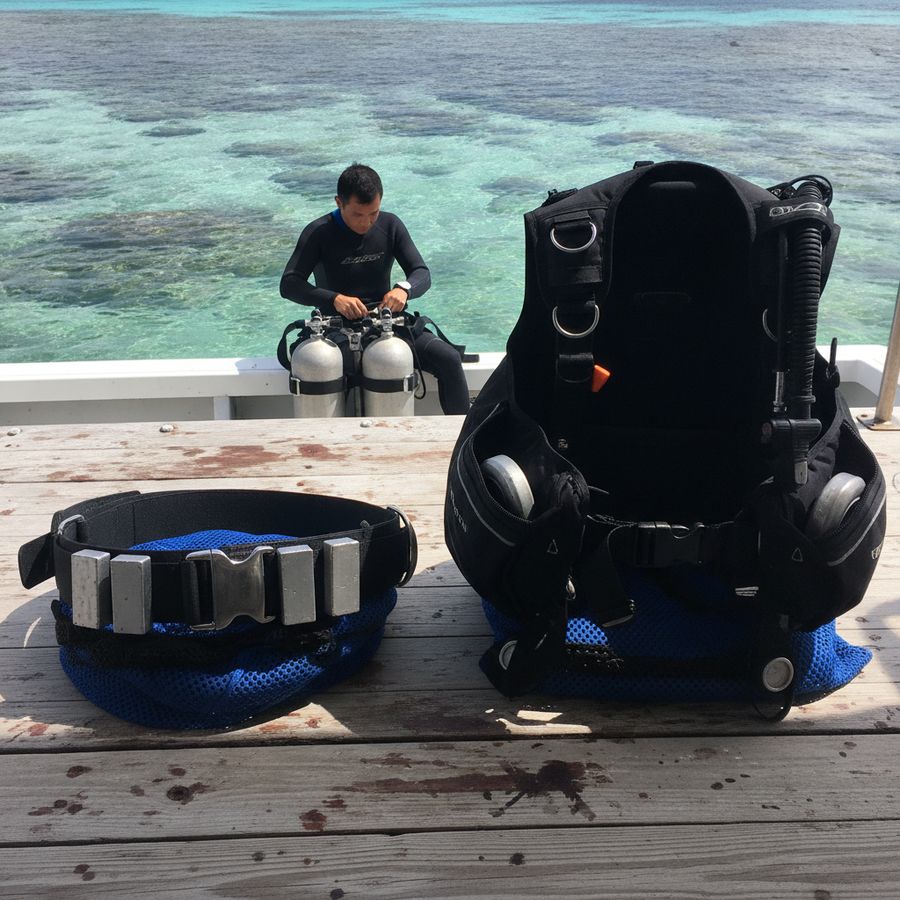
Harness geometry shapes block compatibility
When divers compare Mares Horizon setups with XDeep accessories, the first issue is usually not the lead itself but the harness geometry around the torso and hips. The Mares Horizon uses a hybrid recreational and technical layout, while many XDeep-inspired weighting options were designed around minimalist sidemount harness spacing. That difference affects where weight can sit without creating pressure points, shifting trim, or interfering with hose routing.
In practice, weight compatibility depends on three dimensions: harness webbing width, spacing between attachment points, and the available flat surface along the waistband or spine area. A hard block that fits neatly on one system can protrude too far on another, especially if the harness curves sharply around the hips. With the Mares Horizon, even small changes in cylinder position or chest strap tension can alter how comfortably a block rests against the diver.
Good compatibility is less about total kilos and more about how the harness holds those kilos in a stable, low-profile position
Before choosing between blocks and sidemount weights, assess the harness shape while fully assembled. Look at:
- how much straight webbing is available
- whether buckles or D-rings interrupt weight placement
- how closely the system hugs the body when inflated and deflated
- whether the weight remains easy to remove in an emergency
This geometry-first approach helps divers avoid forcing a standard weight solution into a harness that was never meant to carry it that way.
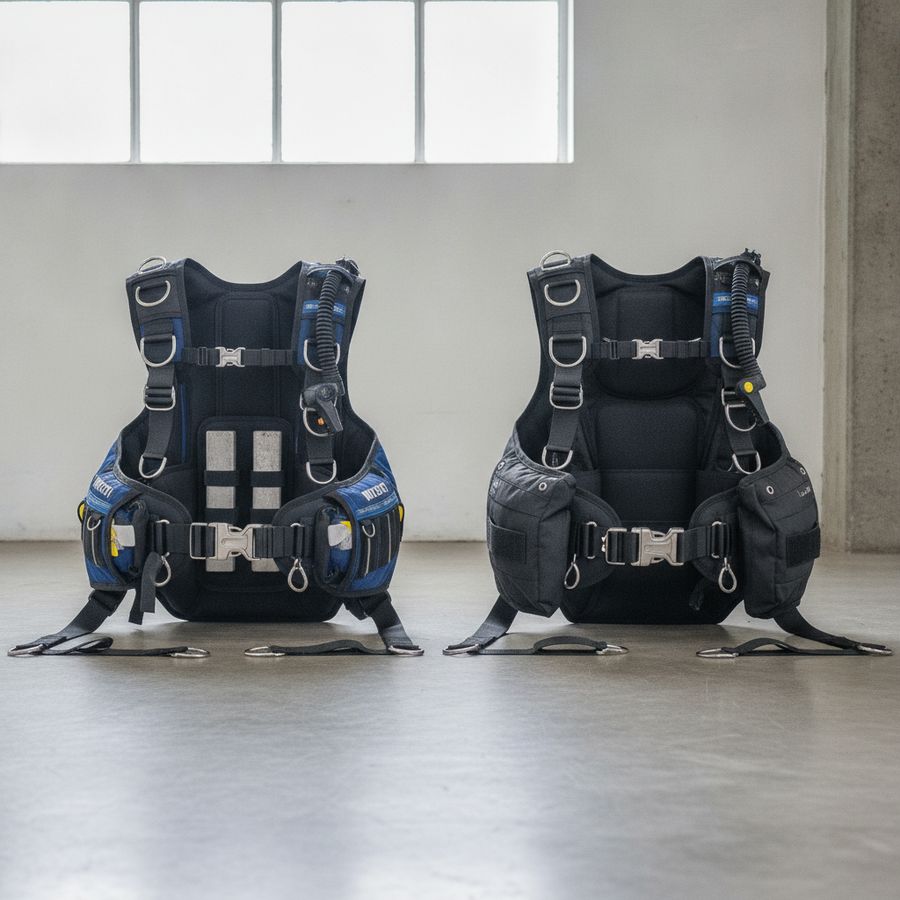
How hard blocks integrate with sidemount systems
Hard lead blocks can work well with sidemount-style configurations, but they require a more deliberate fit than flexible pouches. In an XDeep environment, rigid blocks are often appreciated for their repeatability: once the diver finds a working position, the lead sits consistently dive after dive. That can make trim tuning easier, especially for divers who want a precise, symmetrical feel.
On a Mares Horizon harness, however, the integration of hard blocks depends on mounting method and profile. A coated block with clean edges is typically easier to manage than a raw, bulky shape because it reduces abrasion and sits more neatly against webbing or a dedicated pocket. Compact technical blocks are often preferred where space is limited, since oversized pieces can push cylinders outward or create discomfort along the ribs and lower back.
The main advantage of hard blocks is structural stability, but the trade-off is reduced flexibility. If the harness bends around the diver’s body, a rigid piece may rotate or create a hotspot. That matters most when the diver uses hybrid gear for both open-water recreation and more technical trim goals.
Rigid lead performs best when the harness provides a clear, stable mounting zone rather than a curved or crowded one
For divers evaluating weight compatibility, hard blocks usually make sense when they can be mounted:
- close to the center of gravity
- without overlapping bolt snaps or bungees
- in equal positions on both sides
- without restricting access to dump valves or clips
If those conditions are not met, softer formats may offer a cleaner solution.
Which weight formats suit hybrid configurations?
Hybrid configurations blend features from recreational, rebreather-influenced, and sidemount systems, so there is rarely one universal answer for ballast. The best format depends on whether the diver prioritizes streamlining, adjustability, or modularity. In many cases, the smartest approach is combining more than one type of lead rather than forcing all ballast into a single location.
For example, compact hard blocks are useful when a diver wants predictable trim and a fixed setup. They are often chosen for repeat dives in similar exposure protection. By contrast, soft lead is better when the harness has irregular spaces, when comfort matters over long dives, or when small trim corrections are needed without changing the overall layout. The Mares Horizon can benefit from this flexibility because its shape may leave narrow gaps that cannot accept a standard block cleanly.
Many divers using XDeep-style principles prefer to separate ballast into primary and fine-tuning categories. That makes adjustment easier as conditions change between pool practice, warm water, and thicker thermal protection.
- Hard blocks: best for repeatable placement and clean symmetry
- Tech blocks: useful where compact dimensions matter
- Soft lead pouches: ideal for curved spaces and comfort
- Belt-based weight: practical for overflow ballast but less streamlined
The most efficient hybrid setup is usually the one that lets each weight format do a specific job
Thinking in terms of function rather than tradition leads to better sidemount weights distribution and more consistent in-water balance.
What clearance issues appear around attachment points?
Clearance problems are among the most common reasons a theoretically compatible weighting option fails in real use. On paper, a block may fit the harness width, yet still interfere with hardware once the diver clips cylinders, routes hoses, and tightens the system. This is especially relevant when comparing the Mares Horizon to minimalist technical harness concepts, because the hybrid layout can place more components in the same working area.
The highest-risk zones are usually near waist D-rings, lower attachment points, rear bungees, and inflator hose paths. A weight that sits too close to a clip point can prevent smooth cylinder attachment or create constant rubbing against bolt snaps. Even a few centimeters of extra thickness can reduce hand access when the diver needs to unclip or reposition equipment underwater.
Clearance also changes with exposure suit bulk. A setup that feels acceptable in a rash vest may become cramped in a drysuit. That is why weight compatibility should never be judged on the floor alone; it must be checked under realistic dive conditions with full kit tension.
If a diver cannot reach, clip, or release an attachment point naturally, the weight placement is not truly compatible
During setup, verify that weights do not:
- block D-rings or lower rails
- press into clips during cylinder movement
- trap hose loops against the body
- shift toward crotch strap or buckle hardware
- compromise emergency doffing or removal
Small clearance conflicts often become major irritation points underwater, so precise spacing matters more than many divers expect.
Soft lead options for compact weight placement
When space is limited, soft lead is often the most forgiving solution. Unlike rigid blocks, soft pouches can conform to the harness shape and sit in places where hard edges would dig into the diver or interfere with movement. For divers trying to balance a Mares Horizon system using XDeep-style placement logic, that flexibility can be the difference between a clean profile and a bulky, awkward one.
Compact soft pouches are particularly useful for filling narrow ballast zones along the waist, back, or trim pockets. Because the lead can settle into a curved space, the diver often gains a lower-profile fit with fewer pressure points. That matters on longer dives and in configurations where sidemount cylinders already occupy much of the diver’s side profile.
Another practical advantage is incremental adjustment. Instead of moving a large fixed block, the diver can add or subtract small amounts to fine-tune trim. Suppliers that focus specifically on diving lead, including in-house producers of soft pouches, make this format appealing because sizes and finishing can be optimized for real diving use rather than generic ballast applications.
Soft lead excels where the harness offers usable volume but not a perfectly flat mounting surface
Good use cases for sidemount weights in soft format include:
- fine trim corrections near the torso
- comfort-focused ballast in curved harness areas
- compact placement beside existing hardware
- hybrid systems that need frequent seasonal adjustment
For many divers, soft pouches are not a compromise. They are the most practical route to reliable weight compatibility in a compact setup.
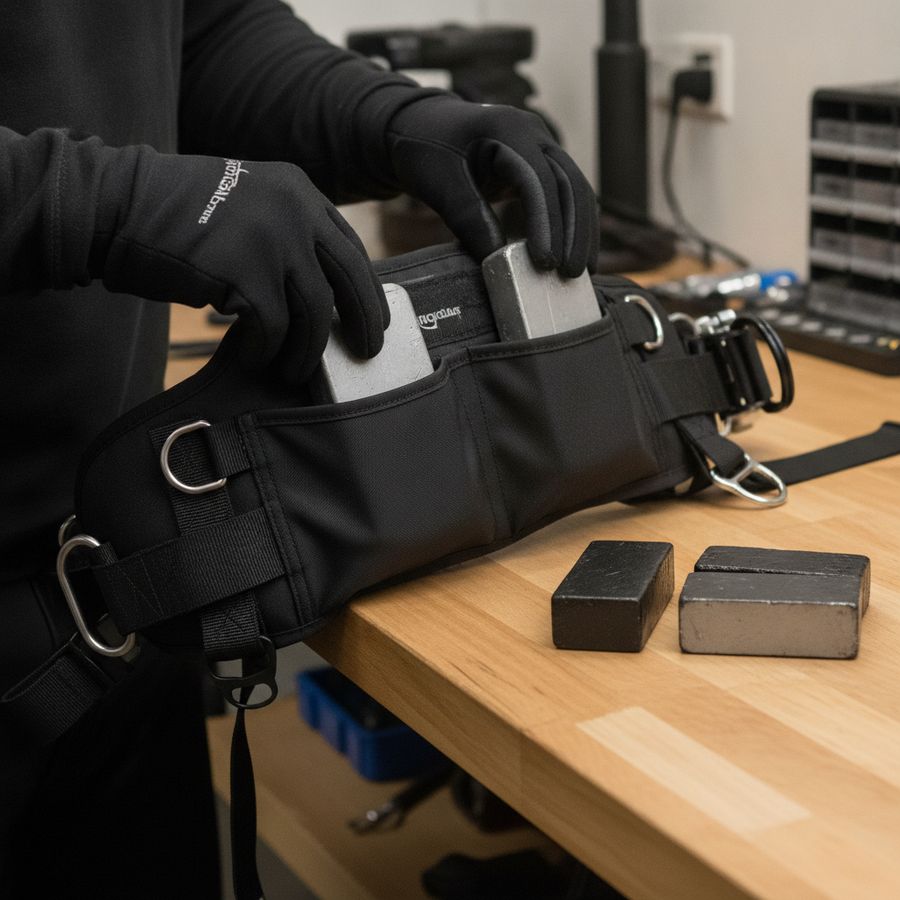
Fit checks before pool or open-water use
Any weighting plan should be tested methodically before the first real dive. A setup that appears balanced on land may behave differently once cylinders become buoyant, the wing changes volume, and the diver shifts through trim positions. For both Mares Horizon and XDeep-influenced configurations, a structured fit check reduces surprises and helps confirm whether the chosen lead format is actually working.
Start dry. Put the full harness on with exposure suit, cylinders, and all accessories attached. Confirm that every weight is secure, comfortable, and reachable if removal is required. Then simulate normal movement: clipping cylinders, reaching valves, looking over each shoulder, and switching between upright and horizontal posture. If any motion feels restricted, revisit placement before entering the water.
In the pool or confined water, assess not only buoyancy but also body angle. A system may be neutral yet still be trim-heavy at the hips or shoulders. Make small changes and test again. Rushing straight to open water with unproven sidemount weights often creates unnecessary task loading.
- check symmetry left to right
- confirm clips and D-rings remain clear
- verify no pressure points after several minutes
- test horizontal trim with normal breathing
- practice emergency removal if applicable
Final compatibility is proven in motion, not in the gear room
A careful pre-dive process turns theoretical weight compatibility into a reliable, repeatable configuration that feels natural in the water.