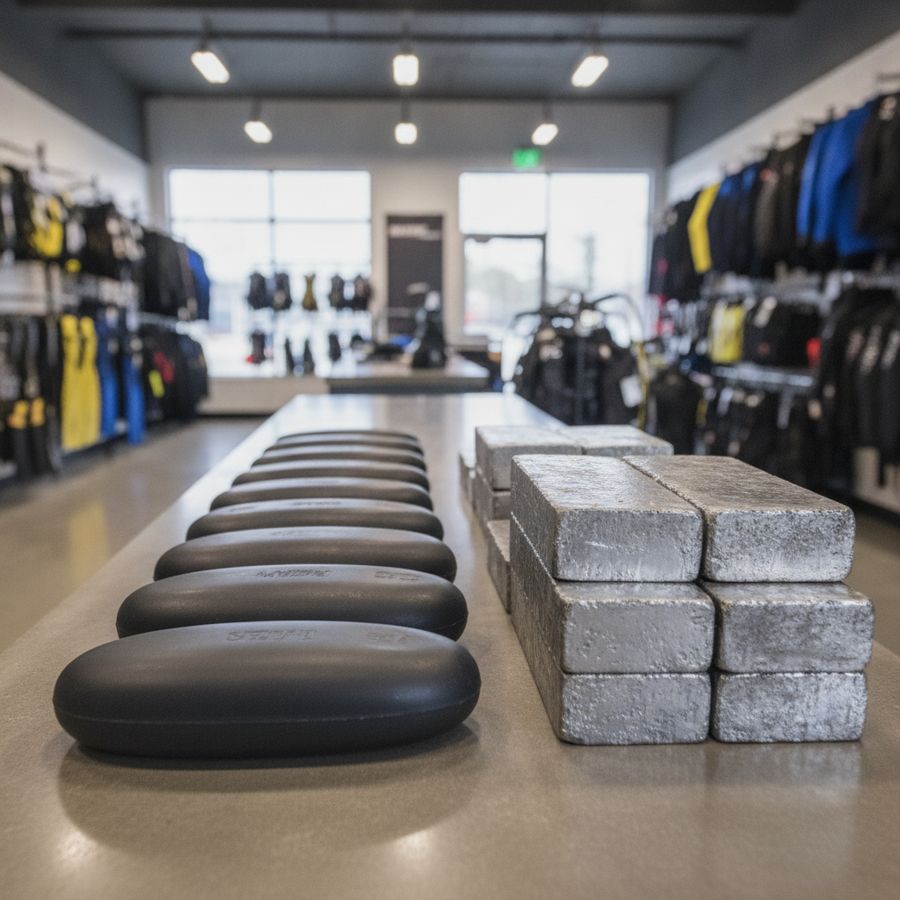
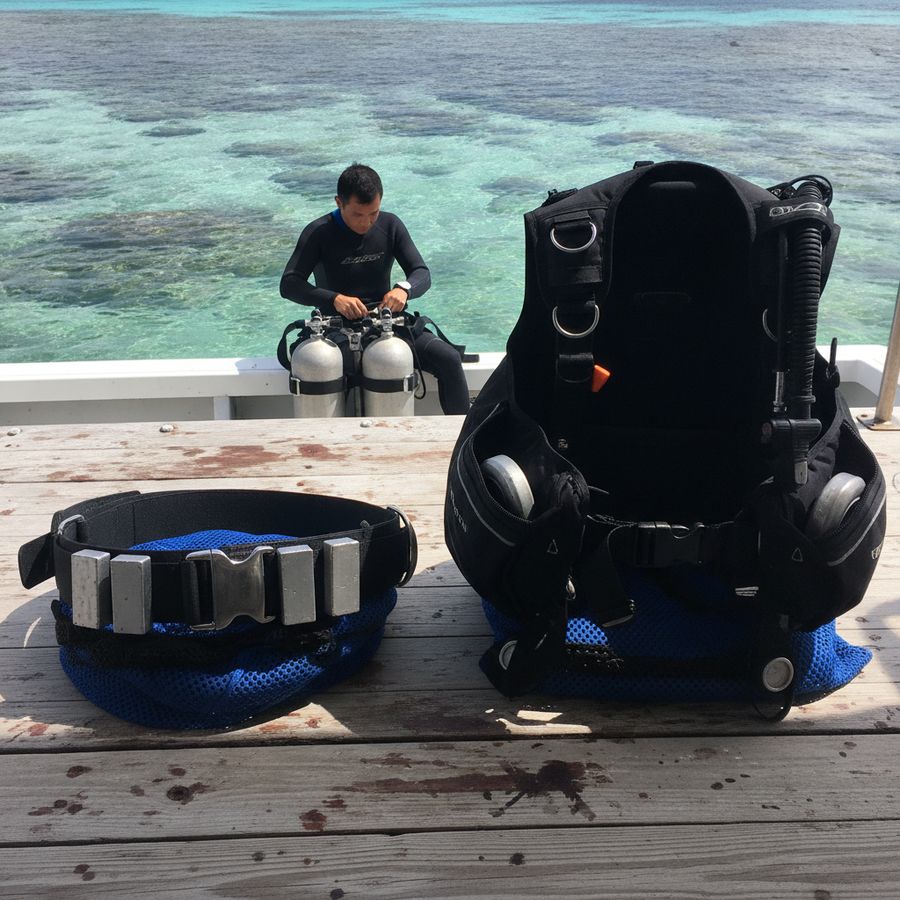
Overview
Nickel-plated soft lead is popular with dive shops, schools, and professional operators because it combines the flexibility of soft lead with a cleaner, more polished outer finish. The plating helps reduce visible staining and slows the reaction that leads to dull, chalky surfaces. Even so, no plated diving weight is completely maintenance-free. Regular dive weight care is still essential if you want products to stay presentable on the shelf and reliable in daily use.
For businesses that handle large volumes of weights, appearance matters almost as much as performance. Customers notice when pouches look clean, uniform, and well maintained. A simple care routine protects stock, lowers replacement frequency, and supports safer handling by staff.
Good maintenance does not just preserve looks; it extends usable life and helps prevent unnecessary lead oxidation
In this guide, we cover the practical steps that help prevent lead oxidation, reduce scuffs, and improve lead weight storage. From cleaning methods to replacement timing, these recommendations are designed for busy dive operations that need dependable, professional-grade handling of soft lead products.
Why nickel-plated soft lead needs routine care
Nickel plating gives soft lead a protective outer layer, but daily wear gradually challenges that barrier. Weights are picked up with wet hands, stacked in bins, transported in vehicles, and exposed to sand, salt, and changing temperatures. Over time, those routine conditions can scratch the surface or allow moisture to linger in seams and folds. Once the finish is compromised, the risk of lead oxidation increases.
Routine care keeps small problems from becoming visible damage. A quick inspection after use, light cleaning, and proper drying can preserve the plated finish and reduce residue transfer onto hands, gear, and storage shelves. For dive shops, that means stock remains more attractive and easier to sell or rent.
There is also a practical inventory benefit. Well-maintained nickel-plated soft lead tends to stay cleaner in mixed storage, making weight markings easier to identify and daily handling faster for staff.
- Less visible dulling and discoloration
- Lower risk of surface abrasion turning into corrosion points
- Cleaner presentation for retail and rental environments
In short, routine dive weight care protects both the product and the professionalism of the operation using it.
Common causes of lead oxidation in storage
The most common storage-related cause of lead oxidation is trapped moisture. Even after a short day of diving, weights may be returned to shelves while still damp with freshwater or saltwater residue. If they are packed tightly into closed containers without airflow, that moisture stays on the surface and can slowly attack weak points in the plating.
Another major factor is contact damage. When nickel-plated soft lead is thrown into hard plastic bins with buckles, metal tools, or loose hardware, the plated layer can be scratched. These scratches expose vulnerable spots where oxidation can begin more quickly. Dust, grit, and salt crystals can make the problem worse by acting like abrasives during handling.
Oxidation often starts in ordinary storage conditions, not during the dive itself
Poor stock rotation also contributes. Older weights kept at the bottom of a stack may remain compressed, dirty, and untouched for long periods. To reduce damage, avoid these storage mistakes:
- Storing wet weights in sealed containers
- Mixing weights with sharp or abrasive gear
- Keeping stock in humid, poorly ventilated rooms
- Ignoring regular inspection and rotation
Good lead weight storage begins with dryness, separation, and consistency.
Cleaning methods for soft lead pouches
Cleaning soft lead pouches should be simple and gentle. In most cases, a wipe-down with a soft cloth and mild soap solution is enough to remove salt residue, dust, and handling marks. Avoid aggressive scrubbing pads, wire brushes, or harsh chemicals, as these can scratch or dull the nickel-plated finish. After cleaning, rinse lightly with clean water if needed and dry the pouch thoroughly before returning it to storage.
For dive shops processing multiple weights, it helps to create a standard routine after rental or training use. Staff can inspect each pouch while cleaning, looking for cuts, worn seams, exposed lead, or patches where the plated surface has broken down.
- Use a soft microfiber or non-abrasive cloth
- Choose mild soap with no strong solvents
- Dry every pouch fully, including stitched edges
- Separate damaged items for further inspection
When stains do not lift easily, resist the urge to use stronger cleaners immediately. The safest approach in dive weight care is to start mild and protect the finish first.
A clean plated surface is easier to inspect, easier to handle, and less likely to hide early wear

Handling guidelines for dive shop staff
Staff handling practices have a direct effect on how long nickel-plated soft lead stays in good condition. Weights should be lifted and placed carefully rather than dropped into crates or onto tiled floors. Repeated impact damages outer finishes, weakens pouch stitching, and creates small deformations that make future storage less organized.
It is also smart to train staff to work with dry or rinsed hands whenever possible. Salt, sunscreen, and sand transferred from other gear can build up on the surface of weights and accelerate wear. During intake, sorting, and shelving, a few consistent habits make a big difference over time.
- Place weights gently into designated bins
- Keep plated weights separate from sharp buckles and tools
- Check for moisture before long-term shelving
- Report split pouches or worn plating immediately
For high-volume shops, labeling a cleaning and inspection area can streamline this process. That supports better lead weight storage and lowers the number of damaged pieces cycling back into customer use.
Careful handling is one of the cheapest and most effective ways to prevent avoidable surface damage
Simple staff routines protect inventory quality while keeping the rental or retail area looking professional.
Storage conditions that reduce surface damage
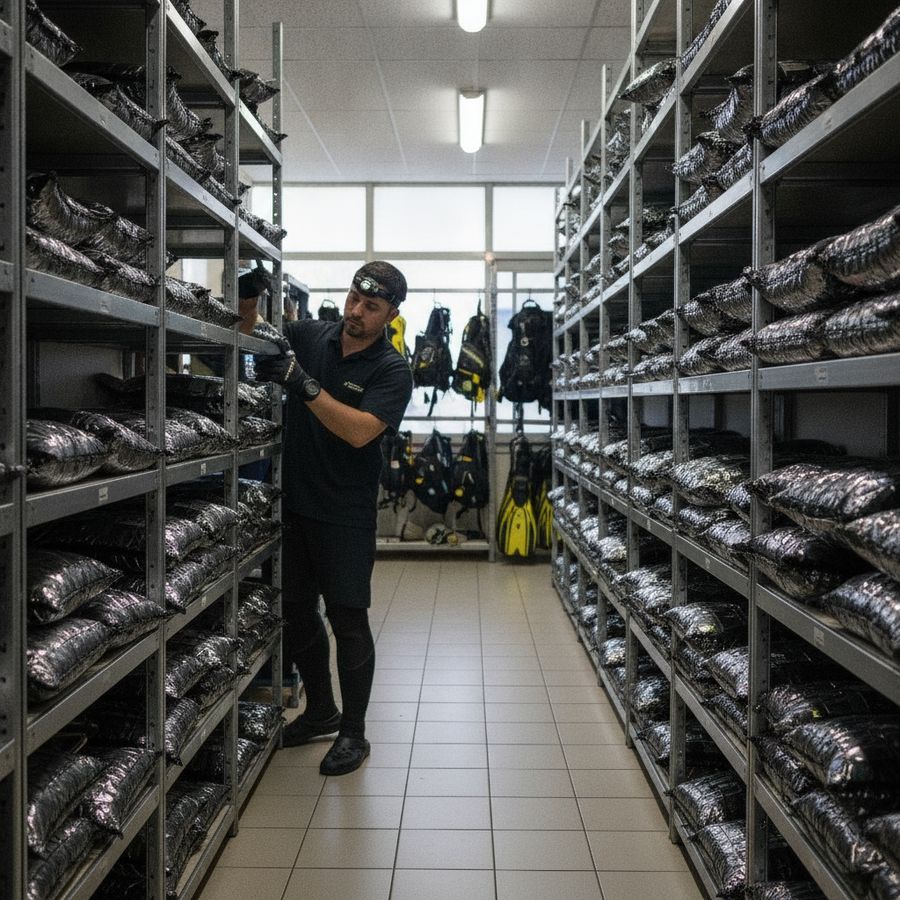
The best lead weight storage conditions are dry, stable, and organized. Store weights in a well-ventilated area away from standing water, damp floors, and extreme temperature swings. Humidity alone can gradually affect surfaces, especially when combined with residual salt. Shelving that allows airflow is usually better than sealed boxes for weights that have recently been cleaned or returned from use.
Use bins or compartments that prevent weights from sliding into one another. Padding is not always necessary, but separation helps reduce rubbing and chipping during daily movement. Heavy stock should not be piled so high that lower items remain under constant pressure for months.
If your operation manages many sizes, sort by weight and rotation date. This makes inspection easier and ensures older stock does not sit untouched until visible lead oxidation has already developed.
- Keep storage rooms clean and low in humidity
- Allow newly cleaned weights to dry fully before stacking
- Separate plated products from metal hardware
- Rotate older stock forward for regular use
Thoughtful storage protects the finish, improves presentation, and supports long-term dive weight care without adding much labor.
When to replace worn plated weights
Even with excellent maintenance, every plated weight eventually reaches a point where replacement is the better option. If the nickel finish is heavily scratched, flaking, or worn through in multiple areas, the underlying material becomes more exposed to moisture and handling damage. That can lead to faster lead oxidation, a less professional appearance, and more residue on hands or shelves.
Replacement is also advisable when the pouch itself is compromised. Split stitching, punctures, misshapen filling, or visible leakage are clear signs that the item should be removed from service. For rental fleets and dive schools, continuing to use badly worn weights can create unnecessary complaints and more time spent cleaning around a declining product.
Replace weights when maintenance stops restoring safe, clean, dependable condition
A practical replacement checklist includes:
- Exposed lead in several places
- Persistent corrosion or discoloration after cleaning
- Damaged seams or leaking pouch material
- Deformation that affects stacking or handling
Planned replacement keeps your soft lead inventory consistent and presentable. It also helps maintain the standard customers expect from a specialist dive operation.
Conclusion
Preventing oxidation in nickel-plated soft lead does not require complicated procedures. The most effective steps are also the simplest: clean gently, dry completely, handle carefully, and store weights in stable conditions. When these habits become part of daily operations, they significantly reduce visible wear and slow the development of lead oxidation.
For dive shops, schools, and other professional users, consistent dive weight care supports more than product longevity. It improves shelf appearance, keeps staff handling cleaner, and reduces avoidable replacement costs. Well-kept weights also reflect positively on the overall quality of the business.
Just as important, regular checks help identify items that are no longer suitable for continued use. Replacing worn pouches before they deteriorate further protects the rest of your stock and keeps lead weight storage areas cleaner and easier to manage.
Routine care turns plated weights from a maintenance concern into a dependable long-term asset
With a clear system for cleaning, handling, storage, and replacement, professional operators can keep soft lead products looking better for longer while maintaining a clean, reliable inventory.