Overview
Weight distribution is one of the most overlooked parts of comfortable diving. Many divers focus only on how many kilos or pounds they need, but where those diving weights sit on the body is just as important. Good scuba trim helps you stay balanced, maintain a horizontal position, and move through the water with less effort.
When your weighting is set up well, buoyancy control becomes easier because your body naturally settles into a stable posture. Instead of constantly finning to stay level or fighting to keep your torso from tipping, you can hold depth with smaller corrections and better breathing control. That translates into a calmer, more efficient dive.
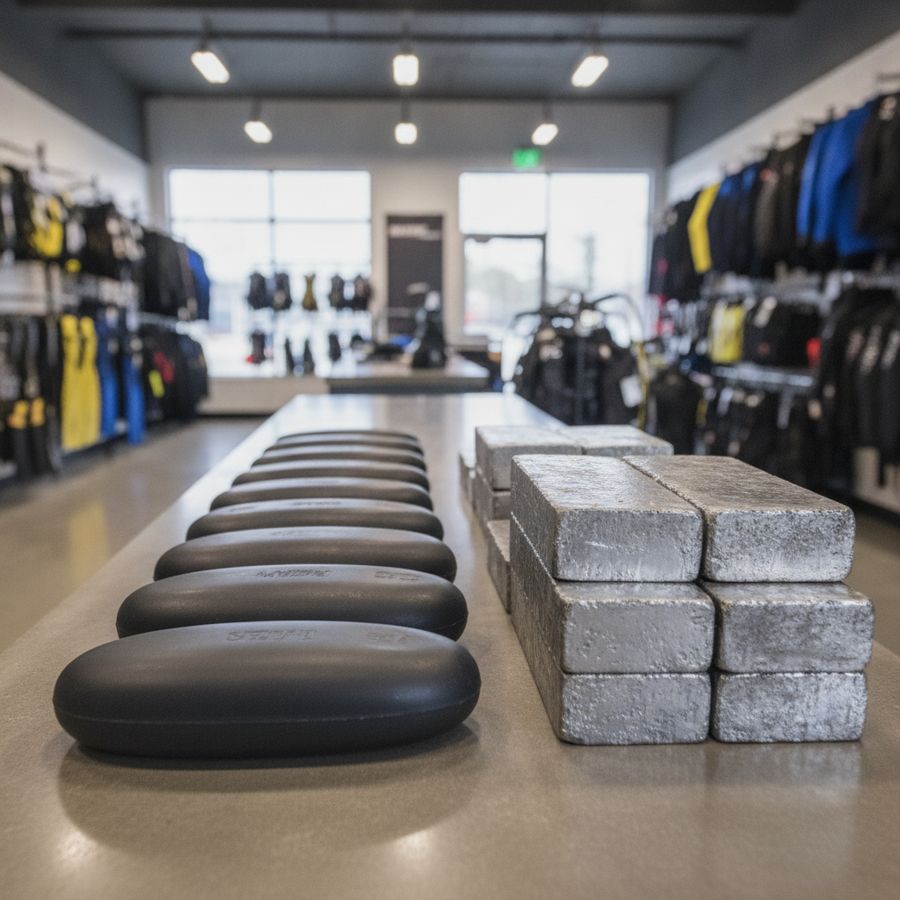
Divers can spread weight across a belt, integrated pockets, tank bands, backplates, or dedicated trim weights. The right setup depends on exposure suit, cylinder type, body shape, and personal comfort. A balanced system is rarely about adding more lead. It is usually about placing the same amount of lead more intelligently.
Proper scuba trim is not about looking technical — it is about reducing effort, improving stability, and making buoyancy control far more precise
Whether you dive in a warm-water wetsuit or a drysuit in colder conditions, fine-tuning weight distribution is one of the fastest ways to improve overall diving performance.

How trim affects buoyancy and air consumption
Scuba trim and buoyancy control are closely connected. If your body is angled head-up or feet-down, your lungs, BCD, and exposure suit distribute air unevenly. That often causes instability in the water, making it harder to hold a consistent depth. Even small trim problems can create a cycle of overcorrection with your inflator, dump valves, and fins.
Good trim keeps your body streamlined and your center of gravity aligned with your center of buoyancy. In a horizontal position, drag is reduced and fin kicks become more efficient. You glide instead of pushing water. That matters on every dive, especially when swimming against current or covering longer distances.
Poor trim also affects breathing. Divers who are working harder to stay balanced often breathe faster and less deeply, which can increase gas consumption. By improving weight distribution, many divers notice that air use drops without changing anything else in their equipment.
- Less drag in the water
- Fewer buoyancy corrections
- Reduced leg and lower-back fatigue
- Better gas efficiency over the whole dive
In simple terms, balanced trim supports calmer movement, steadier depth control, and more efficient breathing — three essentials for better diving.
Weight placement: belt vs pockets vs backplate
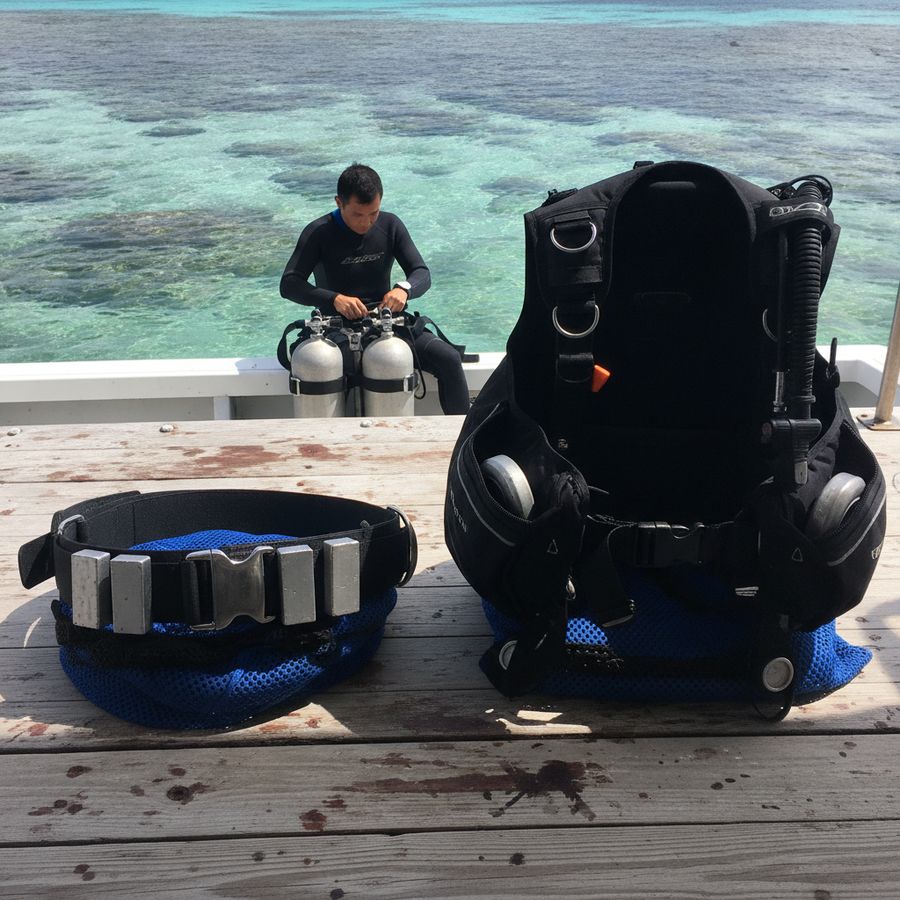
Where you place diving weights has a direct impact on comfort and in-water balance. A traditional weight belt is simple, affordable, and easy to adjust. It places lead low on the body, which works well for many recreational divers, but too much belt weight can pull the hips downward and create a feet-heavy position.
Integrated pockets in a BCD spread weight more comfortably and reduce pressure on the lower back. They also make entries and exits easier for some divers because the load feels more secure. However, depending on pocket position, they can shift the center of gravity slightly higher than a belt would.
A backplate-and-wing system places some weight on the torso itself through the metal plate, and additional trim weights can be mounted near the tank bands. This setup can help bring the body into a flatter position in the water, especially for divers carrying steel cylinders or using a technical-style configuration.
The best choice depends on your body and gear, not on trends. Consider these typical effects:
- Weight belt: simple, flexible, but can pull the lower body down
- Integrated pockets: comfortable and clean, but may need trim adjustment elsewhere
- Backplate: stable and balanced, especially useful for refined trim setups
Often, the best solution is a thoughtful combination rather than one single location.
Fixing feet-heavy and head-heavy trim problems
A diver who is feet-heavy usually feels the legs sinking below the rest of the body. This can come from heavy fins, too much weight low on the waist, or air trapped in the feet of a drysuit. The result is extra effort, poor propulsion, and a constant struggle to stay horizontal.
To correct a feet-heavy position, shift some weight distribution upward. Moving part of your lead from a belt to upper trim pockets or a tank band can help. In some cases, switching to lighter fins or adjusting body posture solves more than adding or removing lead. For drysuit divers, improving gas management in the suit is often essential.
A head-heavy trim problem is less common but still frustrating. It may happen when too much weight is mounted too high on the tank, or if the torso is overloaded compared with the lower body. This can force a diver into a nose-down angle that affects comfort and control.
Before adding more lead, change one variable at a time and test the result in shallow water
Small changes usually work best. Move one or two kilos at a time, reassess your trim, and avoid making multiple gear changes at once. Precision matters more than large corrections.
Using trim weights for stable horizontal position
Trim weights are designed to fine-tune balance, not replace a proper weighting check. Their main purpose is to move a small amount of lead to a more effective position so the body stays flat and stable underwater. For many divers, this is the missing step between being neutrally buoyant and being truly comfortable.
Common trim weight locations include tank-band pockets, camband pouches, upper-back pockets, or small fixed pockets on certain BCDs and harness systems. By placing just a little weight higher on the body, you can often stop the legs from dropping and create a better horizontal profile.
This matters for more than appearance. A stable position improves finning efficiency, protects the seabed from accidental contact, and makes hovering easier during safety stops. It also reduces the need to scull with the hands or constantly adjust with the inflator.
- Use trim weights for fine adjustment, not major ballast needs
- Start with small increments
- Test changes with normal tank pressure and full exposure suit
- Reassess after switching cylinders or travel gear
Well-placed diving weights support a relaxed, controlled posture that makes every part of the dive feel smoother.

Wetsuit vs drysuit: balancing changes by exposure suit
Your exposure suit has a major effect on scuba trim and overall buoyancy control. A wetsuit usually adds buoyancy around the torso and hips, especially when thicker neoprene is used. As it compresses with depth, buoyancy drops, which changes how the diver feels in the water throughout the dive.
A drysuit adds another layer of complexity because buoyancy is managed through both the suit and the BCD. Air can migrate within the suit, which means trim may shift during the dive if positioning or suit gas management is inconsistent. Some divers become feet-heavy simply because excess air moves into the legs.
Weighting for a wetsuit is often simpler, but placement still matters. Weighting for a drysuit usually requires more testing, especially when changing undergarments, fins, or cylinders. Even a setup that worked in one season may need adjustment in another.
Key differences to account for include:
- Wetsuit: buoyancy concentrated in neoprene, especially near the upper body
- Drysuit: shifting air volume can influence trim during the dive
- Thicker exposure protection: generally requires more total lead and more careful placement
The suit changes more than warmth. It changes how your entire weight distribution system behaves underwater.
Common weighting mistakes recreational divers make
One of the biggest mistakes recreational divers make is carrying too much lead. Overweighting forces more air into the BCD or suit, which makes buoyancy less stable and amplifies trim problems. Many divers then blame poor control on experience level when the real issue is simply excess ballast.
Another common problem is putting all weight in one location. A heavy belt, overloaded integrated pockets, or too much lead mounted high on the tank can each create balance issues. Even if the total amount is correct, poor placement can still ruin scuba trim.
Divers also forget that gear changes affect weighting. A new wetsuit, aluminum instead of steel cylinder, different fins, or added accessories can all alter weight distribution. If the setup changes, the weighting check should change too.
- Skipping a proper end-of-dive weighting check
- Using ankle weights to solve problems caused elsewhere
- Copying another diver’s setup without testing it personally
- Ignoring how tank choice changes trim through the dive
The best approach is systematic: confirm total lead first, then refine placement. Better buoyancy control is usually the result of careful adjustment, not more equipment.
Conclusion
Improving weight distribution is one of the most practical ways to become a more efficient and comfortable diver. When your diving weights are placed well, scuba trim improves, movement becomes smoother, and buoyancy control requires less effort. The goal is not just neutral buoyancy, but a stable and relaxed position in the water.
Every diver’s setup is slightly different. Body shape, BCD style, cylinder type, fins, and exposure suit all influence where lead should go. That is why smart weighting is always personal. Small changes in placement can make a bigger difference than adding or removing large amounts of lead.
If you want better trim, start simple. Check that you are not overweighted, then test moving small amounts of lead between belt, pockets, or dedicated trim weights. Evaluate the result in calm, shallow water and keep notes on what works.
The most effective weighting system is the one that gives you control, comfort, and consistency throughout the entire dive
Dial in your balance, and nearly every part of your diving improves — from air consumption to finning efficiency to overall confidence underwater.