Overview
Scuba weighting is a fundamental skill for every diver aiming to achieve optimal buoyancy control and comfort underwater. Proper weighting and trim not only enhance your diving experience but also improve safety and reduce fatigue. In essence, scuba weighting involves carefully selecting the amount and placement of weights to balance your body and gear in the water, enabling a streamlined and efficient dive.
Understanding scuba trim and weight distribution is crucial because it directly affects how you move and maintain position underwater. Poor weighting can cause you to tilt forward or backward, making swimming harder and increasing air consumption. Conversely, well-distributed weights help maintain a horizontal trim, reducing drag and allowing smoother movement through the water.
This article explores practical tips and essential considerations for achieving good trim and weight distribution when diving. Whether you use a traditional weight belt or a modern BCD with integrated weights, the principles remain the same: balance your equipment and body to maximize control and enjoyment underwater. Additionally, we touch on specialized setups like backplate and wing systems, common trim issues, and how to perform weight checks for safe descents and ascents.
As a diver, investing time in mastering your scuba weighting setup will pay off in more efficient dives and increased comfort. For professionals and dive shops, sourcing quality BCD weights and lead options from reliable suppliers ensures consistency and dependability in your gear. With the right knowledge and equipment, you can optimize your underwater experience and dive with confidence.

Why trim matters for buoyancy control
Trimbuoyancy control because it affects how water flows around you and how efficiently you move. When your trim is off, you may find yourself constantly fighting to stay balanced, which increases effort and air consumption.
Maintaining good trim means your body is aligned horizontally, which minimizes drag and enables smooth propulsion. This alignment helps distribute your buoyant forces evenly, allowing your BCD weights and other gear to work harmoniously. Divers with poor trim often experience a head-up or feet-down position, causing them to expend more energy correcting their posture.
“Good trim is the cornerstone of efficient diving; it not only reduces fatigue but also enhances safety by improving your control in various underwater environments.”
In addition to reducing physical strain, proper trim helps with precise buoyancy adjustments. When you are balanced, your lungs’ volume changes have predictable effects on your position, allowing you to make subtle changes without overcompensating. This precision is vital in delicate environments such as reefs or wrecks where contact must be minimized.
In summary, optimizing your trim is a key step toward mastering buoyancy control. It reduces drag, improves air consumption, and makes diving more enjoyable and safe. Learning to adjust your body position, weights, and gear placement plays an essential role in achieving this balance.
Weight distribution for better horizontal trim
Achieving a horizontal trim underwater requires not only the correct total amount of weights but also their smart distribution. Weight distribution involves placing your weights so that your center of gravity aligns with your center of buoyancy, allowing your body to float evenly.
Many divers make the mistake of concentrating all weights on a traditional belt around the waist, which often causes a feet-down posture. Instead, distributing weights across different points on your gear helps maintain a natural horizontal trim. For example, using integrated weights in your BCD’s pockets combined with additional weights on your belt or ankle weights can fine-tune your balance.
Key tips for effective weight distribution include:
- Positioning some weights low around the hips or thighs to counterbalance heavy tanks.
- Placing weights slightly forward to offset the buoyancy of a steel or aluminum tank.
- Using ankle weights sparingly to control leg position without overloading your lower body.
- Adjusting weight pockets on your BCD to achieve even side-to-side balance.
By carefully balancing your weights, you improve your horizontal trim, which leads to a more streamlined profile underwater. This reduces drag and conserves energy, contributing to better air consumption and a more enjoyable dive. Remember, optimal scuba trim is a dynamic balance unique to each diver’s equipment and body type, so experimentation and adjustment are key.

Where to place weights on a BCD
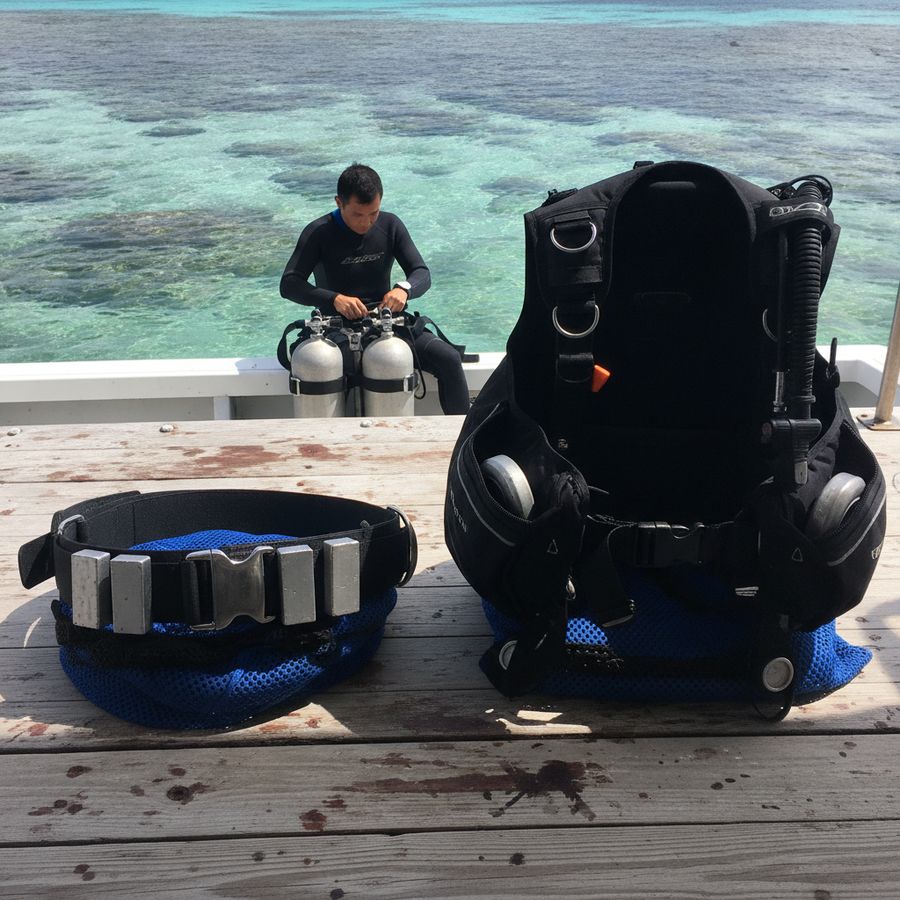
The placement of BCD weights can significantly influence your trim and buoyancy control. Modern BCDs often feature integrated weight pockets designed to securely hold weights close to your body, improving comfort and reducing drag compared to traditional weight belts.
Optimal placement of weights on a BCD involves:
- Front pockets: Placing weights here helps counterbalance the buoyancy of tanks and gear on your back, improving forward trim.
- Side or hip pockets: These help distribute weight evenly around your waist, maintaining lateral balance and stability.
- Back pockets (if available): Some divers use back pockets for additional ballast, but too much weight here can cause a feet-down posture.
It’s important to avoid overloading any single pocket, as uneven weight distribution can cause uncomfortable tilting or rolling. Most divers find a combination of front and hip weights provides the best control and comfort. When using integrated pockets, always ensure weights are securely fastened to prevent shifting during the dive.
For divers using weight belts, consider placing weights evenly around the hips rather than concentrating them solely at the back. This helps maintain a balanced trim and reduces strain on your lower back.
Ultimately, the goal is to position weights so that your center of gravity aligns closely with your center of buoyancy, enabling precise buoyancy control and maintaining a natural, horizontal swimming position.
Backplate and wing weighting basics
Backplate and wing (BP/W) systems offer a modular approach to scuba weighting and trim, favored by technical and experienced divers for their versatility and customization. Unlike traditional BCDs, the backplate provides a rigid frame, while the wing acts as the buoyancy bladder positioned behind the diver.
Weighting a backplate and wing system requires attention to the following basics:
- Use of weight harness or integrated pockets: Many BP/W setups use a weight harness or dedicated weight pockets attached to the backplate. These hold lead blocks or soft lead weights securely.
- Lead block placement: Lead blocks can be positioned low on the backplate harness to lower your center of gravity and improve horizontal trim.
- Distribution balance: Distribute weights evenly side to side to avoid rolling. Some divers use small weights on the belt or ankle weights to fine-tune trim.
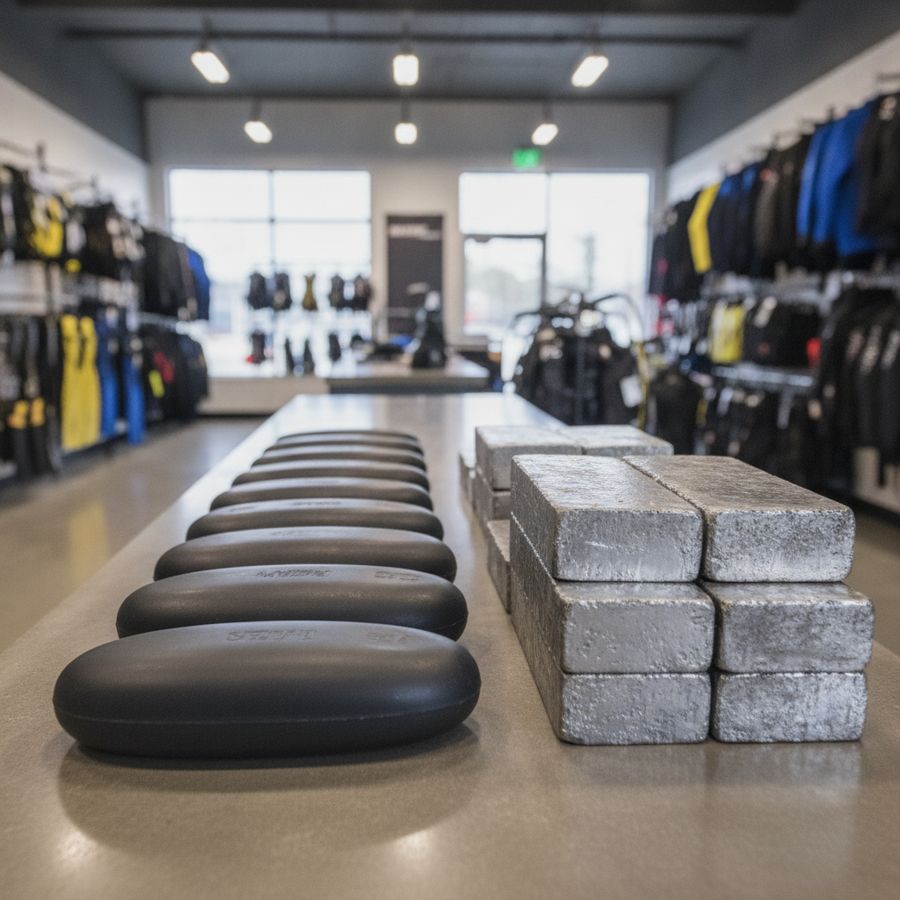
- Soft lead pouches: Soft lead weights molded into pouches allow customizable weight increments and can be easily added or removed.
The rigidity of the backplate helps maintain stable trim, but achieving proper weighting is still essential. Because the wing sits behind the diver, it can shift the center of buoyancy backward, so weights are often placed slightly forward on the harness to compensate.
For those interested in high-quality weighting options, professional-grade lead blocks and soft lead pouches made in-house by specialists provide reliable, corrosion-resistant ballast suitable for backplate systems.
Common trim problems and quick fixes
Even experienced divers occasionally encounter trim issues that disrupt buoyancy and control underwater. Recognizing common problems and applying quick fixes can dramatically improve your diving comfort and safety.
Typical trim problems include:
- Feet-down posture: Often caused by weights placed too low or too far back, or by heavy fins or boots.
- Head-down tilt: Usually results from weights concentrated too far forward or insufficient weight low on the body.
- Side tilt or roll: Caused by uneven weight distribution or air trapped unevenly in the BCD or suit.
- Poor buoyancy responsiveness: Due to incorrect weighting or lung volume management.
Quick fixes to improve trim:
- Adjust weight pockets or move weights slightly forward or backward to find better balance.
- Add or remove ankle weights to correct feet-up or feet-down positions.
- Ensure your BCD and wetsuit are properly inflated and deflated to avoid uneven air distribution.
- Practice breath control to help fine-tune buoyancy changes with lung volume.
- Check your gear setup on land and in shallow water to identify imbalances before deep dives.
Regularly reviewing and adjusting your weighting and trim setup based on dive conditions and equipment changes will help maintain optimal control and comfort.
Weight checks for safe descents and ascents
Performing weight checks before each dive is a critical safety step to ensure your scuba weighting is correctly calibrated. Proper weighting allows controlled descents and ascents, reducing the risk of rapid buoyant rises or uncontrolled descents that can lead to injury.
One common weight check method is the buoyancy check at the surface. Wearing all gear, including the tank and wetsuit, you should float at eye level while holding a normal breath and remain neutrally buoyant when exhaling slowly. If you sink or float excessively, adjust your weights accordingly.
Another important step is a controlled descent test. Descend slowly to a shallow depth and observe how your body position and buoyancy respond. You should be able to maintain horizontal trim without excessive finning or struggling. If you find yourself sinking too quickly or needing excessive BCD inflation, adjust weights before proceeding deeper.
“Regular weight checks are an essential practice that ensures safe, controlled diving and contributes to effective buoyancy management throughout your dive.”
During ascents, proper weighting helps you maintain slow, controlled rises, conserving air and avoiding decompression issues. If you are overweighted, you may have difficulty ascending at a safe pace or require excessive BCD inflation, which increases your risk of a rapid uncontrolled ascent.
In conclusion, performing weight checks and adjusting your ballast before every dive is a fundamental part of responsible scuba weighting and buoyancy control.
Conclusion
Mastering scuba weighting and trim is essential for safe, efficient, and enjoyable diving. Proper weight distribution and maintaining good scuba trim optimize your buoyancy control, reduce fatigue, and improve your overall underwater experience.
Whether you use a traditional weight belt, a BCD with integrated weights, or a backplate and wing system, understanding how to balance your weights and adjust your equipment is key. Regularly performing weight checks and addressing common trim issues will help you dive confidently and comfortably.
For dive shops and professionals, investing in high-quality, specialized BCD weights and lead products ensures divers receive reliable ballast that supports their performance. Reliable suppliers who produce consistent, corrosion-resistant lead blocks and soft lead weights contribute significantly to better diver safety and satisfaction.
By applying these tips and techniques, you can achieve optimal trim and weighting, enhancing your diving skills and maximizing the pleasure of every dive.