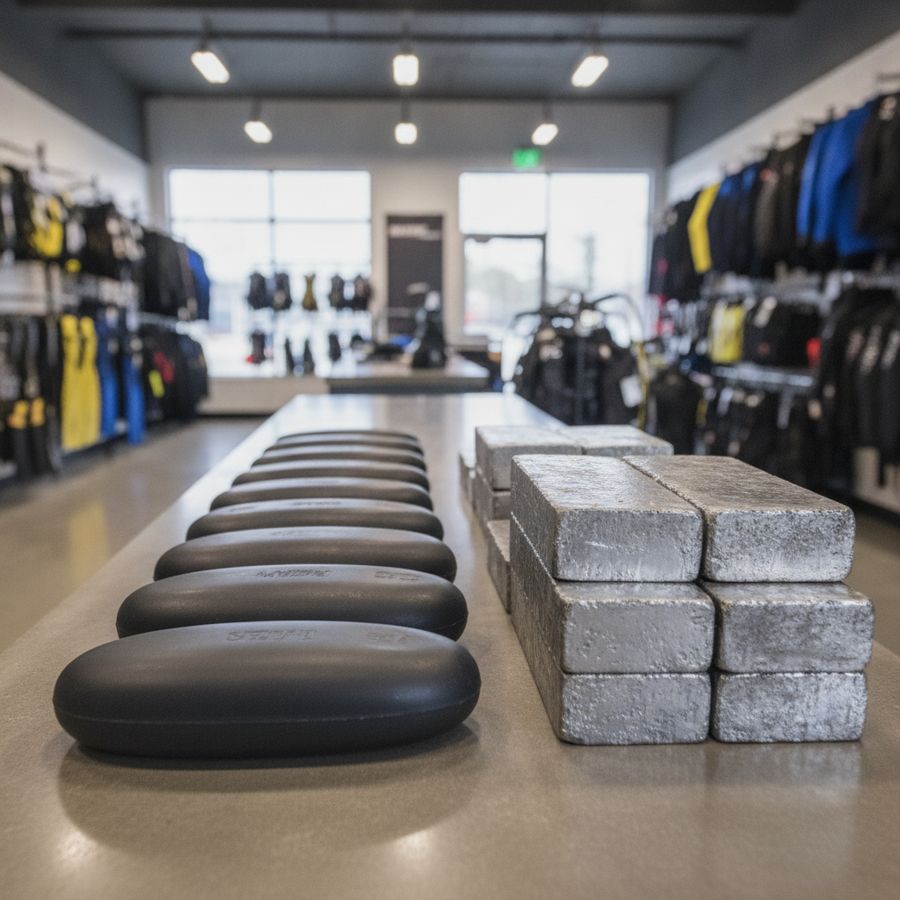
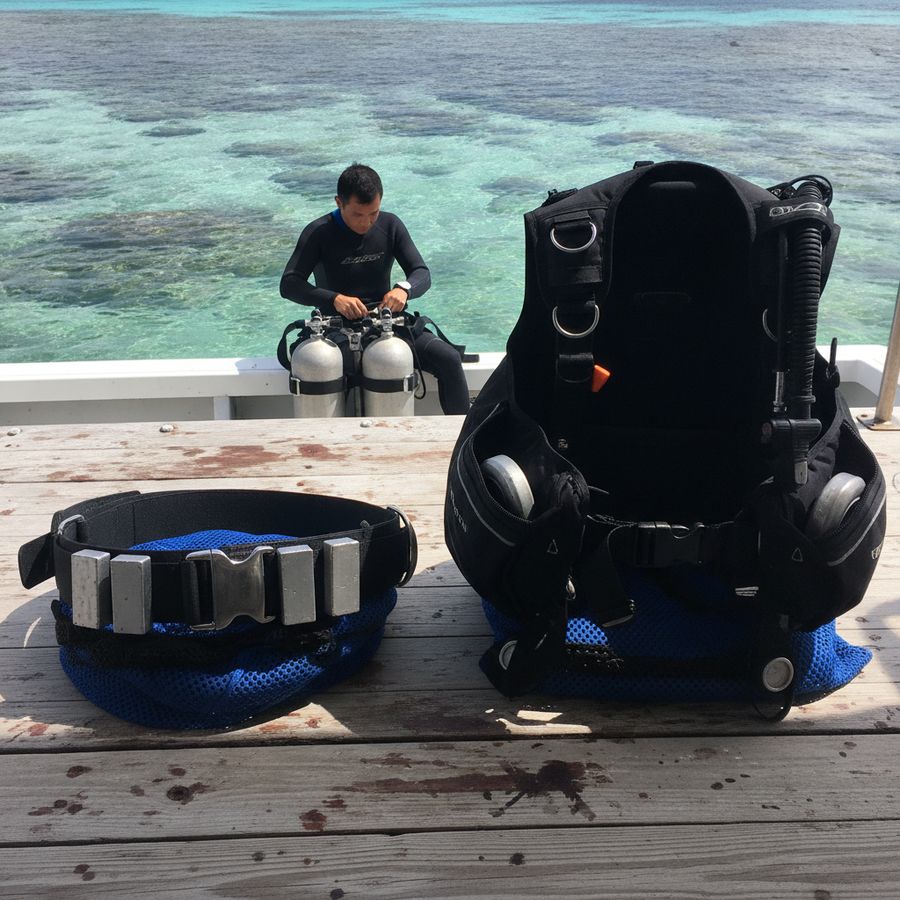
In-house production improves weight consistency
Reliable dive gear starts long before a product reaches a shop shelf. In diving weight manufacturing, consistency depends on how closely a producer can manage each step, from raw material handling to final packing. When production is kept under one roof, the same team can monitor weight tolerances, dimensions, finishing, and inventory standards without handing critical steps to outside parties. That tighter control helps reduce variation between batches and supports a more dependable product for professional buyers.
In-house production is especially important for soft lead products, where filling, shaping, and sealing must remain repeatable. A specialist manufacturer can refine processes over time, adjust quickly when a measurement drifts, and keep records that support better quality control. This matters for dive shops, schools, and distributors that need predictable stock, not mixed results from multiple sources.
When the same manufacturer controls materials, process, and inspection, consistency becomes a built-in feature rather than a hopeful outcome.
For buyers, that operational control translates into practical benefits:
- More uniform product weight from unit to unit
- Better dimensional repeatability for belts, pockets, and storage
- Faster response when custom or repeat orders are needed
- Clearer accountability if specifications must be verified
For a specialist focused purely on diving lead, in-house methods are not just an efficiency choice. They are a direct way to deliver dependable products that perform as expected in professional environments.
What materials are used in diving weights?
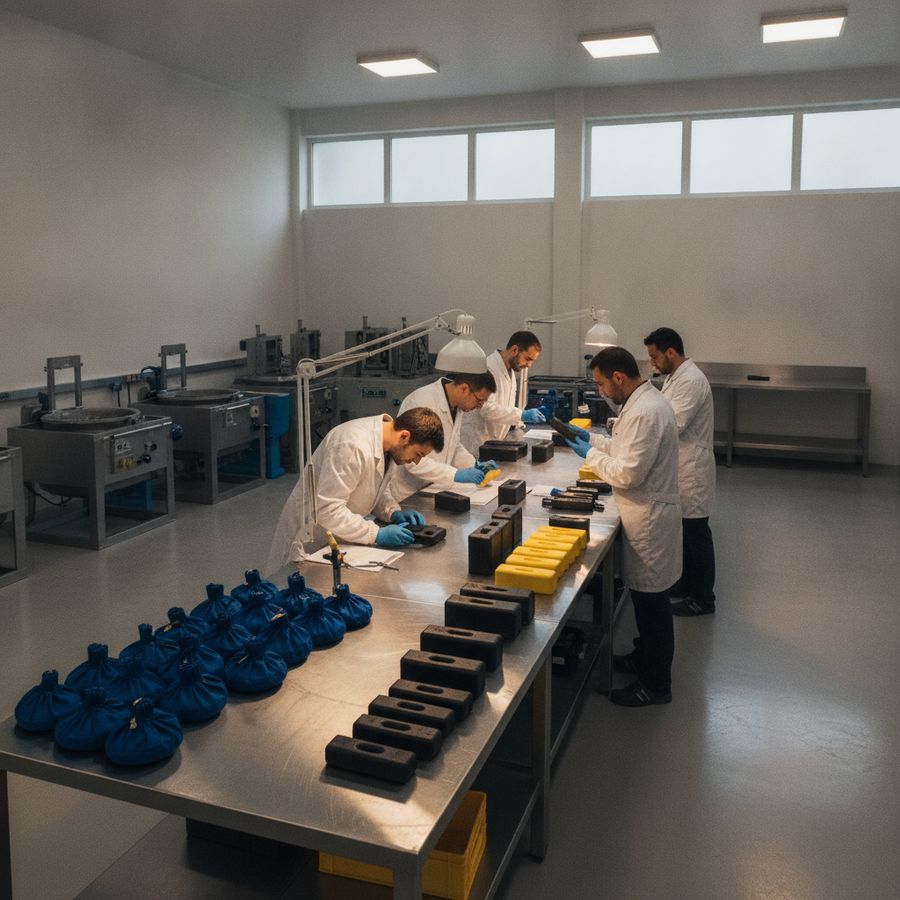
Diving weights are built around one main requirement: achieving dependable ballast in a compact form. That is why lead remains the standard material across much of the industry. Its high density allows manufacturers to create manageable sizes that still provide meaningful weight, whether the product is a simple block, a coated unit, or part of a soft lead production line.
Different applications call for different formats. Solid lead blocks are valued for their straightforward function and dense profile. Soft lead is often used when a product must adapt more comfortably to the diver or fit specific pouch and belt systems. In some product lines, metal components such as nickel-plated details may be used where durability and corrosion resistance matter, especially in accessory assemblies.
Material choice is not only about mass. It also affects handling, finish, and long-term storage quality. Coated products, for example, combine the density of lead with a protective outer layer that helps reduce oxidation and surface wear. That is especially useful for retail environments and training operations where weights are handled frequently.
Good material selection balances density, durability, clean handling, and fit for purpose.
In practice, manufacturers often work with:
- Lead for compact, effective ballast
- Soft lead for flexible pouch-based products
- Protective coatings for cleaner handling and surface protection
- Metal hardware where secure attachment is required
The best results come when materials are chosen to match both underwater performance and professional day-to-day use.
How are coated blocks finished for durability?
Coated diving weights are expected to do more than look neat. Their finish must protect the block during transport, storage, repeated handling, and routine use around boats, pools, and dive centers. A durable finish begins with proper preparation. Before coating is applied, the block surface should be clean, stable, and free from defects that could weaken adhesion or create uneven spots.
Once the block is ready, the coating process must be controlled for full and even coverage. In professional diving weight manufacturing, this step is not just cosmetic. A high-quality finish helps limit oxidation, reduces surface damage, and keeps products looking cleaner on the shelf. This is particularly valuable for coated blocks used in rental fleets or frequent training cycles, where appearance and durability both influence buyer confidence.
After application, the finish needs time and proper conditions to cure. If the process is rushed, the outer layer may chip, scuff, or wear too quickly. Strong quality control includes checking edges, corners, and contact points because these areas usually show problems first.
A protective coating is only as reliable as the preparation, application, and curing behind it.
Durable finishing usually depends on a few essentials:
- Consistent surface preparation before coating
- Even application across the full block
- Proper curing time and handling after finishing
- Inspection for weak spots, bubbles, or damage
When those steps are managed well, coated weights stay cleaner, last longer, and present a more professional product to end buyers.

Quality checkpoints from casting to packing
Consistency in diving weights does not come from a single final inspection. It is built through a series of checkpoints that start early and continue until the product is packed for shipment. In specialist production, each stage offers a chance to confirm that the weight meets specification before the next step adds more time or cost.
The first checkpoint is usually the raw material itself. Material quality affects density, finish, and process stability. During casting or forming, manufacturers review shape, fill quality, and visible defects. For soft lead production, checkpoints may also include pouch filling accuracy, seam integrity, and finished handling quality. After that, the focus shifts to measurement: verifying weight, checking dimensions, and confirming that the product matches the intended format.
Finished products then move to coating or surface review where applicable. This is where quality control protects against chips, incomplete coverage, or handling marks. Packing is the last checkpoint, but it still matters. Correct counts, clean presentation, and secure packaging help prevent damage and order errors before goods reach distributors or dive businesses.
Reliable products are the result of repeated verification, not last-minute correction.
Typical checkpoints include:
- Raw material verification
- Casting or forming inspection
- Weight and dimensional checks
- Coating and surface review
- Final count, packing, and shipment control
For professional buyers, that structured process reduces surprises and supports confidence in every batch ordered.
Why dimensional consistency matters underwater
Weight alone is not the full story in diving products. A block can meet its target mass and still create problems if its dimensions vary too much. Underwater, dimensional consistency affects how a weight sits in a belt, pocket, harness, or storage rack. If sizes differ from piece to piece, loading becomes less predictable and the overall setup may feel less secure or balanced.
For dive schools and rental operations, consistent dimensions simplify daily use. Staff can pack gear faster, divers can switch or replace weights more easily, and storage systems stay organized. In technical or professional settings, repeatability matters even more because divers often rely on precise equipment arrangements. That makes diving weight manufacturing a question of both mass control and shape control.
Dimensional variation also influences wear. A block that is slightly oversized may stress pockets or coatings, while one that is undersized can shift more than intended during transport or use. Strong in-house production helps prevent these issues because measurement standards can be applied the same way across every batch.
Underwater reliability depends on weights fitting the system as consistently as they meet the scale.
This is why professional buyers pay attention to:
- Uniform fit in common belt and pocket systems
- Predictable stacking and storage
- Reduced movement during use and transport
- Cleaner batch-to-batch reordering
Dimensional consistency supports efficiency above water and confidence below it, which is exactly what serious buyers expect from a specialist supplier.
Production choices that support professional buyers
Professional buyers do not only evaluate the product itself. They also look at the production model behind it. A manufacturer serving dive shops, schools, distributors, and industrial buyers needs to offer more than ballast. It needs dependable lead times, repeatable specifications, and the flexibility to support different order sizes without compromising standards.
That is where specialist production choices make a difference. A focused assortment, tight quality control, and a clear emphasis on diving lead help streamline decisions for B2B customers. Rather than spreading attention across unrelated product categories, a dedicated supplier can improve its methods around coated blocks, soft lead production, and other core weight formats. This creates stronger process knowledge and more stable supply.
Professional buyers also benefit from practical policies. No-minimum ordering can reduce unnecessary stock pressure, while in-house oversight can support faster restocking and better specification control. These are not just commercial conveniences. They are part of a production strategy built around reliability.
Professional purchasing becomes easier when the manufacturer is structured for consistency, specialization, and responsive supply.
Key production choices that matter in B2B purchasing include:
- Specialization in diving weights rather than general equipment
- In-house process control for repeat orders
- Protective finishing that keeps stock clean and presentable
- Flexible ordering that helps manage inventory efficiently
For buyers across Europe, those choices support smoother procurement, stronger shelf quality, and greater confidence in every shipment received.