Overview
Trim and weight distribution are at the heart of comfortable, efficient diving. When a diver is properly balanced in the water, buoyancy control becomes easier, movement feels smoother, and every kick produces better forward motion. Good dive trim is not just about looking streamlined; it directly affects safety, air consumption, and task loading underwater.
In both recreational diving and more advanced configurations, the goal is simple: carry the right amount of weight and place it where it supports a flat, stable body position. Too much weight forces a diver to add unnecessary air to the BCD or wing. Poor weight placement can make the feet drop, the shoulders sink, or the body rock side to side. All of these issues increase effort and reduce control.
Different gear setups influence underwater balance. Soft lead, coated blocks, weight belts, trim pockets, and tank-mounted options all change how a rig feels. That is why experienced divers test and refine rather than guess.
Better balance underwater usually comes from smarter placement, not simply adding more lead
Once divers understand how trim, weighting, and equipment placement work together, they can build a setup that feels lighter, calmer, and far easier to manage in the water.

Why trim affects buoyancy and air use
Trim has a major influence on buoyancy control because body position changes how a diver moves through the water and how often they need to adjust gas in their BCD or drysuit. A horizontal, balanced posture allows a diver to hover with minimal movement. By contrast, a head-up or feet-down position creates drag and often causes depth changes that must be corrected repeatedly.
Those constant corrections cost energy and gas. If a diver is fighting poor dive trim, finning harder to stay level, or sculling with the hands to avoid tipping, air use usually rises. Even a small imbalance can become tiring over the course of a long dive, especially in current or cold water. Good trim helps a diver stay relaxed, and relaxed divers typically breathe more efficiently.
Trim also affects how gas shifts inside the BCD or suit. In awkward positions, air can move to unwanted areas and make a diver feel unstable. A balanced setup reduces those surprises and makes ascents, descents, and hovering more predictable.
- Less drag means less effort
- Less effort often means lower air consumption
- Fewer corrections improve stability and control
For many divers, improving trim and weight distribution is one of the fastest ways to make buoyancy feel easier without changing any other part of the dive.
Weight distribution for recreational diving setups
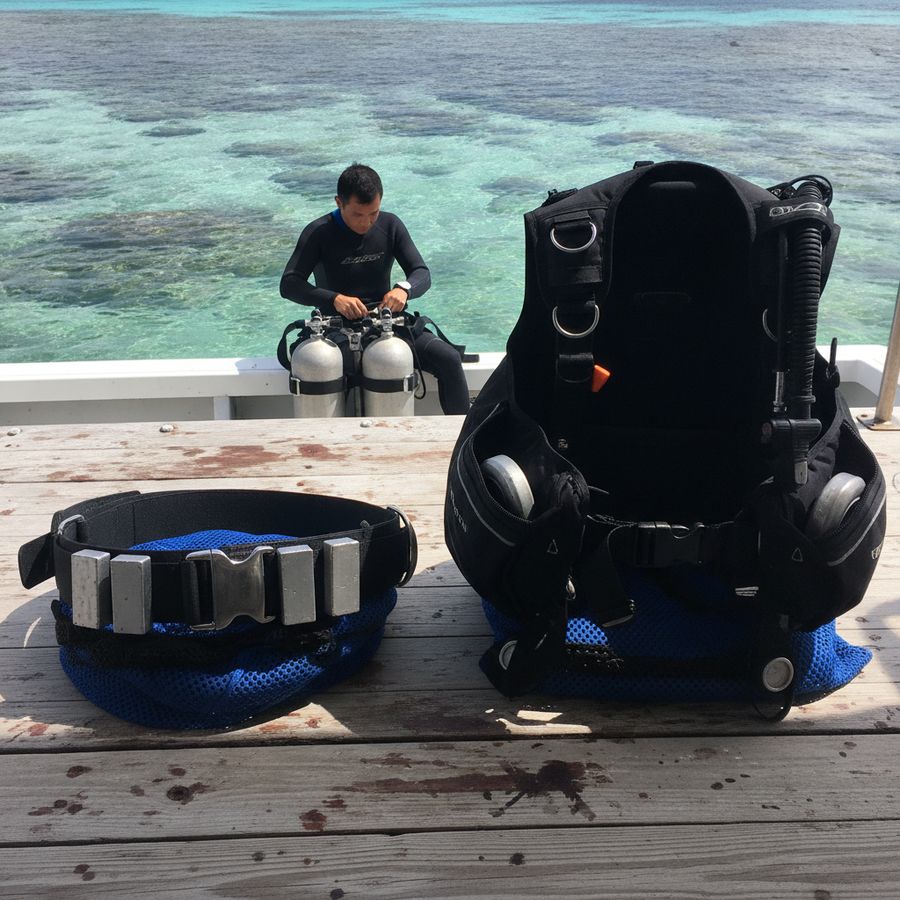
In recreational diving, the best weighting setup is usually the simplest one that keeps the diver balanced and comfortable. Many divers focus only on total kilograms, but where that lead sits matters just as much. A standard weight belt may work well for one person, while integrated pockets or small trim weights may be better for another, depending on body shape, exposure suit, and tank type.
A good starting point is to spread weight so the torso stays level underwater. If all the lead is low on the hips, some divers become feet-light and top-heavy. If too much is placed high on the tank, others may tip head-down. Small adjustments often make a big difference, especially when switching between aluminum and steel cylinders or moving from warm water to thicker thermal protection.
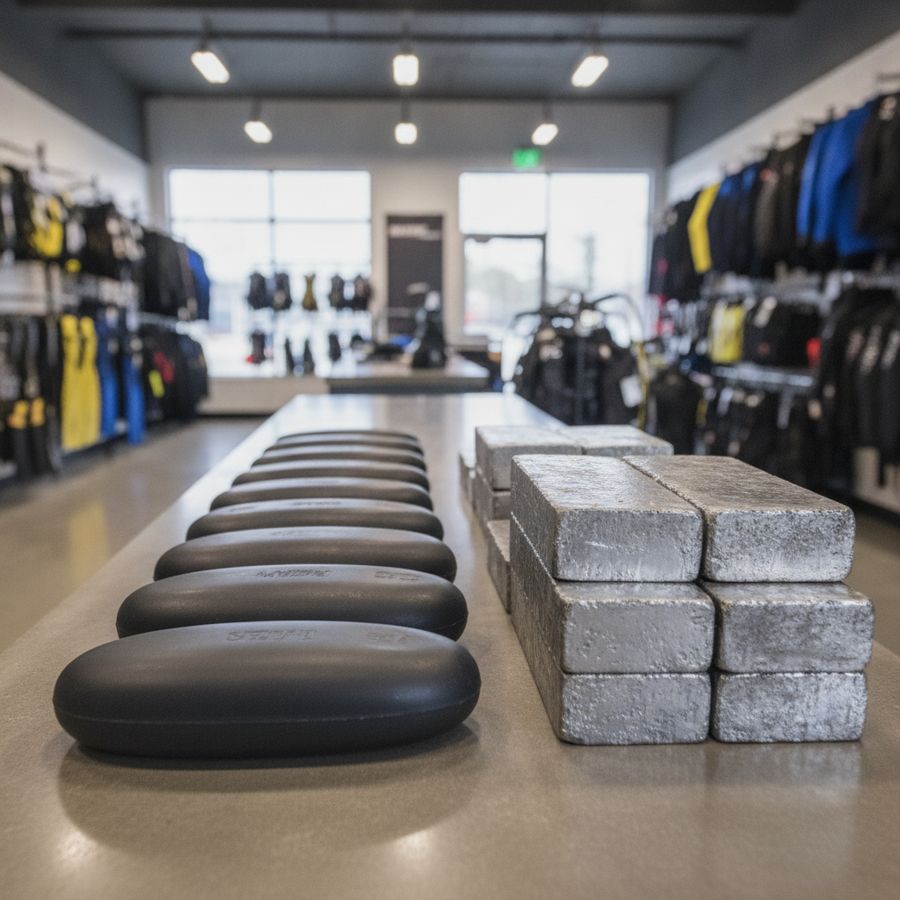
Common recreational options include soft lead pouches, coated lead blocks, and compact belt weights. These allow divers to fine-tune weight placement without creating pressure points or bulky profiles.
Comfort on the surface matters, but balance underwater should guide the final setup
The most effective approach is to test one change at a time. Move a small amount of weight, check your hovering position, and note how your body responds. That method builds a personalized setup that supports steady buoyancy control dive after dive.
Trim adjustments for technical diving rigs
Technical diving rigs introduce more variables, which makes trim tuning even more important. Backplates, wings, steel cylinders, stage bottles, canister lights, reels, and redundant gas all affect underwater balance. In these setups, trim and weight distribution are not minor comfort details; they are part of the system that supports control, awareness, and efficient propulsion.
Technical divers often use a combination of fixed and removable weight. A backplate may provide baseline ballast, while trim pockets, V-weights, tail weights, or weighted cambands fine-tune the rig. Because these configurations are more equipment-heavy, poor balance can create major issues, such as unstable valve shutdown positions, awkward stage handling, or constant fin effort to stay level.
The key is to think of the rig as a whole. A heavier steel backplate may reduce the need for belt weight. A pair of steel tanks may shift the center of gravity differently than aluminum cylinders. Even accessory placement can influence whether the diver stays flat or rotates in the water.
- Adjust one element before changing several at once
- Test in shallow water with near-empty cylinders when possible
- Evaluate trim during hovering, swimming, and simulated task work
Well-tuned technical rigs feel controlled rather than heavy. The goal is not simply to carry ballast, but to place it so the diver and equipment move as one streamlined unit.
Common weighting mistakes and simple fixes
One of the most common mistakes in diving is carrying too much lead. Overweighting forces the diver to add extra air to the BCD or wing to compensate, which can create instability and make fine buoyancy control harder. Many divers learn this habit early and keep adding weight “just in case,” even when their technique or equipment has changed.
Another frequent problem is placing all the ballast in one area. A heavily loaded belt can pull the hips down, while too much weight on the upper tank can push the head and shoulders lower than intended. Divers may blame their finning or body position, when the real issue is poor weight placement.
Fortunately, the fixes are often simple:
- Recheck total weighting with a proper end-of-dive buoyancy check
- Move small amounts of lead higher or lower to correct trim
- Use compact trim weights instead of adding more belt weight
- Review changes after switching suits, cylinders, or accessories
It also helps to avoid making large corrections too quickly. Shift one kilogram, or even less, and test again. Subtle changes are easier to evaluate and safer to manage.
Most trim problems are solved by removing or relocating weight, not by adding more
A measured approach helps divers build a setup that feels lighter, more stable, and far more predictable underwater.
How block placement changes underwater balance
Block-style weights are especially useful because they make ballast placement more precise. Whether used on a belt, in integrated pockets, or in trim-specific positions, compact lead blocks can shift a diver’s balance point in ways that are easy to notice underwater. That is why block placement is such a valuable tool for improving dive trim.
For example, moving weight slightly upward can help a diver whose legs tend to sink. Shifting some ballast lower may help when the upper body feels too heavy. The same total amount of lead can produce a very different result depending on where it sits. This is particularly relevant when divers use coated blocks, soft lead pouches, or modular systems that allow fast repositioning.
Different body types and equipment combinations respond differently, so there is no universal placement map. The best method is to test your setup in calm, shallow water and observe your natural hovering posture without forcing it.
- High placement can lighten the feeling in the feet
- Low placement can reduce a head-heavy posture
- Balanced left-right placement improves stability while turning
For shops, schools, and dive operations, having a range of block options makes fine adjustments easier for different divers. For the individual diver, thoughtful block placement turns ballast from a blunt tool into a precise part of underwater balance.
Conclusion
Better diving often comes down to details, and few details matter more than trim and weight distribution. When ballast is chosen carefully and placed with purpose, divers gain smoother movement, stronger control, and a more relaxed experience underwater. Good trim supports everything from hovering on a safety stop to swimming efficiently over a reef or maintaining stable position during a technical task.
The most important lesson is that buoyancy control is not only about adding or releasing air. It is also about creating a balanced system where the diver, cylinder, exposure suit, and weights work together. In recreational diving, that may mean redistributing a few kilos for better comfort and stability. In advanced setups, it may involve fine-tuning a more complex rig until it responds predictably in every phase of the dive.
There is no perfect setup for everyone, but there is a better setup for every diver. By checking total weighting, refining weight placement, and testing small changes one at a time, divers can steadily improve their dive trim.
Balanced weighting makes diving feel quieter, easier, and more controlled
That is why trim is worth practicing: small adjustments at the surface often create major improvements below it.