Most buoyancy problems begin before descent
Many buoyancy errors start long before a diver reaches the bottom. They usually begin with rushed preparation, borrowed equipment, or assumptions about how much lead is needed. A diver who enters the water without checking exposure suit thickness, cylinder type, salinity, and current breathing habits is already making buoyancy control harder than it needs to be.
Good control depends on starting with the right baseline. A thick wetsuit adds floatation, an aluminum cylinder becomes more positive near the end of the dive, and even a small gear change can alter trim. New divers often focus only on getting down, but proper weighting is really about staying balanced and controlled for the whole dive.
Correct ballast is not about sinking fast; it is about staying stable, efficient, and calm at every depth
Before descent, divers should confirm a few essentials:
- Exposure protection and its buoyancy effect
- Cylinder material and gas volume
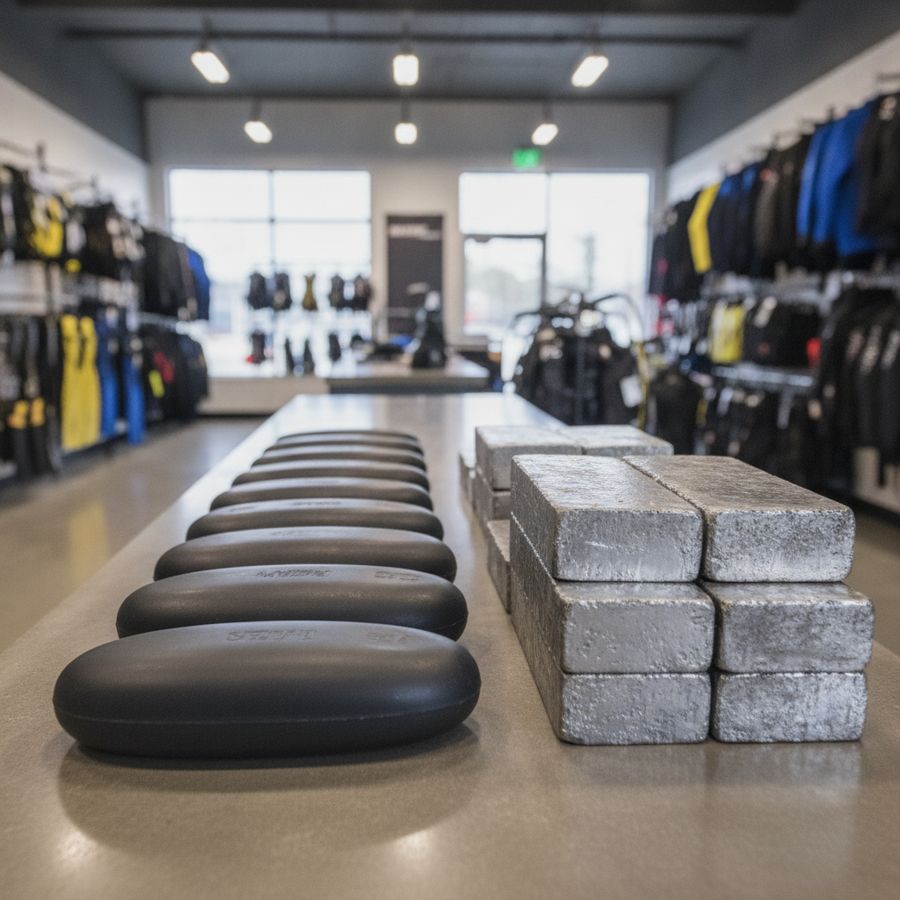
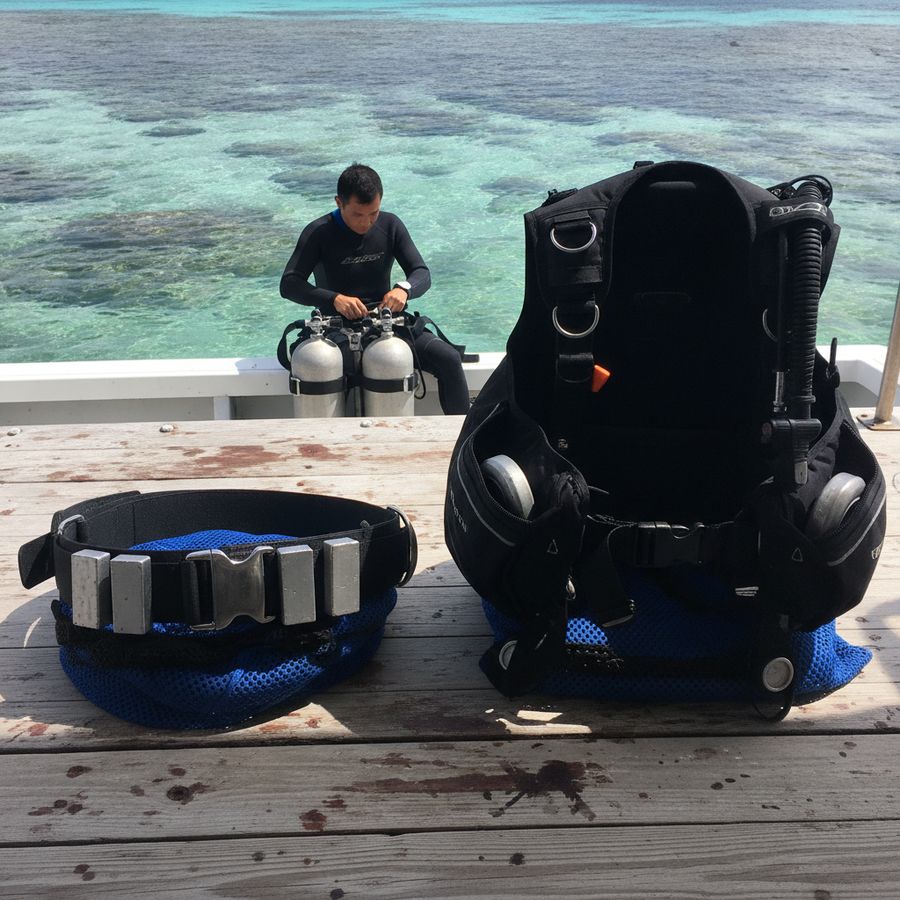
- Weight placement on belt, pockets, or trim points
- Whether accessories such as ankle weights or neck weights are truly necessary
When this setup is checked in advance, descent becomes smoother and small adjustments underwater feel predictable instead of frustrating. That is the foundation of better buoyancy and safer diving.

What weighting mistakes do new divers repeat?
One of the most common weighting mistakes among new divers is adding lead simply because descent feels difficult in the first minute. That short-term fix often creates a long list of new problems later, including uncontrolled drops, heavy finning, and frequent inflator use. Instead of solving buoyancy, it masks poor breathing rhythm, incomplete deflation, or nervous movement at the surface.
Another repeated mistake is copying another diver’s setup. Two divers wearing similar gear may still need very different amounts of ballast because body composition, lung volume, and experience all affect buoyancy. A number that worked on a previous holiday dive may also be wrong in colder water or with a different tank.
New divers also tend to focus on total weight but ignore placement. Lead concentrated only at the waist can pull the body out of line and worsen body position. That makes hovering harder and increases the temptation to kick constantly.
Good weighting is personal, situational, and always worth rechecking after an equipment change
The best habit is simple: make small, measured changes, log them after the dive, and review results rather than guessing. Precision creates confidence, and confidence improves buoyancy faster than extra kilos ever will.
Overweighting increases gas use and effort
Overweighting is one of the most expensive buoyancy habits a diver can develop because it costs both energy and breathing gas. When a diver carries too much lead, more air must be added to the BCD to compensate at depth. That creates a larger air bubble that expands and contracts more dramatically during ascent and descent, making buoyancy less stable and much harder to fine-tune.
The physical effort also climbs quickly. An overweight diver often swims at a slight angle, kicks harder to maintain depth, and makes frequent inflation and dump adjustments. All of that movement raises workload, and higher workload means increased gas consumption. On longer dives or professional operations, that inefficiency becomes especially noticeable.
There is also a comfort issue. Carrying excess ballast can strain the lower back at the surface and make entries, exits, and ladder climbs more tiring than necessary. What seemed like a safe margin often turns into a source of fatigue and stress.
A better approach is to aim for the minimum effective ballast that still allows a controlled safety stop near the end of the dive with little or no gas in the BCD. Buoyancy errors become easier to correct when the diver is not constantly fighting unnecessary weight.
Less unnecessary lead usually means less effort, smoother control, and more useful gas left in the cylinder
How does poor distribution affect body position?
Total weight matters, but distribution often matters just as much. Poor placement can seriously affect body position, forcing a diver into a head-up, feet-down, or rolling posture that wastes energy and reduces control. Even when the overall amount of ballast is technically correct, bad trim can make a diver feel unstable through the entire dive.
A common example is too much lead on the waist with none positioned to balance the upper body or tank setup. This can push the hips down and raise the torso, especially when the diver is wearing a bulky suit. In other cases, heavy fins may pull the legs downward, leading some divers to consider ankle weights. Sometimes that is useful, but often the real fix is better redistribution elsewhere.
Balanced trim supports easier hovering, cleaner propulsion, and improved awareness of the environment. Divers who are horizontally aligned disturb less silt, protect fragile underwater areas more effectively, and communicate more calmly because they are not constantly correcting themselves.
- Head-up posture often suggests weight too low or too far forward
- Feet dropping may point to heavy fins or poor overall trim balance
- Persistent rolling can indicate uneven side-to-side distribution
When ballast is positioned thoughtfully, buoyancy control feels less reactive and far more precise. Small changes in placement can deliver major gains without adding any extra weight.

Ankle and neck weights need clear purpose
Ankle weights and neck weights can be effective tools, but they should never be used as random fixes for general instability. They work best when there is a clear trim problem to solve and when the diver understands why the imbalance exists. Without that purpose, they may simply shift discomfort from one part of the body to another.
Ankle weights are most often considered when a diver’s legs float upward because of drysuit air migration, buoyant fins, or suit design. In the right amount, they can help lower the feet and reduce constant sculling. However, too much weight at the ankles can increase leg fatigue and make finning less efficient.
Neck weights are typically associated with specific disciplines such as freediving or specialized training scenarios. They can help counter floatation around the upper body, but they also require careful selection, comfort testing, and a clear understanding of safety implications.
Specialized weights should refine trim, not compensate for poor weighting fundamentals
Before using either option, divers should ask:
- Is the problem caused by total weight or by placement?
- Has exposure suit, cylinder, and fin choice been considered?
- Would a small trim adjustment elsewhere solve the issue better?
Purpose-driven use is the key. When applied thoughtfully, these tools can improve comfort and control; when used casually, they often create new weighting mistakes.
Simple pool tests reveal needed adjustments
A pool session is one of the fastest ways to diagnose buoyancy errors without the distractions of current, depth, or task loading. In calm, shallow water, divers can isolate whether the issue comes from total ballast, distribution, breathing control, or equipment fit. That makes testing more objective and much less frustrating than guessing during an open-water dive.
Start with a basic weight check near the surface using the actual gear configuration intended for diving. Then move to a hover test, a horizontal trim check, and a slow finning pass to see whether the body naturally stays level. If the feet rise, the shoulders sink, or constant hand movement is needed, the setup still needs adjustment.
Useful pool checks include:
- Floating at eye level with a near-empty BCD at the surface
- Holding a stop-like hover without sculling
- Observing whether the knees, hips, and shoulders stay aligned
- Testing small changes in lead placement before changing total weight
These short sessions are also the safest place to trial ankle weights or reassess whether neck weights have any real benefit. A controlled environment removes guesswork and helps divers build a repeatable, evidence-based setup.
Testing in the pool turns buoyancy from trial and error into a measurable skill
Correct ballast improves safety and control
When ballast is correct, diving becomes simpler in all the right ways. A well-weighted diver descends without rushing, holds depth with less effort, and ascends with finer control. That directly supports safety because emergency tasks, gas sharing, stops, and navigation all become easier when the diver is not battling unstable buoyancy.
Proper weighting also reduces stress. Divers who trust their setup tend to breathe more steadily, move more deliberately, and react better to changes in depth or conditions. Good trim improves situational awareness, while fewer unnecessary adjustments free attention for buddy contact, environment, and task management.
From a performance standpoint, correct ballast means better propulsion, lower gas use, and less strain on the body. It also helps protect underwater habitats by reducing fin contact and silt disturbance. For professionals and frequent divers, these gains are not minor refinements; they are operational advantages.
The takeaway is straightforward: review your setup before every dive, question repeated weighting mistakes, and treat accessories such as ankle weights or neck weights as precision tools rather than shortcuts. The more carefully ballast is matched to the diver and the equipment, the more predictable every phase of the dive becomes.
Correct ballast supports calm decisions, efficient movement, and safer outcomes underwater