Why training centers still rely on belts
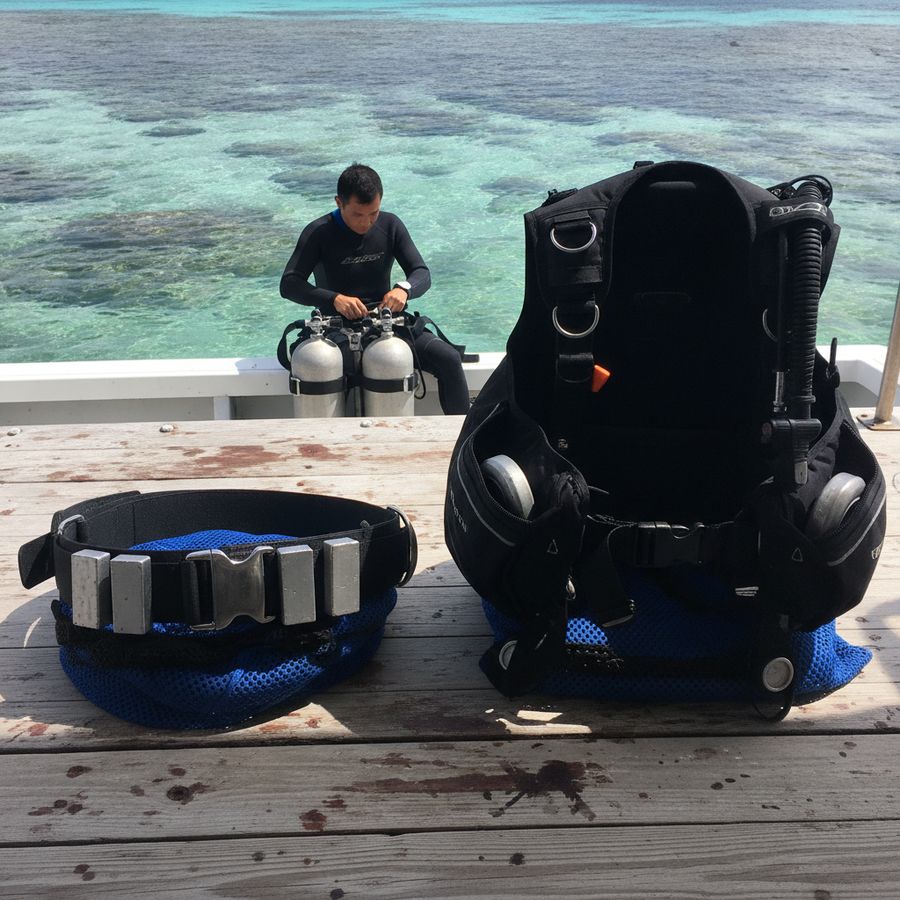
For many operators, weight belts remain the default choice in dive training because they are simple, familiar, and easy to scale across large classes. A belt, buckle, and a set of lead blocks can be fitted to different body types without needing a full range of BCD-specific pockets or model-specific spares. That matters when training centers must equip beginners quickly and keep sessions moving.
Belts also help instructors teach the fundamentals of buoyancy and trim in a very visible way. Students can see where weight is placed, feel how distribution changes comfort, and learn early how ballast affects position in the water. In fleet environments, that transparency often makes problem solving faster during confined-water sessions.
Training fleets often choose the system that is easiest to issue, adjust, inspect, and reset between students
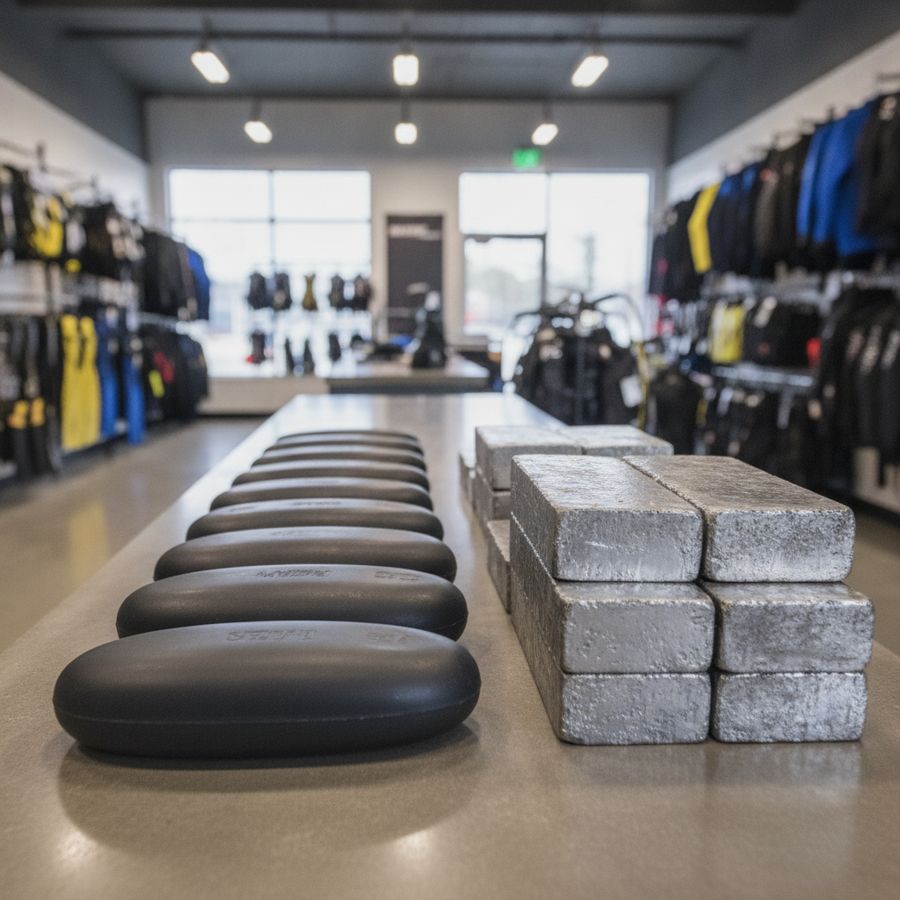
Another reason belts persist is cost control. Many schools already own substantial stocks of lead blocks, buckles, and replacement webbing, making belts practical for rental dive gear. Even when discussing weight belts vs integrated weights, centers often stay with belts because they reduce dependency on one BCD design. For busy programs, durability, interchangeability, and straightforward teaching value still make belts a reliable backbone of daily operations.

Integrated systems and faster student comfort
Integrated weights appeal to training centers because they often improve first-time comfort. New divers may feel less intimidated when ballast is built into the BCD instead of hanging around the waist. For some students, especially those unused to wearing a belt over exposure suits, integrated systems reduce pressure points and create a cleaner overall fit on the surface.
Comfort can translate into smoother early lessons. Students who are less distracted by shifting gear may focus better on breathing, mask skills, and basic buoyancy. Instructors also report that some beginners perceive integrated systems as more modern and easier to understand, which can lower anxiety during entry-level courses.
Still, comfort depends on setup quality. If pockets are overloaded, poorly balanced, or difficult to insert, the advantages disappear quickly. Training centers comparing weight belts vs integrated weights should assess not only student reactions but also how easily staff can prepare each unit for the next class. A comfortable system must also be repeatable under pressure.
- Less waist pressure for some body types
- Cleaner harness area with fewer loose components
- More streamlined feel during pool or shallow-water sessions
For many fleets, integrated systems work best when comfort is a priority and the BCD inventory is standardized enough to support consistent loading procedures.
Maintenance differences across both setups
Maintenance is one of the clearest operational differences between weight belts and integrated weights. Belts are mechanically simple: webbing, buckle, retainers, and lead. Staff can inspect them quickly for corrosion, frayed stitching, or worn releases, and replacement parts are usually inexpensive. In high-volume dive training, that simplicity reduces downtime.
Integrated systems demand a more detailed routine. Weight pockets must be checked for stitching wear, handle integrity, locking mechanisms, and compatibility with the exact BCD model. Sand, salt, and repeated force can affect how smoothly pockets insert and release. If a single pocket or receiver is damaged, the whole BCD may be sidelined until the correct spare arrives.
A ballast system is only efficient when the inspection routine is realistic for the staff who must repeat it every day
This does not mean integrated setups are poor choices; it means they require a disciplined maintenance process. Operators should document loading limits, train staff to confirm positive locking, and store pockets so pairs do not get mixed between sizes or models. By contrast, rental dive gear fleets using belts often benefit from easier standardization across classes.
When choosing between the two, training centers should compare not just purchase price but labor time, spare-part dependence, and how quickly a damaged unit can return to service.
Sizing issues that affect class turnover
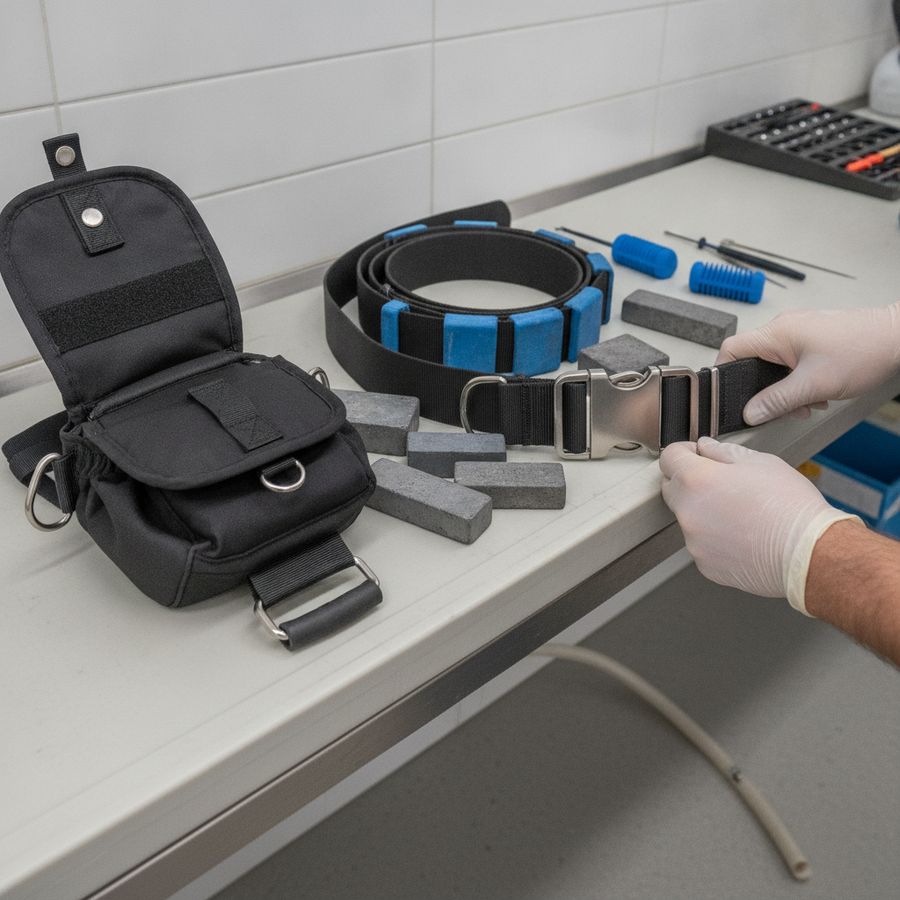
Fast class turnover depends on efficient sizing, and ballast choices directly affect that workflow. With weight belts, sizing is generally flexible. Staff can move the belt position, swap lead blocks, and fine-tune tension within seconds. That adaptability helps when several students of different shapes and suit thicknesses must be fitted in a short briefing window.
Integrated weights can be efficient too, but only when the training center carries the right BCD sizes and matching pockets. If the BCD fits the torso but the pocket placement feels awkward, students may still struggle with comfort or trim. In busy training fleets, those extra adjustment steps add up and can delay water entries.
Seasonal changes amplify the issue. A class in thin wetsuits may need a very different setup from a cold-water group using thick exposure protection. Belts allow weight quantity and placement to be changed independently from BCD size, which can simplify logistics when class composition varies day to day.
- Belts separate ballast sizing from BCD sizing
- Integrated systems work best with standardized gear ranges
- Poor fit slows briefings, buddy checks, and water entry
For centers evaluating weight belts vs integrated weights, the real question is how many fitting decisions staff must make per student. Fewer steps usually mean faster turnover, less queue time, and a calmer learning environment.
Loss prevention and replacement cost factors
Loss prevention is a major consideration for any fleet managing rental dive gear. Traditional weight belts are relatively low-cost to replace, but individual components can go missing: loose lead blocks, dropped buckles, or entire belts left on boats or pool decks. Because the parts are universal, those losses are manageable, yet they can become frequent if inventory control is weak.
Integrated weights shift the risk profile. The lead itself may be secure during normal use, but removable pockets are valuable and easier to misplace during rinsing, transport, or hurried changeovers. Replacing a branded pocket usually costs far more than replacing a standard belt, and some models require exact manufacturer parts rather than generic substitutes.
The cheapest ballast system on paper may become the costliest if pieces are often lost between classes
Good fleet management reduces risk in either setup. Color coding, numbered components, check-in/check-out routines, and end-of-day reconciliation can prevent steady losses. Training centers should also consider whether students carry gear from classroom to dock, since more movement increases the chance of missing parts.
From a budgeting standpoint, weight belts vs integrated weights is not only a comfort debate. It is also a question of how often consumable items disappear, what each missing component costs, and how quickly replacements can be sourced without interrupting training schedules.
Emergency release habits students learn fastest
In entry-level dive training, emergency release must be learned quickly, clearly, and under stress. This is where weight belts still hold a strong teaching advantage. The release motion is visible, standardized, and easy for instructors to demonstrate repeatedly: identify the buckle, use the correct hand, and drop the belt cleanly if required. For beginners, that straightforward sequence is often easier to remember.
Integrated weights can also be taught effectively, but release procedures vary between BCD brands and pocket designs. Some systems require pulling a handle outward, others upward, and some need a specific angle to disengage properly. That variation can slow learning when students encounter different fleet units or switch between rental models later.
There is also a habit-forming issue. Students should not only know how their own system releases; they should be able to assist a buddy under pressure. Belts offer a more universal reference point, while integrated systems demand more model-specific familiarization during pre-dive checks.
- Belts teach a single, easy-to-demonstrate release concept
- Integrated pockets require brand-specific orientation
- Buddy assistance is simpler when releases are obvious
For schools, the best approach is deliberate repetition. Whatever system is used, students should practice identify, confirm, and release steps until the action becomes automatic rather than theoretical.
Best mix for rental and instruction programs
For many operators, the smartest answer is not choosing one system exclusively but building a mixed fleet. Weight belts are often the most practical foundation for high-volume courses, referral training, and backup use. They are flexible, economical, and easy to maintain, which makes them ideal when student turnover is high and staff need reliable standardization.
At the same time, integrated weights can add value in premium instruction packages, continuing education, and BCD fleets designed around comfort-focused customer experiences. They suit centers that maintain consistent equipment models and want to reduce student resistance to wearing traditional belts. In that setting, integrated systems can improve perceived quality without replacing belts entirely.
The best ballast strategy for a fleet is usually the one that matches the teaching environment, maintenance capacity, and customer profile
A balanced program may look like this:
- Use belts for entry-level classes, backup stock, and mixed-size student groups
- Use integrated systems for standardized BCD fleets and comfort-sensitive customers
- Keep clear maintenance and inventory rules for both setups
- Train staff to teach emergency release confidently on every system in use
When deciding on weight belts vs integrated weights, training centers should focus less on trends and more on operational fit. The strongest rental dive gear program is the one that supports safe instruction, efficient turnover, and predictable long-term costs.