How each weight type changes body position
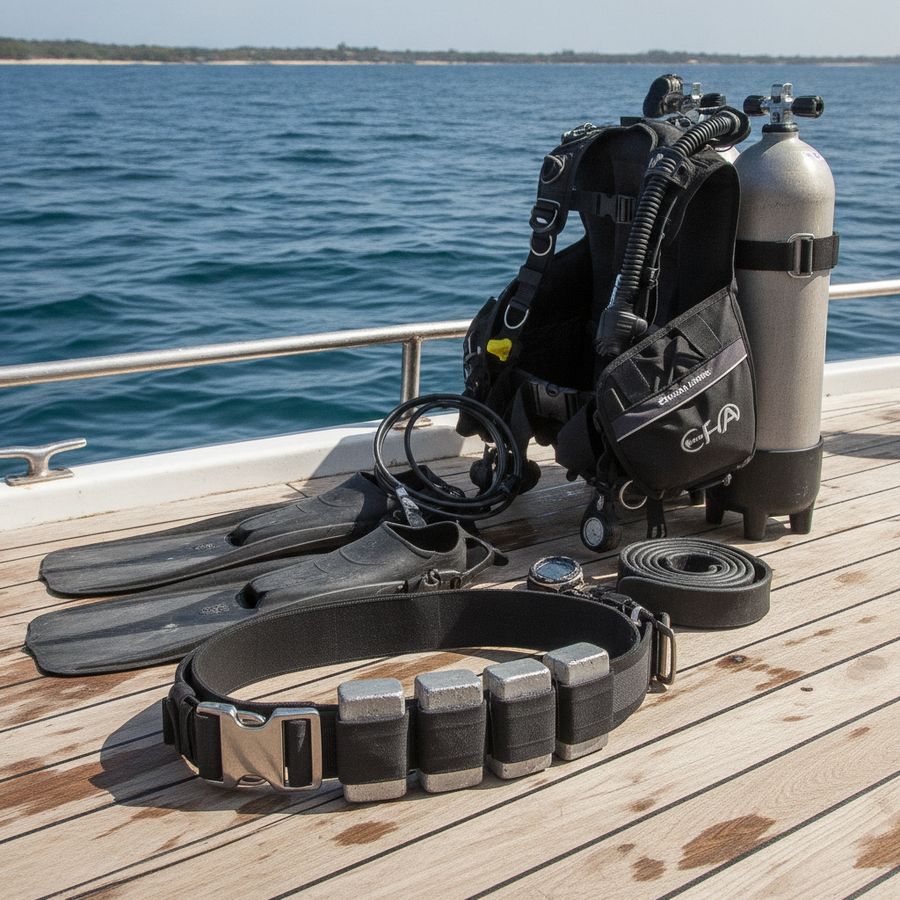
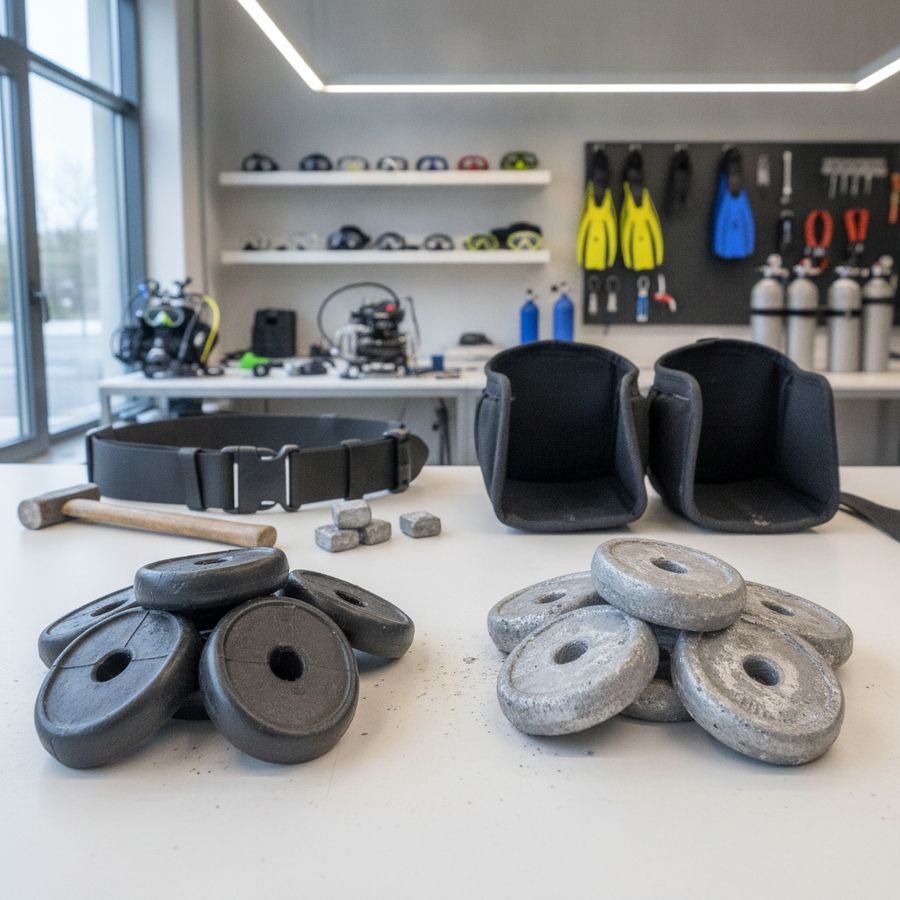
Weight belts, neck weights, and ankle weights all change trim in different ways because they shift where mass sits on the body. A traditional weight belt places most of the ballast around the hips, which lowers the center of gravity and helps many divers achieve neutral buoyancy. In scuba, that often feels familiar and predictable, but it can also make the lower body sink if the rest of the setup is already heavy.
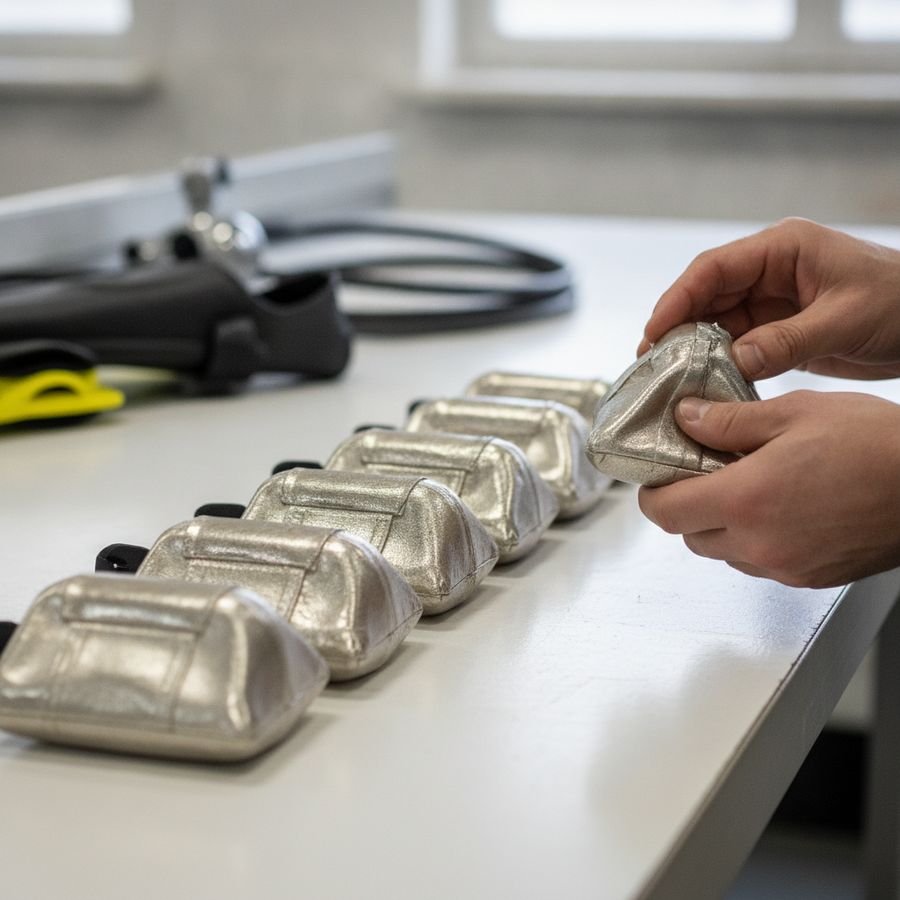
Neck weights move ballast higher, around the shoulders and upper chest. For freedivers, that can improve body line during descent because the weight is closer to the lungs, reducing the tendency to bend at the waist. Ankle weights, by contrast, act at the far end of the lever. Even a small amount can bring floaty feet down and stop fins from rising above the torso.
Small changes in weight placement often affect hydrodynamics more than large changes in total kilograms
Understanding this principle helps divers choose freediving weights or scuba weights based not just on buoyancy, but also on posture, streamlining, and energy efficiency in the water.

Freediving and scuba use cases compared
The best weighting solution depends heavily on whether you are freediving or scuba diving. In scuba, weight belts remain the standard because divers need reliable ballast that can offset wetsuit buoyancy, cylinders, and exposure protection. A belt also works well with quick ditching in many emergency scenarios, which is why it still plays a major role alongside integrated systems.
In freediving, the priorities shift toward streamlining, equalized body position, and low drag. Many freedivers still use a belt, especially for pool training or constant-weight sessions, but neck weights are more common in disciplines where maintaining a straight vertical line matters. They help distribute freediving weights closer to the torso rather than concentrating everything at the hips.
Ankle weights cross both worlds, though usually in small amounts. Scuba divers may use them to correct persistent foot float, while freedivers often use them in the pool to keep long fins from lifting. The key difference is purpose: scuba weights primarily solve buoyancy, while freediving setups often solve buoyancy and alignment at the same time.
When neck weights improve vertical alignment
Neck weights are especially useful when a freediver struggles to stay upright and streamlined during descent or static positioning. If the hips hinge, the knees drop, or the diver has to fight to keep the chest stacked over the legs, shifting some ballast upward can make a major difference. Because the weight sits near the shoulders, it encourages a cleaner line from head to fin tips.
This matters most in disciplines where vertical efficiency is everything. A straighter line reduces frontal resistance, improves relaxation, and can make equalization feel easier because the diver is not constantly correcting posture. Used properly, neck weights can support smoother freefall and less wasted motion.
Helpful for upright descent mechanics
Useful when hip-loaded weighting causes bending
Often preferred for discipline-specific freediving training
However, they are not automatically better than weight belts. Divers still need the correct amount, fit, and quick-removal awareness.
Neck weighting should improve position naturally, not force the diver into an awkward shape
If alignment improves only when a diver tenses up, the setup likely needs adjustment.
Why ankle weights solve floaty fin issues
Ankle weights exist for a simple but important reason: some divers have feet and fins that keep rising. This is common with thick wetsuits, drysuits, certain fin materials, and body shapes that trap buoyancy in the lower legs. When the feet float upward, the diver must constantly push them down, which wastes energy and breaks an otherwise streamlined position.
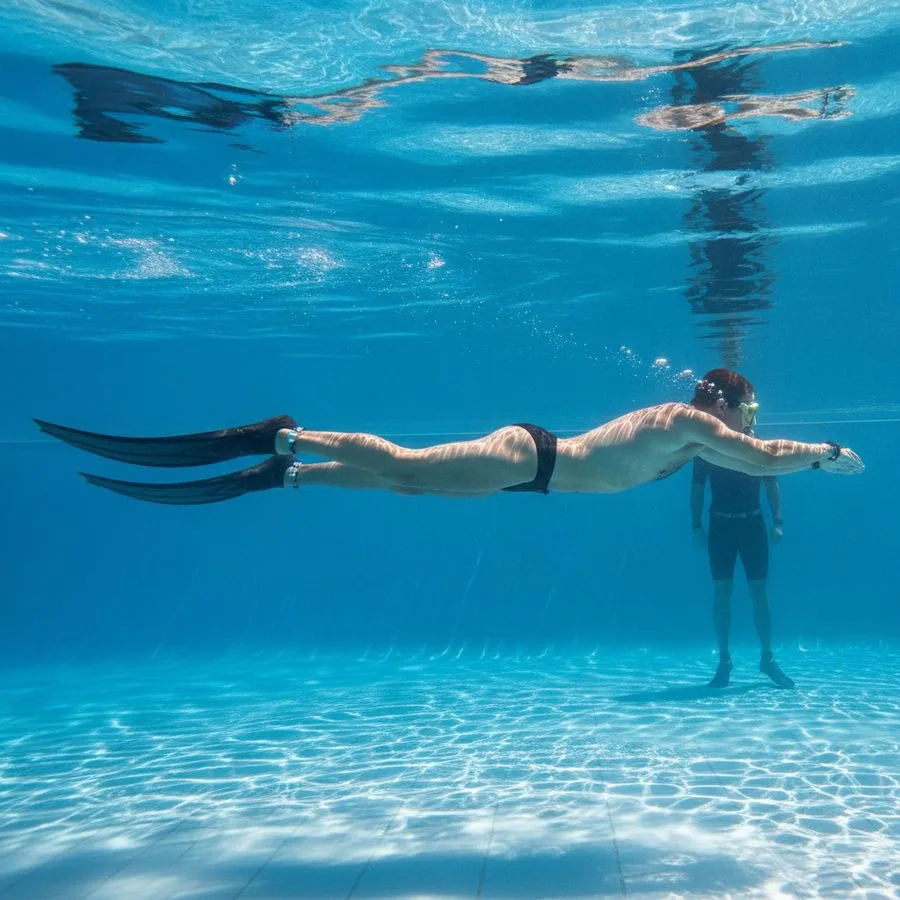
Adding a small amount of ballast at the ankles can counter that upward lift. Because the weight is placed far from the body’s center, even light ankle weights can create a noticeable trim correction. For freedivers in the pool, that often means a flatter surface position and cleaner kick mechanics. For scuba divers, it can reduce the tendency to pitch head-down or bicycle kick unintentionally.
The most important word is small. Too much weight at the ankles increases effort during finning and can slow turns, ascents, and exits. Good trim should feel easier, not heavier.
Ankle weighting works best as a precision adjustment, not as a substitute for fixing the rest of the weighting system
When used sparingly, it is one of the simplest ways to solve persistent floaty fin problems.
Comfort, safety, and quick-release concerns
Any discussion of weight belts, neck weights, and ankle weights has to include comfort and safety. A weight that improves trim but creates pain, numbness, or restricted movement is not truly functional. Belts can slide, pinch, or bruise the hips if they are poorly fitted. Neck systems can feel stable for one diver and distracting for another. Ankle systems must stay secure without rubbing or cutting into the suit.
Safety is even more important. Scuba weights are often chosen with a clear quick-release plan in mind, especially in open-water conditions. A belt should be easy to find, grasp, and drop under stress. Freedivers using neck weights need equally clear removal habits and discipline-specific supervision when training.
Check fit before entering the water
Practice removal with gloves if relevant
Avoid complicated stacking of multiple systems
Ankle weights deserve special caution because they are less instantly releasable than a belt. The safest setup is usually the simplest one that delivers the needed trim correction while preserving mobility, awareness, and a fast response in an emergency.
Choosing combinations for training environments
The ideal combination of freediving weights depends on where and how you train. In the pool, divers often prioritize horizontal balance and repeatability. That makes a light belt plus small ankle weights a practical option for keeping the body flat during drills. Some freedivers may instead use a light neck weight when working on discipline-specific alignment or static technique.
In open water, conditions usually matter more. Depth, suit thickness, salinity, and entry style all affect how scuba weights or freediving systems behave. A diver in thin pool gear may need very different placement in a thick wetsuit offshore. That is why copying another person’s setup rarely works perfectly.
A useful way to choose is to start with the main problem you need to solve:
If total buoyancy is the issue, begin with weight belts
If vertical line and torso alignment are the issue, test neck weights
If feet rise and fins feel unstable, add minimal ankle weights
For professional instruction, rental fleets, or team training, consistency and simple adjustment paths are often more valuable than highly customized but overly complex setups.
Mistakes that Create Drag and Fatigue
The most common weighting mistakes often stem from poor placement rather than using too much lead. For example, a heavy belt worn too low can cause the hips to sag. Oversized ankle weights can turn every kick into extra work, while poorly chosen neck weights may create shoulder tension instead of promoting relaxed alignment. These errors increase drag and fatigue, even if the diver appears neutral.
Another common mistake is addressing one trim issue by continuously adding more weight. This approach typically creates a chain reaction: more ballast leads to increased compensation, which heightens effort and worsens body control. Efficient divers typically use the least amount of weight required and position it to support natural posture.
When a weighting system is correct, the diver should feel quieter in the water, not busier.
To avoid wasted energy, review your weighting systematically:
Check total kilograms first
Adjust one variable at a time
Test fin position, hip angle, and comfort together
Better trim translates to less drag, smoother movement, and more effective use of both freediving weights and scuba weights. For more insights on optimizing your diving experience, visit our website.