Stock turns matter more than broad assortments
Many dive retailers assume a bigger wall of products creates a stronger offer. In reality, dive shop inventory performs best when it is built around dependable turnover, not maximum variety. A compact range of the right lead weight SKUs usually generates better cash flow than a large assortment of slow-moving pieces that collect dust in the stockroom.
For weight systems, customers mainly want availability, consistency, and clean handling. That means core sizes, reliable coatings, and fast replenishment matter more than carrying every niche option all year. When stock turns are healthy, shelves look active, staff can reorder with confidence, and working capital is free for high-margin items like courses, servicing, and equipment packages.
Dead stock is not just unsold inventory; it is cash, space, and attention trapped in the wrong products.
Better reorder planning starts by trimming duplicate or low-demand variations and protecting your fastest sellers. For most stores, a narrower assortment with stronger turn rates improves margins, reduces stock aging, and supports more accurate demand forecasting through cleaner sales data.
Which SKUs move fastest by season?
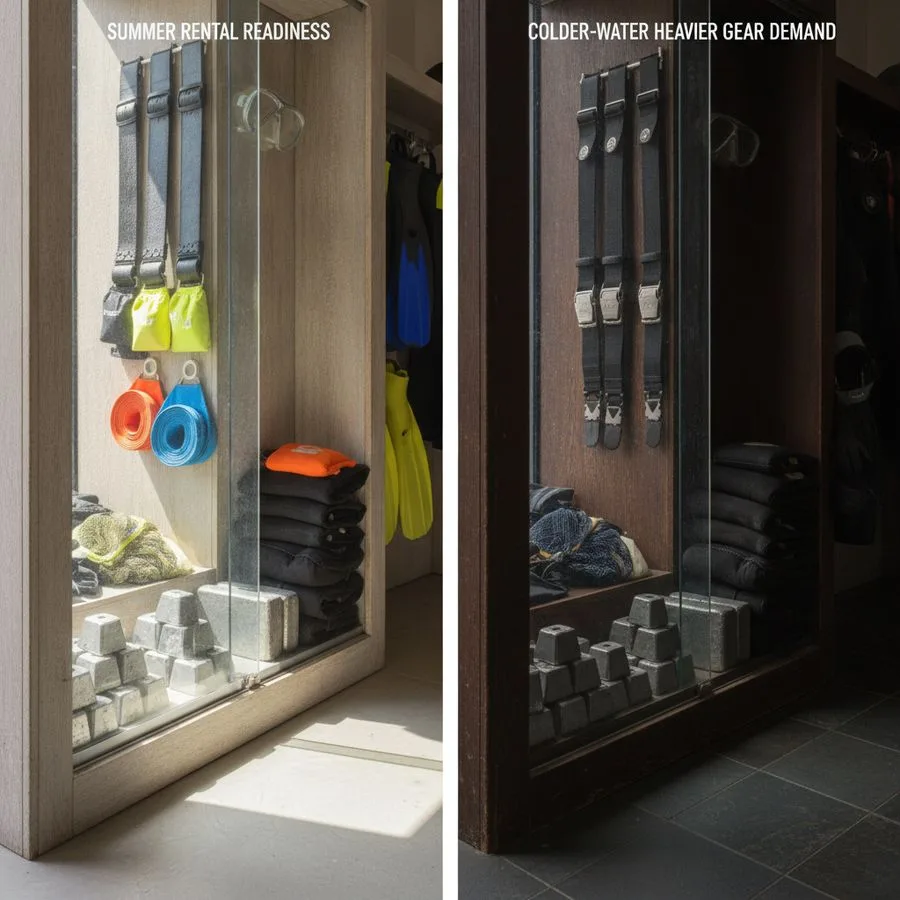
Seasonality shapes nearly every weight purchase in a dive business. Entry-level training periods often drive demand for simple, durable sizes used across open water courses, while peak tourist months increase rental wear and replacement demand. Colder-water destinations may also see stronger movement in heavier configurations because divers add thicker exposure protection and require more ballast.
The smartest way to identify seasonal winners is to review sales by month, not just annual totals. Break out hard weights, soft lead pouches, belt systems, and specialty pieces separately. Then compare each SKU against course starts, travel seasons, water temperature shifts, and local charter activity. This turns raw history into useful demand forecasting.
Track units sold by SKU and month
Separate retail sales from rental replacement
Note local high season, shoulder season, and off-season
Flag products tied to wetsuit thickness or technical training
When you know which lead weight SKUs spike by season, you can stock deeper on proven movers and avoid overbuying fringe options. That is how dive shops reduce dead stock without risking empty shelves.
How can dive shops forecast weight demand?
Accurate forecasting starts with three inputs: historical sales, upcoming activity, and supplier responsiveness. Historical data tells you what sold, but upcoming course schedules, group bookings, resort partnerships, and equipment upgrades explain why demand will change. A shop training forty new divers next month should not rely on last month’s quiet sales alone.
Use a simple rolling method. Start with the last 12 months of unit sales for each major weight category. Adjust upward or downward based on known events, weather patterns, and rental fleet condition. Then compare that forecast to supplier lead time. If your supplier can dispatch within 24 to 48 hours and offers no minimum order, you can forecast leaner and reorder more often.
Forecasting works best when inventory decisions combine sales history with operational reality.
Good reorder planning also accounts for product type. Soft lead, coated blocks, tech blocks, belts, and accessories do not move at the same rhythm. Splitting forecasts by category improves accuracy and helps managers protect cash while keeping essential dive shop inventory available when divers actually need it.
Minimum-order flexibility reduces tied-up capital
Minimum order quantities often create the very problem dive shops want to avoid: shelves full of slow stock. When a supplier requires large buys, the shop is pushed to purchase too many sizes, too much volume, or too early in the season. That capital then sits in storage instead of funding marketing, staffing, compressor maintenance, or rental fleet upgrades.
By contrast, a supplier model with no minimum order changes inventory economics. You can top up only the sizes that are moving, test new lead weight SKUs without major risk, and respond quickly when training demand shifts. Fast delivery strengthens this further, because short lead times reduce the need for oversized safety stock.
For dive operations, this flexibility is especially valuable with heavy products that consume storage space and are expensive to move unnecessarily. Clean, durable stock that arrives quickly is more useful than bulk quantities bought “just in case.”
In practical terms, demand forecasting becomes easier when the buying threshold is low. You make smaller, smarter purchasing decisions, reduce dead stock, and keep your dive shop inventory aligned with real turnover instead of supplier constraints.
Track rentals, courses, and replacement cycles
Weight demand is not driven only by retail sales. In many shops, the biggest consumption comes from rentals, training use, and damage replacement. If those flows are not tracked separately, the numbers can mislead managers into overordering some products and underordering others. A rental set that stays in circulation for months has a very different planning pattern from a retail SKU sold over the counter.
Create three demand buckets: rental fleet, course use, and retail sales. Then monitor how often each type needs replacement. Coated blocks, soft lead pouches, buckles, and belts all wear differently depending on salt exposure, transport, and instructor handling. Products that stay clean and resist oxidation can reduce replacement frequency and improve presentation on the shop floor.
Count items issued to rentals each week
Log course starts and expected student equipment use
Record damaged, lost, or retired weights by SKU
Review replacement cycles every quarter
This approach gives your team a clearer basis for demand forecasting. Instead of guessing, you connect dive shop inventory needs to actual operational use, which is one of the fastest ways to prevent both dead stock and surprise shortages.
What metrics prevent overstock and stockouts?
The most useful inventory metrics are simple enough to review every month and specific enough to guide action. Start with sell-through rate, stock turn, weeks of supply, fill rate, and aged inventory. Together, these show whether your best-selling weights are moving fast enough and whether slower items are quietly becoming dead stock.
You should also track stockout frequency by SKU. A product that repeatedly sells out during course weekends or holiday peaks may look efficient on paper, but lost sales and operational friction can outweigh the savings from running lean. The goal is not the lowest stock level; it is the best balance between availability and cash efficiency.
Healthy inventory is measured by service level and turnover, not by how full the warehouse looks.
For weight systems, it helps to set thresholds such as maximum months on hand and minimum reorder points by category. Review these metrics separately for rental-related products and retail-only items. That split makes reorder planning far more accurate.
When dive shops monitor the right metrics consistently, demand forecasting improves, storage stays manageable, and overstock and stockouts become far less common.
A lean reorder model for lead weights
A lean model for ordering weights doesn’t require complex software. Start by categorizing products into core, seasonal, and specialist groups. Core items are your everyday sellers and rental essentials, warranting the highest availability. Seasonal products adjust with tourism, water temperature, and course activities. Specialist items can be stocked lightly and reordered only when demand is confirmed.
Next, assign each SKU a reorder point based on average weekly demand, supplier lead time, and a small safety buffer. If a supplier can ship within 24 to 48 hours and has no minimum order quantity, that buffer can remain slim. This approach reduces carrying costs while ensuring critical items are in stock.
Set reorder points based on actual weekly usage
Keep safety stock only for proven fast movers
Review slow sellers monthly for markdown or phase-out
Order smaller quantities more frequently
The most effective model is disciplined, not large. Clean data, regular reviews, and flexible supply chains help dive shops avoid dead stock while maintaining service levels. For many operators, this is the most practical route to achieving smarter dive shop inventory, stronger demand forecasting, and improved reorder planning for lead weight SKUs.
FAQs
Why is a smaller assortment often better for dive shop inventory?
A tighter range usually improves stock turns, frees cash, reduces aged inventory, and makes reordering easier. For lead weights, reliable availability of core sizes often matters more than offering every niche variation.
How can dive shops forecast demand for lead weight SKUs more accurately?
Review monthly sales by SKU, separate retail from rental and course use, and adjust for seasonality, course schedules, tourism peaks, water temperature, and supplier lead times. This produces a forecast tied to actual operating demand instead of annual averages alone.
What metrics help prevent dead stock and stockouts?
Useful metrics include stock turn, sell-through rate, weeks of supply, fill rate, stockout frequency, and aged inventory. Tracking these by category helps shops identify which SKUs should be reordered, reduced, or phased out.
How do no-minimum-order suppliers change reorder planning?
No-minimum-order supply lets shops buy smaller quantities more often, which lowers carrying costs and reduces the risk of overbuying slow sellers. Combined with short lead times, it also allows leaner safety stock.
Why should rentals, courses, and retail sales be tracked separately?
Each demand source follows a different pattern. Rental fleets create replacement demand, courses create scheduled spikes, and retail sales reflect consumer purchases, so separating them improves forecasting and prevents distorted reorder decisions.