What white lead dust means in practice
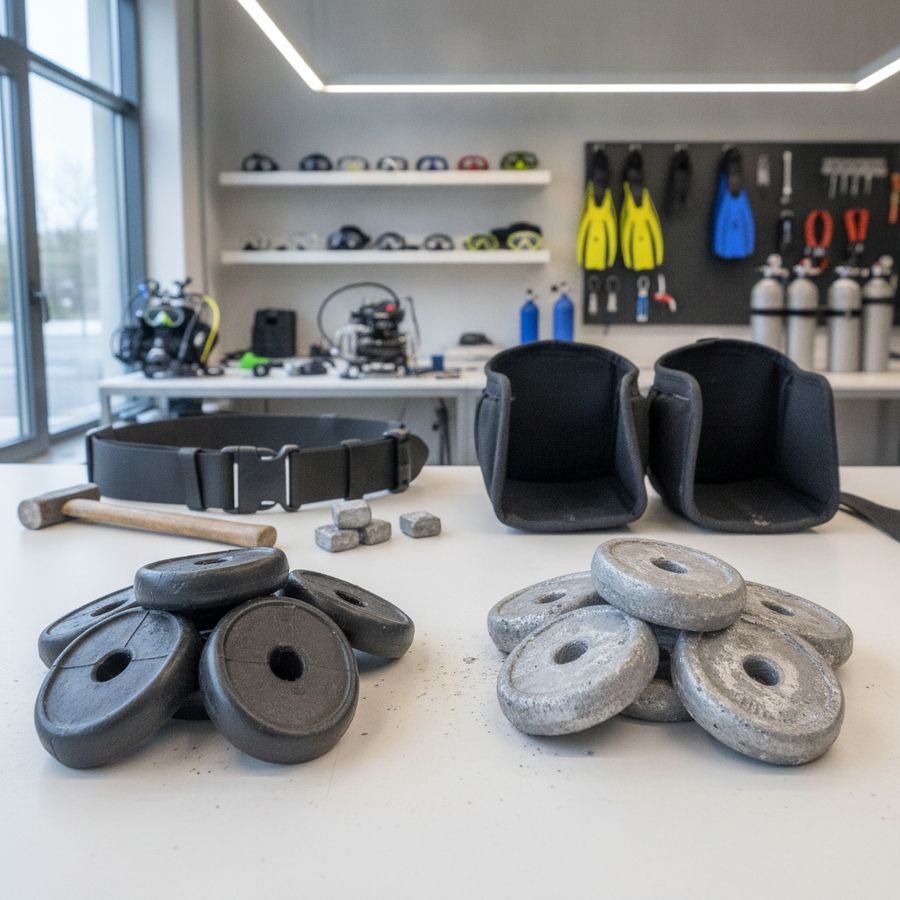
When professionals talk about lead oxidation on dive weights, they are usually referring to the pale, chalky residue that can appear on uncoated or poorly protected lead surfaces. In day-to-day operations, that white dust is more than a cosmetic issue. It transfers onto hands, shelves, wetsuits, bins, counters, and packaging, which makes a retail or rental environment look neglected even when the products are structurally usable.
For dive shops, schools, and service teams, the practical impact is cumulative. Staff handle weights repeatedly during filling, rinsing, repacking, and customer handover. As oxidized residue builds up, cleaning time increases and so does the chance of direct contact with raw lead particles. That is why lead safety should be treated as both a housekeeping issue and a handling issue.
White residue on lead is a visible sign that oxidation is active and contamination control should be improved
It also affects customer perception. A weight that leaves powder on the user’s fingers can quickly raise concerns about quality, maintenance standards, and hygiene. In busy dive operations, that matters. Clean-looking stock is easier to rent out, easier to merchandise, and easier to trust.
In practical terms, white dust means it is time to review storage, protective coatings, and product choice. Oxidation prevention is not only about preserving the metal; it is about keeping inventory cleaner, reducing unnecessary staff exposure, and presenting professional-grade equipment at every customer touchpoint.
Storage conditions that speed up oxidation
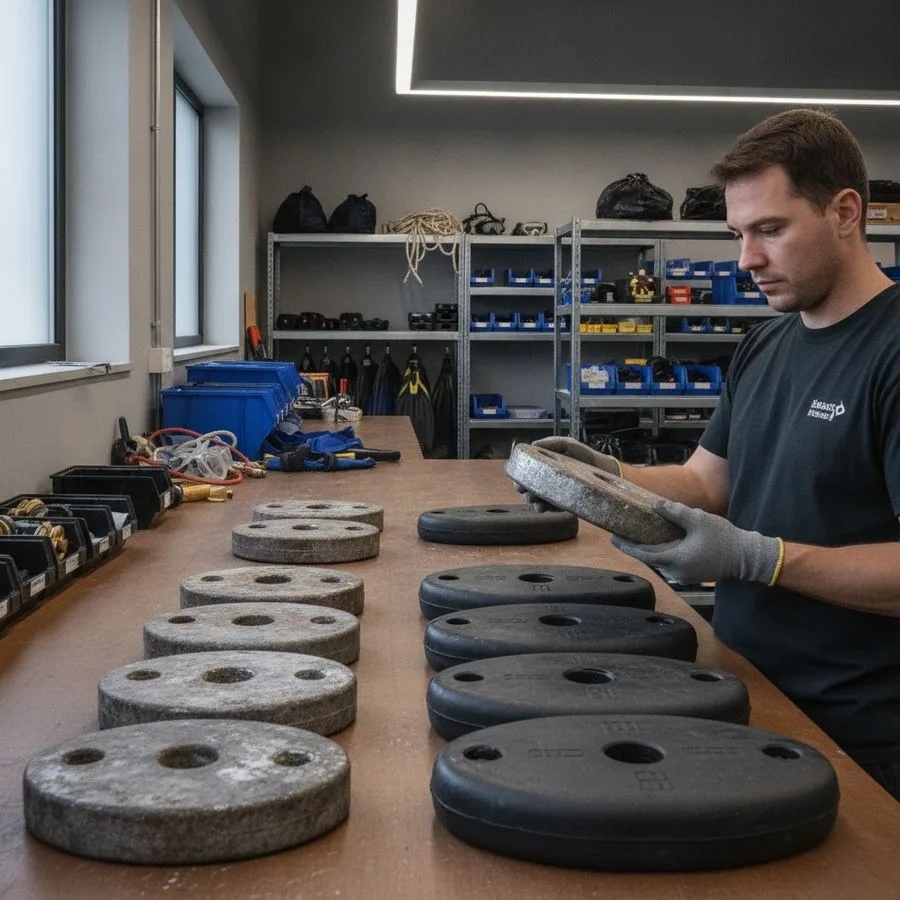
Although lead is widely valued in marine and ballast applications for its density and durability, some storage conditions can still accelerate surface oxidation. The biggest triggers are moisture, salt residue, poor ventilation, and repeated temperature swings that cause condensation. When dive weights are stored damp after use or left in humid back rooms, the surface is more likely to develop oxidized residue over time.
This is especially relevant for dive centers near the coast. Saltwater droplets, wet crates, rinsing stations, and enclosed storage lockers create the perfect environment for contamination to build slowly but consistently. Even when the weights are not submerged, trapped humidity can keep the surface active enough for visible oxidation to appear.
Store weights only after they are fully dry
Keep stock off wet floors and away from rinse areas
Avoid sealed bins that trap moisture
Separate clean stock from recently used rental gear
Reduce contact with salt-contaminated straps and pouches
Another overlooked factor is friction during transport. Loose metal pieces rubbing together can damage protective surfaces and expose fresh lead, which then oxidizes faster. This matters in vans, boats, warehouses, and refill stations.
Good oxidation prevention starts with stable, dry storage. If a business wants cleaner shelves and less handling residue, environmental control is often the first improvement to make. Better storage conditions do not eliminate lead oxidation entirely, but they can significantly slow it and make the rest of the safety process easier to manage.
Coatings that reduce shelf contamination
One of the most effective ways to limit visible lead oxidation and shelf mess is to use weights with a durable protective coating. A proper coating creates a barrier between raw lead and the surrounding environment, reducing direct contact with moisture, salt, air, and repeated handling. For B2B dive operations, this can make a clear difference in how clean stock remains during storage and daily use.
Not all coatings perform equally well. Thin or brittle finishes may crack, peel, or crumble when weights are dropped, stacked, or moved in bulk. Once that happens, exposed spots begin oxidizing again and contamination returns. A more resilient finish is better suited to commercial dive settings where equipment is handled often and not always gently.
Specialized protective systems such as impact-resistant coatings help keep blocks cleaner on the shelf and reduce residue transfer to hands and gear. That is particularly useful for shops that want a more professional presentation or rental fleets that need to stay visually tidy through a busy season.
Effective coatings do more than improve appearance; they support cleaner handling, better storage hygiene, and lower maintenance effort
Coated products are not a substitute for basic lead safety rules, but they do reduce one of the most common sources of contamination. They also protect surrounding equipment from scuffs and rubbing damage.
For teams focused on oxidation prevention, coatings are a practical investment. They simplify shelf management, reduce cleaning labor, and help ensure that dive weights reach staff and customers in a cleaner, more controlled condition.
Safer handling rules for staff teams
Even with better storage and coated products, staff still need clear procedures for safe routine handling. Strong lead safety practices should be simple enough to follow every day, especially in dive shops, training centers, and rental operations where weights move constantly between storage, boats, wash areas, and customers.
The first rule is consistency. Staff should wash hands after handling raw or uncoated lead, avoid eating or drinking during packing tasks, and keep lead products away from shared food or break areas. If oxidized weights are being sorted, basic protective gloves can help reduce direct contact and keep residue off other surfaces.
Wash hands after handling lead products
Use gloves when dealing with oxidized or dusty stock
Clean work surfaces with methods that capture dust rather than spread it
Store damaged and clean items separately
Train new staff on the difference between coated, raw, and nickel-plated products
Dry sweeping should be avoided if visible residue is present, because it can spread fine particles through the workspace. Instead, teams should use damp wiping or other controlled cleaning methods that remove contamination rather than redistribute it.
It also helps to assign one inspection and repacking area instead of letting lead products circulate through multiple rooms. This improves cleanliness and makes monitoring easier.
When businesses treat handling as part of oxidation prevention, they reduce avoidable exposure while improving presentation standards. Cleaner routines support cleaner inventory, and that directly benefits employees, customers, and the overall reputation of the operation.
When nickel-plated shot solves recurring issues
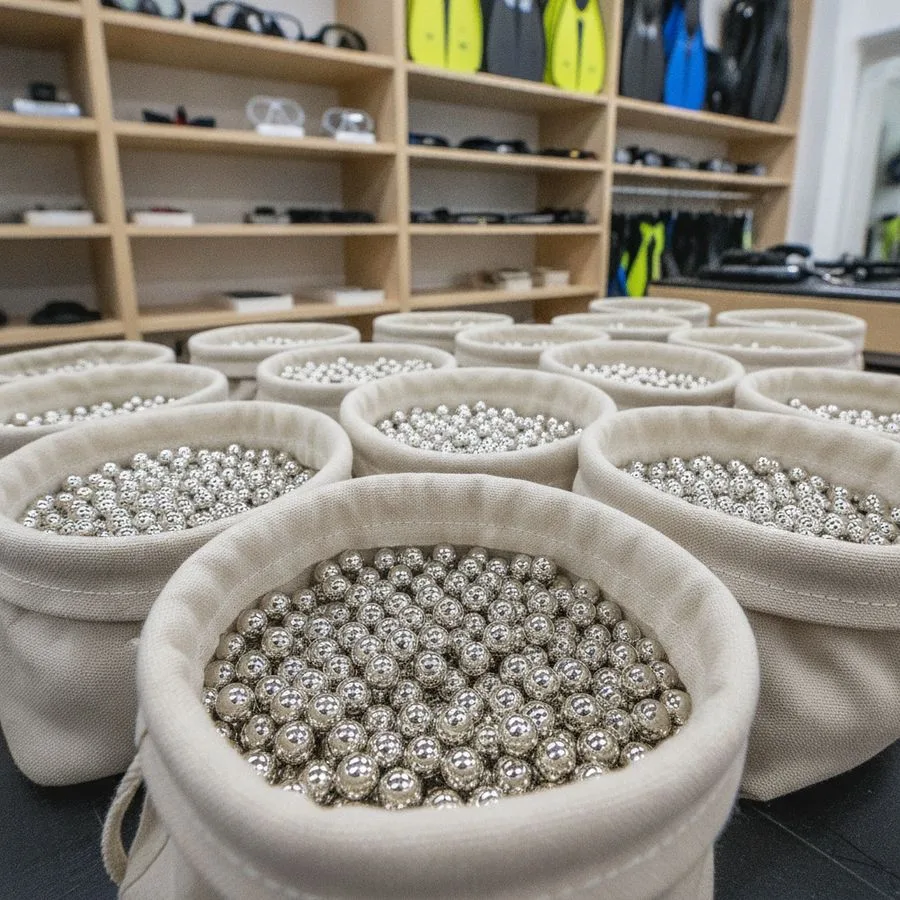
Some operations struggle with the same problems over and over: white dust in storage bins, dirty soft lead bags, residue on staff hands, and customer complaints about mess. In those situations, switching material can be more effective than endlessly adjusting cleaning routines. This is where nickel plated lead shot becomes a strong practical solution.
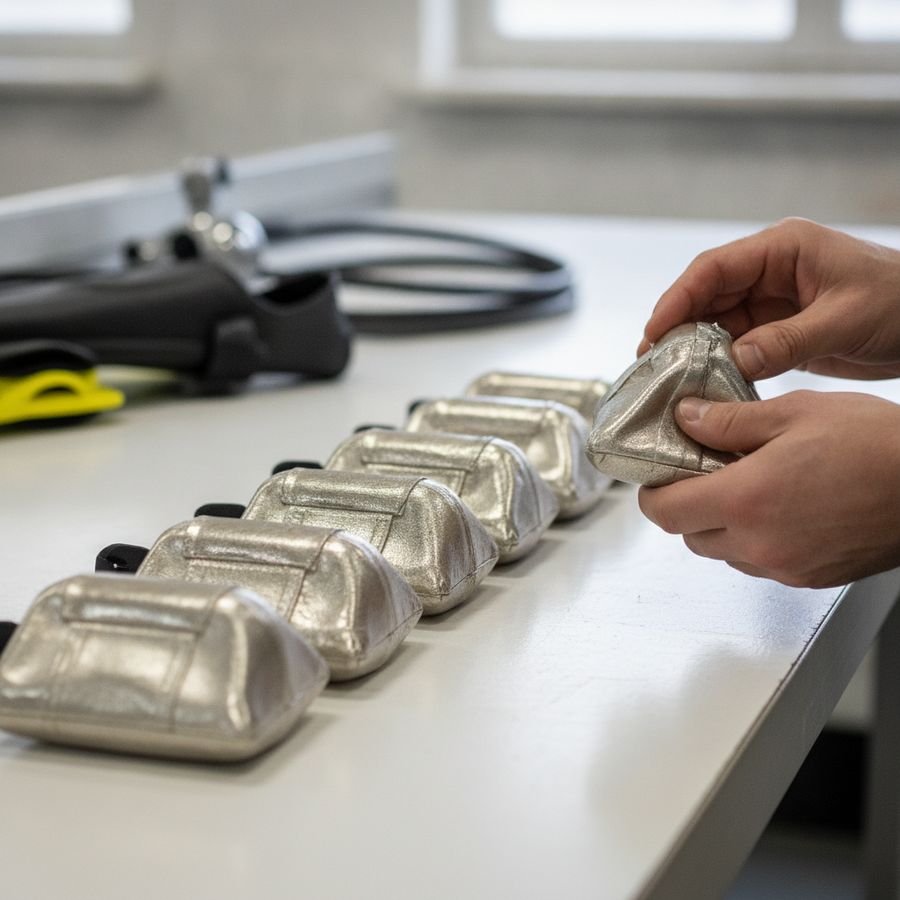
Nickel plating adds a protective outer layer that helps block contact between the lead core and the environment. For businesses using soft lead pouches or pellet-filled weight systems, that means far less risk of surface oxidation and virtually no chalky contamination escaping into the workspace. The result is a cleaner product that still retains the density advantages expected from lead shot.
This matters most in environments where appearance and hygiene are critical, such as dive schools, rental fleets, premium retail displays, yacht interiors, laboratories, and service counters. Staff can handle the product more confidently, and shelves stay cleaner with less frequent maintenance.
When oxidation problems keep returning, the right material choice can solve the root cause instead of just treating the symptoms
Another advantage is consistency over time. Standard shot may perform well initially but become troublesome after exposure to humid or salty conditions. By contrast, nickel plated lead shot is designed specifically to resist that cycle.
For companies serious about lead safety and long-term oxidation prevention, nickel-plated shot often makes the most economic sense where soft lead products are handled frequently. It reduces recurring labor, protects presentation quality, and helps maintain cleaner dive weights across the full product lifecycle.
Inspection steps before weights reach customers
Before any dive weights are sold, rented, or installed in a customer order, they should pass a simple inspection process. This final checkpoint is one of the easiest ways to support lead safety, limit complaints, and catch early signs of lead oxidation before the product leaves the business.
Start with a visual check under good lighting. Look for white residue, scratches that expose raw lead, damaged coatings, torn pouches, broken stitching, and signs of moisture inside packaging or storage containers. If the weight is part of a soft lead system, inspect seams and closures as carefully as the fill material itself.
Check for white dust or chalky residue
Confirm coatings are intact and not cracked
Ensure the product is dry and clean before packing
Separate any item that needs cleaning, recoating, or replacement
Verify labels, weight markings, and packaging are accurate
Touch inspection matters too. If a product leaves residue on gloves or hands, that is a sign it should not go directly to a customer. For rental fleets, adding a quick wipe-down and dry storage confirmation before reissue can prevent contamination from circulating through the inventory.
A documented inspection routine also helps train staff and standardize quality across multiple locations or teams. It turns cleanliness from an informal expectation into a repeatable process.
In the end, strong inspection supports both product quality and brand trust. It is the last line of oxidation prevention before customer contact, often making the difference between a professional handover and an avoidable problem. For more information on ensuring quality, check out Van Krimpen.