Different weight systems solve different imbalances
Weight system choice is not only about adding enough kilos to descend. It is also about where the weight sits on the body and how that placement changes trim, stability, and effort in the water. A diver who is correctly weighted overall can still feel unbalanced if the ballast is concentrated in the wrong place. That is why a lead belt, a neck weight, and ankle weights are not interchangeable solutions.
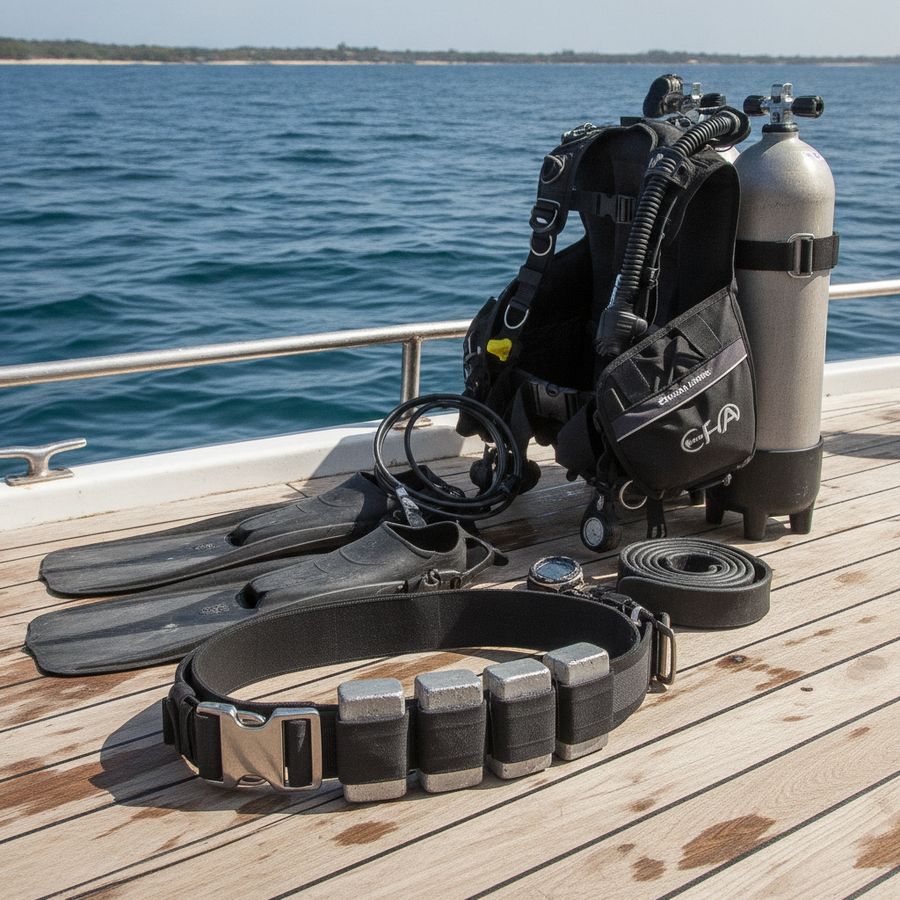
A traditional lead belt places mass around the waist, making it the most flexible general-purpose option for open-water training, rental use, and divers switching between exposure suits. By contrast, ankle weights address floating feet or lower-leg buoyancy, while neck weights are typically used to fine-tune body position in highly specific diving disciplines.
The best weighting setup corrects a problem without creating a new one somewhere else in the body
When evaluating systems, think in terms of imbalance patterns rather than product categories:
Waist-heavy need: broad ballast requirement across many divers
Feet-up trim issue: targeted correction with ankle weights
Upper-body buoyancy problem: selective use of a neck weight
This framework helps divers and dive professionals choose a setup that improves control, streamlines movement, and supports safer in-water performance.

When should divers choose ankle weights?
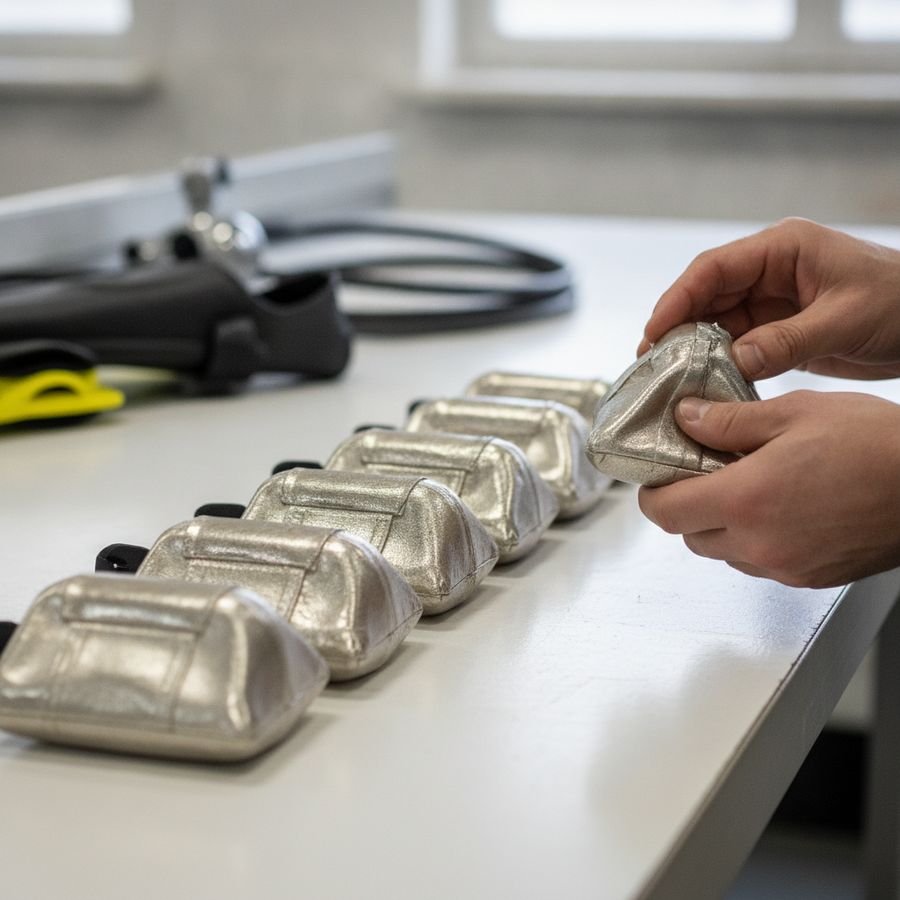
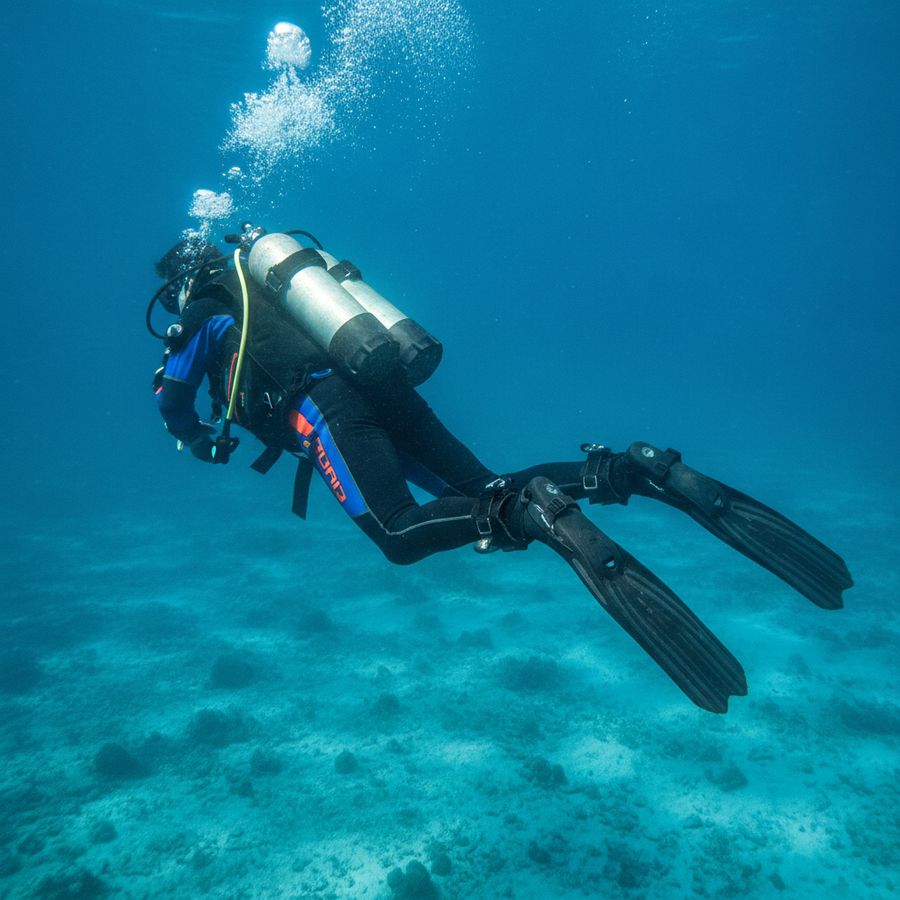
Ankle weights are most useful when a diver’s fins and lower legs consistently rise above the rest of the body. This often happens with drysuits, certain full-foot fin combinations, or very buoyant exposure protection around the calves and boots. In these cases, adding more weight to a belt may not solve the issue because the problem is not total buoyancy alone; it is weight distribution.
By placing a small amount of ballast lower on the body, ankle weights can help flatten the diver’s trim and reduce the constant effort needed to push the legs down. That usually leads to better propulsion, less lower-back strain, and improved control during stops or task loading.
However, they should be used with restraint. Too much weight at the ankles can make kicking inefficient and increase fatigue during entries, exits, or surface swims. Divers should test only the amount needed to fix the imbalance.
Ankle weights work best as a precise correction tool, not as a substitute for proper overall weighting
A diver may benefit from ankle weights when:
the feet float upward despite correct total weighting
drysuit boots trap gas and change trim
finning feels harder because the legs resist a horizontal position
Used carefully, they can be a practical part of a smarter weight system choice.
Why are neck weights used selectively?
A neck weight is a specialized solution, not a universal replacement for a lead belt. It places ballast high on the body, close to the shoulders and upper chest, which can help offset buoyancy patterns that make the torso or upper body ride too high. This is why neck weights are most often associated with controlled, discipline-specific environments rather than general recreational diving.
The reason they are used selectively is simple: high-positioned weight changes body mechanics quickly. If the amount, shape, or fit is wrong, the diver may feel pressure, restricted movement, or unnecessary strain. Diver comfort matters here because discomfort can distract from breathing, equalization, and situational awareness.
Neck weights also require thoughtful matching to the suit and the task. A freediver, a pool athlete, or a diver practicing precise body alignment may have a very different need from someone doing rental-kit open-water dives. In other words, the system makes sense when there is a clear upper-body trim issue to solve.
Selective use is a sign of a refined setup, not a more advanced or better weighting system by default
For most divers, the question is not whether neck weights are effective, but whether the specific imbalance actually calls for one. If not, a simpler system is usually the better choice.
Belts remain versatile for rental fleets
For dive centers, schools, and professional operators, the lead belt remains one of the most adaptable solutions in a rental fleet. The main advantage is flexibility: belts are easy to size, easy to issue to different body types, and easy to adjust when a diver switches from a shorty to a thick wetsuit or a drysuit. That makes them a dependable baseline option for high-turnover operations.
Belts also simplify logistics. Staff can quickly inspect them, pair them with different block styles, and configure weight based on training level and local conditions. Compared with more specialized systems, they are easier to standardize across a mixed fleet of student, recreational, and guided-dive equipment.
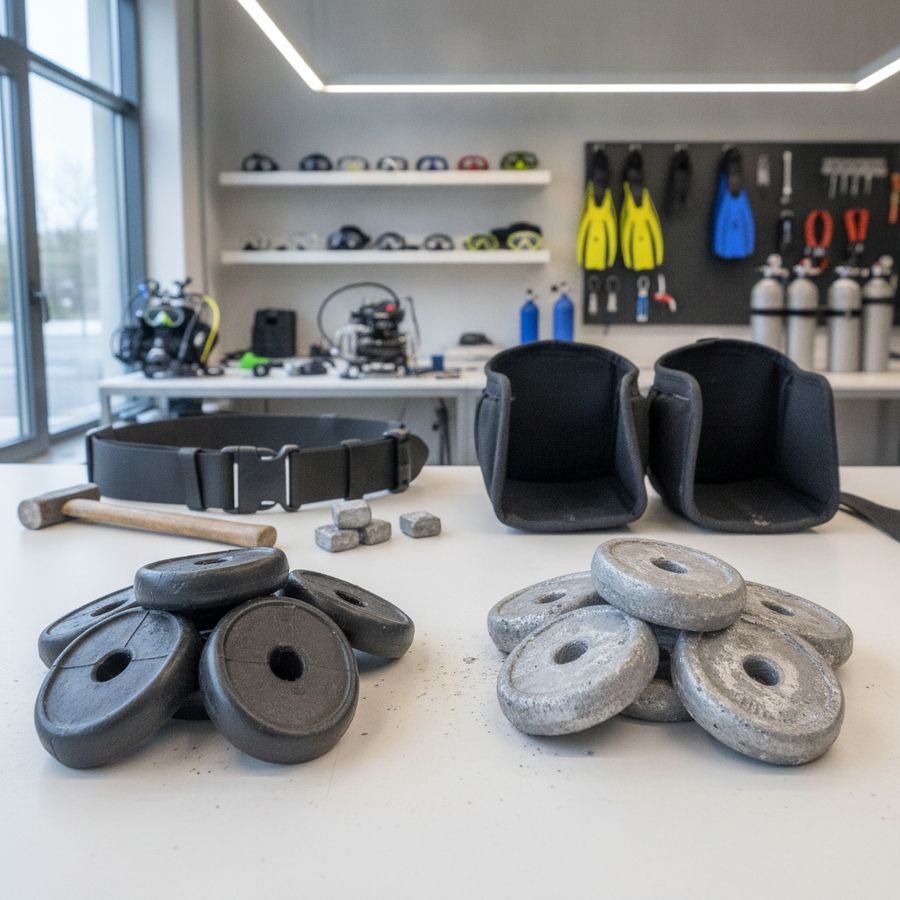
From an operational perspective, durability and handling matter just as much as function. Coated or clean-finish weights help reduce mess, protect equipment surfaces, and keep boats and rinse areas more professional in appearance. For busy centers, that affects both maintenance and customer perception.
A lead belt stays relevant because it solves the widest range of weighting needs with the fewest complications
Belts are especially valuable when operators need:
fast adjustment between divers
simple training on emergency release procedures
compatible weighting across multiple suit thicknesses
reliable stock for rental and instruction
That broad usefulness is why belts continue to anchor many fleet-based weight system choice decisions.
Exposure protection influences weight system choice
The suit a diver wears has a direct impact on weight system choice. A thin tropical wetsuit usually needs less ballast and creates fewer trim complications than a thick semidry or drysuit. As exposure protection becomes bulkier, buoyancy increases and the location of that buoyancy changes. That is where the choice between a lead belt, ankle weights, or a neck weight becomes more important.
For example, thick boots and drysuit legs can make the lower body feel floaty, which is why some divers add ankle weights. A hooded configuration or upper-body buoyancy pattern may lead others to test a neck weight in specific disciplines. In many cases, though, the right answer is still a well-balanced belt setup combined with better gas management inside the suit and proper trim practice.
Exposure protection also changes through the season. Rental fleets serving warm-water travelers one month and cold-water students the next benefit from systems that can be adjusted quickly without overcomplicating fit and briefing procedures.
The more buoyant the suit, the more carefully weight must be distributed rather than simply increased
Before changing systems, divers should review:
suit thickness and material
boot and fin buoyancy
how gas shifts during the dive
whether the issue is total weight or body position
This approach leads to more efficient weighting and better overall diver comfort.
How does comfort affect emergency response?
Diver comfort is often discussed as a convenience issue, but it also has safety implications. If a weight system pinches, shifts, rides too high, or overloads one part of the body, the diver may become distracted at exactly the wrong time. In routine diving that means poorer trim and higher gas use. In a stressful moment, it can slow recognition, movement, and response.
A comfortable system supports cleaner emergency actions because the diver already understands where the weight sits, how it feels, and how to release or manage it under pressure. This is one reason the familiar lead belt remains popular in training environments: the release method is straightforward and easy to practice repeatedly. More specialized systems may still be appropriate, but only when fit, purpose, and procedures are fully understood.
Comfort also affects helpers. Buddies and instructors need to identify and manage another diver’s weighting quickly if assistance is required. Predictable placement and secure attachment reduce confusion.
A system that feels natural in calm water is more likely to be handled correctly when stress levels rise
Warning signs that comfort may be compromising response include:
frequent readjustment during the dive
localized pressure or restricted breathing
uncertainty about release points
fatigue caused by poor trim or awkward movement
Good weighting should improve control, not compete with it.
Matching the system to the diving task
The most effective weight system choice starts with the task, not the product. A diver teaching entry-level courses, a cold-water diver in thick exposure protection, and a specialist correcting a precise trim issue may all require different solutions. The right setup supports the dive objective while maintaining balance, simplicity, and diver comfort.
For broad recreational use, the lead belt remains the most versatile option because it is easy to understand, adjust, and suitable for various suits and body types. If the challenge is specifically floating feet, ankle weights may provide a cleaner fix. For high-body imbalance in specialized activities, a neck weight can be selectively considered.
The key is to avoid solving every problem by adding more total weight. While extra kilos may push a diver down, they can also worsen trim, increase effort, and decrease efficiency. Better placement often proves more valuable than simply adding more lead.
Choose the system that addresses the actual in-water problem with the least complexity. Learn more about optimal weight systems here.
A practical decision framework is straightforward:
Identify where buoyancy is causing imbalance.
Confirm the correct total weighting first.
Select the least specialized system that resolves the issue.
Test comfort, trim, and emergency handling together.
This approach yields smarter, safer, and more repeatable results for both individual divers and professional operators.
FAQs
What is the main difference between a lead belt, ankle weights, and a neck weight?
A lead belt adds ballast around the waist and works as the most versatile general-purpose system. Ankle weights place small amounts of weight low on the body to correct floating feet or lower-leg buoyancy. A neck weight places ballast high on the body and is used more selectively for upper-body trim issues in specialized diving contexts.
When should divers use ankle weights?
Divers should consider ankle weights when their feet or lower legs keep floating upward even though their total weighting is already correct. This can happen with drysuit boots, buoyant fins, or exposure protection that traps gas around the lower legs. They should be used sparingly and only in the amount needed to fix trim.
Are neck weights suitable for most recreational divers?
Usually no. Neck weights are specialized tools for specific upper-body buoyancy or alignment problems and are more common in discipline-specific diving. For most recreational divers, a simpler system such as a lead belt is more practical unless there is a clear trim issue that calls for weight placed high on the body.
Why does exposure protection affect weight system choice?
Different suits change both total buoyancy and where that buoyancy sits on the body. Thick wetsuits, semidrysuits, and drysuits can create trim issues that a simple increase in total weight may not solve. That is why divers should assess suit thickness, boots, fins, and gas movement before choosing between belt, ankle, or neck weighting.
How does comfort influence diving safety and emergency response?
A comfortable weight setup helps a diver stay focused, move efficiently, and react faster under stress. If a system pinches, shifts, restricts breathing, or creates confusion about release points, it can interfere with trim and delay emergency actions. A predictable, well-fitted setup supports both personal control and easier buddy assistance.