Overview
For many retailers, dead stock is not caused by dramatic buying mistakes. It builds slowly through small over-orders, inconsistent reordering, and a “just in case” mindset. In the context of dive shop inventory, weights are especially vulnerable because they are essential products, but demand is spread across multiple sizes, formats, and customer types. A shop may sell weights every week while still carrying too many slow-moving units on the shelf.
The good news is that weight inventory can usually be improved without reducing service levels. The most effective shops narrow their core assortment, watch fast-selling sizes closely, and replenish in smaller, more frequent batches. This approach keeps key products available for divers and training centers while reducing cash locked into items that move only occasionally.
Smart inventory planning is not about carrying more stock. It is about carrying the right stock at the right time.
For businesses buying dive weights wholesale, the real opportunity is operational discipline. When suppliers offer flexibility, especially a no minimum order model, shops can stop treating weights as a bulk-buy category and start managing them as a controlled, data-driven product line. That shift helps protect margins, free up working capital, and keep storage space focused on inventory that actually earns its place.
Why dive weights tie up working capital
Dive weights look simple, but they can consume more working capital than many shop owners expect. They are dense, heavy, and often purchased in broad assortments to cover every possible diver need. When a store carries too many sizes, styles, or coated variations without enough turnover, cash becomes trapped in stock that may sit for months. That is the core problem behind dead stock in this category.
Unlike masks or accessories with higher perceived variety, weights are usually bought for function. Customers and dive schools often want dependable basics, not endless choice. Yet many businesses still hold extra inventory because they fear losing a sale. In practice, this usually creates the opposite outcome: slower stock rotation, more back-room clutter, and less money available for faster-moving lines.
Strong inventory planning starts with understanding the hidden cost of overstock. That cost includes:
- Cash tied up in unsold units
- Storage space lost to heavy products
- Extra handling time for low-turn items
- Aged stock that makes displays look neglected
Dive shop inventory performs better when managers treat weights as a working-capital category rather than just a necessary commodity. By measuring turnover, identifying true demand, and eliminating duplicate or slow-moving variants, a shop can keep availability high while putting more capital back into the business.
Fast-moving sizes every dive shop tracks
Most dive shops do not need equal stock levels across every weight option. A small group of sizes usually drives the majority of sales and rental replacement demand. These are the units that support beginner courses, recreational divers, and everyday shop traffic. Shops that actively track these fast movers make better replenishment decisions and avoid overbuying fringe sizes that rarely leave the shelf.
The exact mix varies by market, but the principle is consistent: identify the weights used most often in entry-level training, rental sets, and standard customer purchases. In many cases, this means keeping closer watch on practical core sizes rather than treating all blocks or pouches as equally important. A focused assortment is often more profitable than a wide one.
A useful stock review often separates inventory into three groups:
- Core movers that sell or rotate weekly
- Support sizes that are needed but slower
- Rare-demand items that should be stocked carefully
For shops sourcing dive weights wholesale, this creates a clear buying framework. Replenish the core quickly, monitor the support range, and limit the rare-demand products unless local demand justifies them. When owners use real movement data instead of assumptions, dead stock falls naturally. The shelf becomes simpler, cleaner, and more aligned with what divers actually need.
No minimum orders and lean replenishment
One of the fastest ways to reduce dead stock is to stop buying weights in oversized batches. A supplier offering no minimum order terms gives dive shops the flexibility to replenish based on real demand rather than warehouse pressure. That changes the economics of the category. Instead of tying up cash in speculative stock, the shop can buy what it needs now and reorder as sales develop.
This model works especially well for dive shop inventory because weight demand is steady but uneven. A training center may suddenly need more core weights, while coated blocks for premium retail sales may move at a slower pace. Smaller, more frequent orders let managers respond to these patterns without carrying excess product for long periods.
No minimum order is not just a purchasing perk. It is a practical tool for lean inventory control.
Lean replenishment usually improves three things at once: stock accuracy, cash flow, and visual merchandising. Shelves stay relevant because older, slower units do not build up around fresh stock. Teams also spend less time shifting heavy products in storage.
For buyers working with a specialist in dive weights wholesale, flexible ordering can replace guesswork with rhythm. Reorder points become easier to manage, storage needs fall, and the business gains room to invest in products with better rotation. That is how inventory planning turns from reactive buying into a reliable operating system.

Forecasting seasonal demand for training centers
Training centers rarely need the same weight volume all year. Demand rises with course schedules, tourism patterns, water temperatures, and local diving seasons. Shops that serve schools or operate their own training programs can cut dead stock significantly by forecasting around these patterns instead of ordering to an annual average. Seasonal planning makes weight inventory more precise and more profitable.
A simple forecast does not need advanced software. Start by reviewing last year’s monthly usage, then compare it with upcoming class bookings, rental turnover, and any expected changes in student volume. From there, separate essential training weights from lower-priority retail variations. This keeps the business ready for peak periods without overloading storage after the season ends.
Useful forecasting signals include:
- Course calendars and open-water certification dates
- Historical rental wear and replacement rates
- Local holiday travel periods
- Group bookings from clubs or resorts
Inventory planning is strongest when orders are staged. Bring in the highest-turn training sizes first, then top up only if bookings confirm the need. This protects working capital and avoids the common mistake of carrying post-season surplus. For any business managing dive shop inventory, a seasonal forecast turns weights from a reactive necessity into a planned operational category.
Balancing premium coated blocks with basics
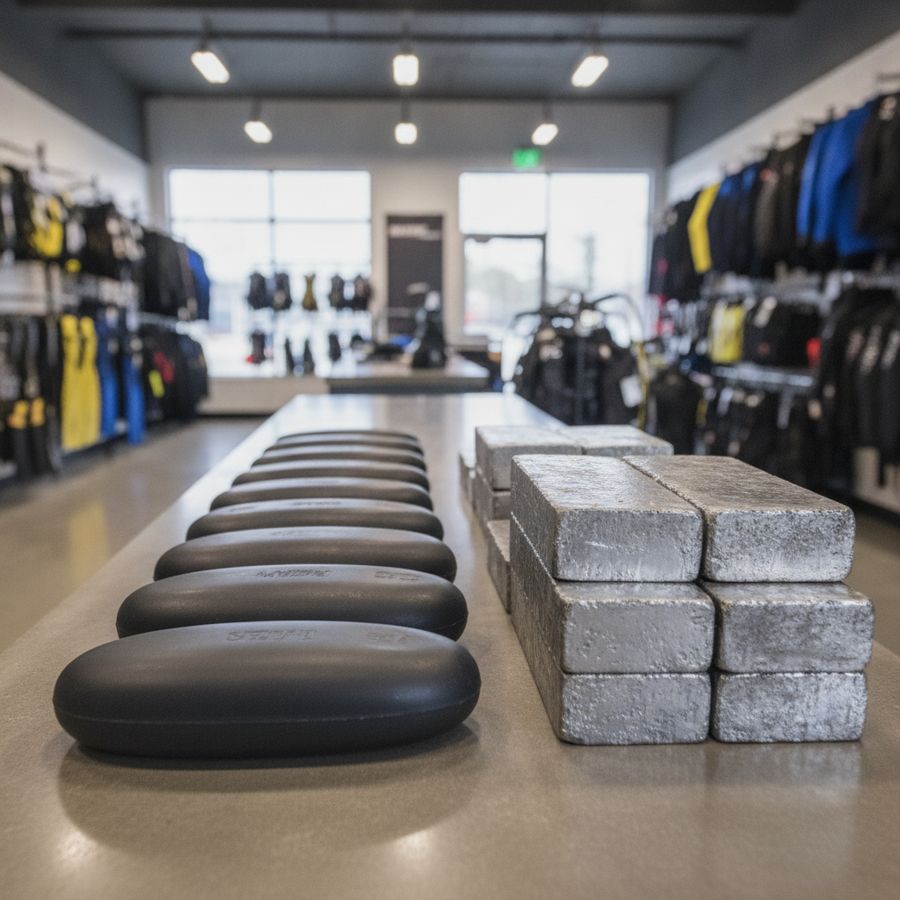
A healthy weight assortment usually includes both premium products and dependable basics. Coated blocks can improve presentation, reduce oxidation, and give the display a cleaner, more professional look. Basic lead options, meanwhile, often cover the practical needs of rental fleets, schools, and price-focused customers. Problems begin when a shop overcommits to either side without matching stock to actual demand.
Premium coated blocks can strengthen margins, but they should be stocked intentionally. If every size and finish is held in depth, attractive products can become slow-moving inventory. On the other hand, relying only on basic weights may limit retail appeal and reduce opportunities to upsell customers who value durability and shelf presentation.
The most effective balance is usually built around role-based purchasing:
- Basics for training, rental, and high-turn replacements
- Premium coated blocks for retail display and higher-margin sales
- Specialty items only where local demand clearly exists
This is where disciplined inventory planning matters. Shops should let sales purpose determine stock depth, not supplier catalog breadth. When the basic range supports volume and premium items support margin, the category becomes more stable. That balance helps reduce dead stock while still giving customers a professional, specialist-led product selection.
Conclusion
Cutting dead stock in weight inventory does not require a bigger warehouse, deeper discounts, or a larger assortment. It requires clearer decisions. The best-performing shops know which sizes move, which products support training demand, and which premium options genuinely earn space on the shelf. That clarity turns a heavy category into a more efficient part of the business.
For managers reviewing dive shop inventory, the priorities are straightforward: reduce unnecessary variety, track fast movers, forecast seasonal needs, and replenish in smaller quantities where possible. A flexible no minimum order supply model makes that strategy easier to execute because it lowers the risk of buying too far ahead. Instead of carrying excess stock for months, shops can stay responsive and lean.
The goal is not fewer options at any cost. The goal is better stock discipline with stronger cash flow.
When buying dive weights wholesale, every order should support turnover, customer need, and working-capital efficiency. That is the foundation of smarter inventory planning. Over time, this approach frees up cash, improves merchandising, and creates a cleaner, more focused assortment. In a specialist category like diving weights, that discipline is often what separates a cluttered stockroom from a well-run, profitable operation.